Tom Hui’s second software company spent 54 consecutive months losing money before turning a profit in April 2010. He later recalled getting through those years without layoffs or salary cuts. For a business selling efficiency, survival was a rather thorough product test. The reassuring part of his account is how little glamour he attaches to it. A plan had to last long enough to become a business.
The company was HST Pathways, which Hui founded in 2005. He had already created and sold a software business serving the same specialised market. Starting again meant carrying experience into a different technical era, with all the inconvenient work of persuading customers that the new arrangement deserved their trust.
A second company, a different proposition
Before HST came Surgicenter Information Systems, or SIS, an on-premise practice management business established in the early 1990s. Hui sold it in 2001. His professional history runs through DOS, client-server systems and cloud deployments: three generations of software, each with its own assumptions about where the machinery lives and who must look after it.
At HST, the delivery model became part of the proposition. Cloud software offered a way to simplify deployment and administration while supporting organisations with multiple facilities. Hui was returning to ambulatory surgery centres, usually shortened to ASCs, with a different answer to an old business question: how should an organisation manage the information needed to get through its day?
There is something pleasingly unfashionable about returning to a market one already knows. A second company need not come with a new species of customer. Familiarity can sharpen the view of a problem. Hui’s career suggests an interest in the accumulated detail: the routines, the handoffs, the work that continues after the demonstration has finished and everyone has reclaimed their coffee.
Selling something the customer could not see
Cloud delivery now sounds like an ordinary choice in a software procurement meeting. Hui remembers a period when it required an explanation. Customers understood a server on their premises. Asking them to put their information elsewhere introduced a second sale inside the first: they had to accept the architecture before they could assess the application.
He described the early challenge as persuading people to trust something they could not see. The financial crisis made that conversation harder. Budgets were constrained at precisely the moment HST was asking customers to consider a different arrangement. Technical confidence inside the company did not automatically become confidence across the table.
The distinction matters to understanding Hui. A founder can be correct about technology and still have years of commercial work ahead. The customer is entitled to ask where the risk goes, who answers the telephone and what happens when an ordinary working day becomes an awkward one. An elegant system diagram rarely settles all three.
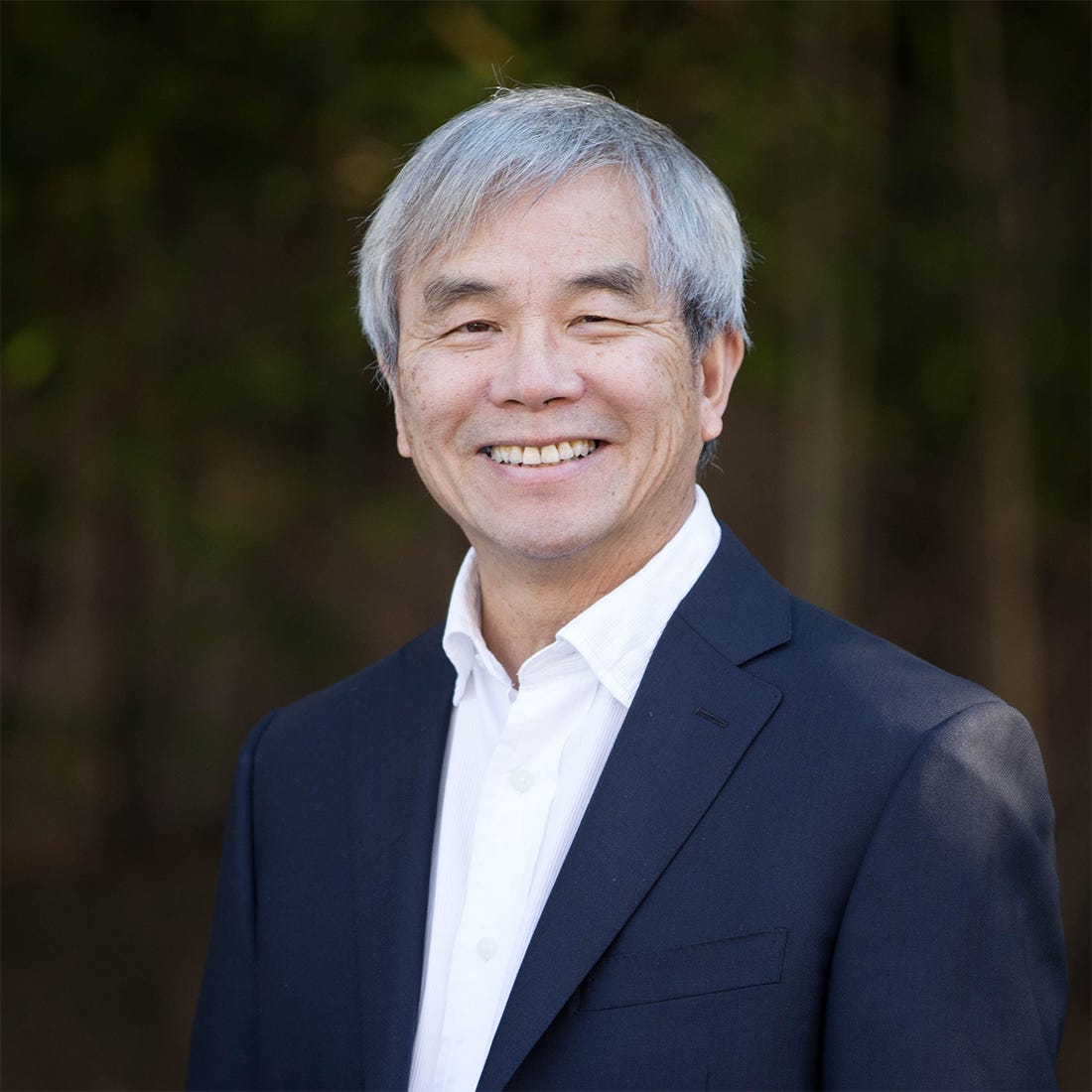
His forecasts in 2019 paired enthusiasm for faster connectivity with attention to the cost of operating systems. He discussed the advantage of sharing technical resources across a customer base, making services more affordable than an individual organisation might find them on its own. The business case for cloud delivery included the unromantic matter of who could afford to keep everything running. An internet connection could open the door; a workable cost structure helped keep it open.
The screen had to earn its keep
Hui’s product conversations are unusually attentive to the mundane circumstances in which software gets used. In describing HST’s design work in 2018, he discussed browser differences, network quality and the challenge of putting necessary information on smaller screens. There were repeated revisions. The engineering team became twice as large as he had originally envisaged.
These are the details that tend to fall out of a polished founder story. They make a better explanation of how a product comes together. A screen has edges. A user has habits. A feature that behaves beautifully under ideal conditions must eventually introduce itself to the equipment and working practices already in the building.
Hui also described bringing experienced users into design and implementation. That choice gave practical knowledge a place in the product process. A founder may know the market; the person who spends a working day inside it knows exactly where the friction sits. Asking that person to help design the software is a useful way of shortening a very expensive argument.
By 2021, Hui was describing implementation as work that began three to six months before launch. Preparation mattered. Customers learned the system and constructed their workflows ahead of time, so the first live day would require less instruction. His account makes room for a quality that product launches seldom advertise: homework.
“Our customers don’t get into the geeky nuts and bolts of what is inside a box.”
Tom Hui, 2021
That remark explains much of his commercial manner. Reliability and support were part of what customers were buying. They had work to finish. The machinery could be fascinating to its makers while remaining, quite reasonably, somebody else’s concern to its users.
The audience gets a vote
Hui has also offered a less flattering example of customer understanding. During a sales presentation, he made a joke at a consulting firm’s expense. A representative of that firm was in the room. The sale did not follow. His lesson was concise: “We don’t know our audience or their biases!”
It is an agreeable puncture in the usual portrait of the founder who sees around every corner. Hui’s ability to recognise a market did not exempt him from misreading a room. A joke can have an excellent opening and a very expensive conclusion.
His later public discussion of customer data offers a more methodical approach to understanding a business. In a 2021 conversation about CRM adoption, he addressed leadership’s role in getting departments to maintain useful information and make decisions from it. The topic was data integrity, but the responsibility began with the chief executive.
There is an operational thread here. A customer database can exist without becoming useful. A team needs to understand why keeping it accurate helps its work. Hui’s discussion puts that explanation among a leader’s duties. Purchasing software is a decision; getting an organisation to use it consistently is an ongoing occupation.
- 2019Connect the productsHST and Casetabs begin bidirectional integration.
- JAN 2020Share the offeringA revenue-sharing agreement brings scheduling into HST’s software.
- NOV 2020Combine the businessesBain Capital Tech Opportunities leads a majority investment.
A partnership before the paperwork
The Casetabs combination arrived on November 10, 2020. Bain Capital Tech Opportunities led the majority investment, with Nexxus Holdings investing as a minority partner. HST and Casetabs had already integrated products and developed a commercial relationship. Hui said the businesses shared more than 400 customers.
That sequence gives the transaction an everyday foundation. Products had been connected before the companies were combined. There were existing customers who knew both organisations. The corporate announcement formalised a relationship with some practical history behind it, rather than introducing the participants to one another over the closing documents.
Casetabs founder Gavin Fabian and Hui brought their respective teams into a wider organisation. The stated ambition included a broader set of products and services, supported by investors with experience in technology businesses. For Hui, whose earlier work had centred on building software for a particular kind of customer, the combination offered another way to extend that relationship.
A different seat at the table
In August 2021, David Thawley became HST’s chief executive. Hui stepped back from daily operations and became non-executive chairman. The announcement preserved a connection to the founder while handing operational leadership to a successor. It was a change in the shape of his involvement, with a clear distinction between guiding a company and running its working day.
Succession belongs in a founder’s story because it changes the unit of achievement. A company must eventually contain more than its creator’s judgement. Decisions have to travel through other people. Relationships have to survive a different name on an email. Experience remains valuable, but the organisation needs room to acquire some of its own.
HST’s current biography lists Hui in that chairman role. It also gives a glimpse of interests beyond the company: an MBA, a master’s degree in biology, undergraduate degrees in biology and psychology, and a nonprofit he operates with his wife to promote young women in STEM. Education occupies a visible place alongside enterprise in that account of his life.
HST’s own explanation of its business takes a similarly practical line on price. The company says being the cheapest has never been its objective, placing the emphasis on the return customers receive. That positioning asks service and reliability to carry commercial weight. It is a useful expression of the business Hui set out to build: the invoice is part of the relationship, and so is everything that must happen after it is paid.
The next chapter has other authors
The business has continued to change under Thawley. In June 2026, HST announced a growth investment from Novo Holdings alongside Bain Capital and Nexxus Holdings. The announced direction included automation and AI capabilities intended to reduce manual work and improve operational visibility.
In October, HST appointed Alan Gao as chief product and technology officer and Marc Krull as senior vice president of engineering. It reported more than 2,000 ASC customers and 75,000 users across its platform, serving the United States and Canada. These are developments in the company Hui founded, under the leadership of his successor.
The new technical vocabulary returns the story to a familiar question. Whether software arrives on a local server, through a browser or with new automation, somebody has to find it useful on a busy day. Hui’s second act was built around that encounter. Its continuation now depends on other people making the same appointment with the customer, and arriving prepared.