At five in the morning, Avery Durrant would finish pushing an update and go to bed. At six, his roommate and co-founder Jack Pawlik might knock on the door. Something had broken. The software was already at work in coffee shops, whose customers had considerably less interest in deployment schedules than in getting their orders.
Durrant tells this early Dripos story with the embarrassment of someone who remembers exactly how the machinery worked. He compiled server code, moved it into Elastic Beanstalk and sent updates to the apps. The process had room for enthusiasm. It had rather less room for checking what enthusiasm had just done.
As more shops depended on the product, the team moved toward weekly releases and checks built around essential customer tasks. A register introduces a particular kind of accountability: people arrive expecting it to function. The experiment on a programmer’s screen becomes somebody else’s working day.
That distance, between the person making software and the person trying to use it, runs through Durrant’s career. He has approached it from the keyboard, from sales calls and from the awkward business of handing a customer from one team to another. His newest company, Custral, takes that last problem as its starting point.
The café was the specification
Dripos began with a smaller proposition: mobile ordering for independent coffee shops. Durrant and Pawlik founded the business in 2019. The obvious reference was Starbucks, whose customers could order on their phones. Bringing a similar convenience to a neighborhood café seemed a reasonable place to start.
Then the owners explained the rest of their day. Ordering was one task among many. There were staff schedules, payroll, payments and customer loyalty to manage. Each piece of software could solve a legitimate problem while requiring another subscription, another login and another connection to maintain.
Pawlik went to work without pay at Cafe Social in Madison, Wisconsin, the company’s first user. His shifts began at six in the morning. He kept notes about what worked and what needed changing, then passed the findings to Durrant, who made changes overnight. The next morning brought another shift and another test.
The arrangement gave their work a useful constraint. A misplaced button was something a barista encountered while doing a job, rather than a matter for abstract debate. Durrant’s code had to answer to that experience. The two founders were effectively sharing one long workday across the café counter and the development screen.
A larger product, with a smaller pile of logins
By April 2024, Dripos brought together point of sale, mobile payments, employee management, payroll and loyalty tools. Its announced $11 million Series A was led by Base10 Partners. The company said its location count had increased 400% during 2023 and that its customers spanned 46 states.
Those figures describe the company at a particular moment. They also reveal the scale of the wager the founders had made. Building a broad product meant taking responsibility for several jobs that other companies sold separately. Every additional function could make the system more useful, while giving its makers another opportunity to get something wrong.
Revolucion Coffee + Juice, a five-location operator in Texas, described replacing a collection that included Toast, Square, 7Shifts, ADP and Otter. The appeal was time returned to running the shops. A café owner buying software is also buying an answer to a practical question: how much attention will this require tomorrow?
For Durrant, growing the company meant learning duties beyond engineering. He has described taking on cold calls, selling, onboarding and support. A product can look persuasive in a demonstration and still be difficult to introduce into a working business. Doing those jobs gave him a view of the spaces between the features.
A customer takes the long way round
In September 2026, Durrant publicly explained his next undertaking. Custral grew out of the experience of building systems for sales, implementation and support. Even when the processes worked, keeping the information connected took continual effort. One tool fed another; the network acquired more dependencies.
His account names a familiar cast: Notion, Slack, Google Sheets, Zendesk, Zapier and multiple CRMs. None needs to fail dramatically for the whole arrangement to become cumbersome. Someone still has to keep track of which record contains the promise a salesperson made and whether the next team has seen it.
Durrant describes Custral as a full-cycle CRM. Its ambition covers the relationship from the first conversation through onboarding, support, success and product feedback. The proposition extends an old Dripos concern into a different business setting: give people who serve the same customer a shared place to work.
“I spent years chasing a different view of the customer in every tool.”Avery Durrant · Custral
The company’s own explanation makes the handoff tangible. A salesperson learns that a customer needs a particular capability before launch. That information needs to reach onboarding. Later, a request heard by support needs a route into product planning. A signed contract is only one event in that sequence.
- Sales
- Onboarding
- Support
- Success
- Product
One customer record travels with the work. Product feedback informs the next conversation.
Conceptual workflow, based on Custral’s stated approach.In his launch posts, Durrant emphasizes what happens after a deal closes. Each department can have a coherent view of its own work and still lack the context held next door. That is a sensible problem for a founder who has occupied several of those seats to pursue. Whether Custral can resolve it across different companies will be decided in use.
The reading has a purpose
Durrant began programming at eleven, working on websites and Minecraft projects. His route into technology included Make School, which he left after finding full-time work. He later worked at Deltek. The Dripos business passed through Y Combinator’s summer 2020 batch.
His personal account gives books a substantial role in the education that followed. He calls the Barnes & Noble in Union Square his campus. His shelves favor business, biography and philosophy; he marks passages with highlights and colored sticky notes. Even the colors have assignments.
The reviews make this more interesting than a decorative reading list. When he returned to Bob Iger’s The Ride of a Lifetime, a favorite for years, he found his attention had changed. Earlier, he had read an inspiring career story. Later, he was looking at the principles behind the decisions.
That is a useful distinction for somebody learning to run a company. A successful outcome can be admired without being understood. A principle can be examined, tried and argued with. Durrant’s second reading placed more weight on how Iger approached problems and why he chose a particular course.
His response to Bill Gates’s Source Code was more personal. He was drawn to the childhood interests that preceded a programming career, and found himself reconsidering his own early enthusiasms. He likes memoirs for the access they give to a person’s decisions before the eventual reputation has swallowed the detail.
Reading also sends him sideways. Iger’s interest in Theodore Roosevelt helped prompt Durrant to pick up Edmund Morris’s biography. His review enjoys the depiction of an earlier New York, where he now lives. But admiration has limits: he questions the pacing and finishes still wondering about the distance between Roosevelt’s reputation and record. The reader keeps his right to disagree.
Three screens before breakfast
Durrant’s enthusiasm for Formula 1 started in a less scholarly place: a YouTube detour through crash compilations. Highlights led to more coverage and eventually full races. By the time he wrote about Adrian Newey’s How To Build a Car, he was watching with a distinctly elaborate arrangement.
His photograph shows an early race morning in pajamas, with the main broadcast on television, a Max Verstappen view on another screen and data on a third. He says this is his routine for every race. Casual viewing has acquired an operations department.
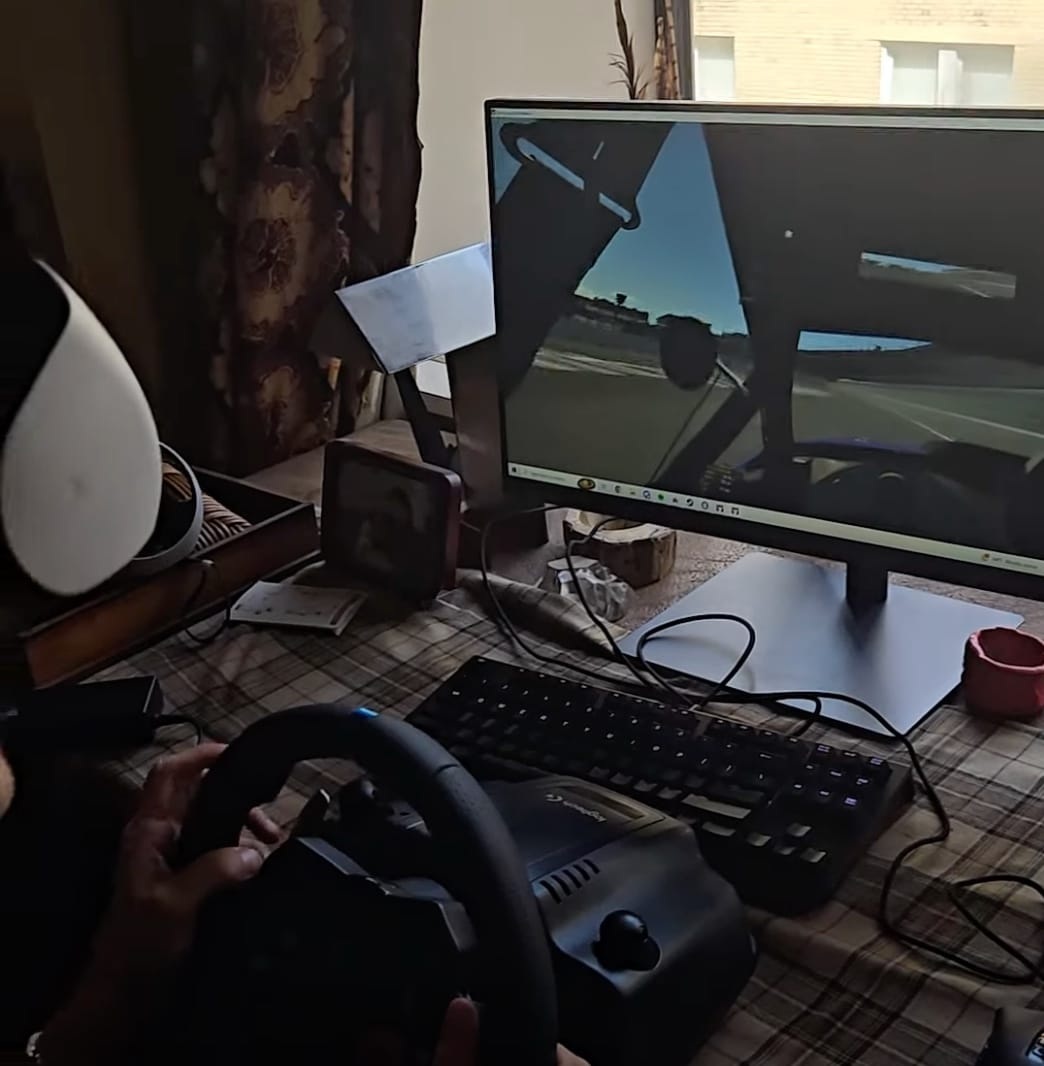
Newey’s book appealed partly because it opened up the work behind the spectacle: engineering, design and the people whose decisions are harder to see from the grandstand. Durrant’s interest follows the process into the workshop. The car on screen becomes more interesting when he can understand something about how it was made.
There are other details that rescue him from the outline of a startup biography. His Dripos author profile names Stevie Nicks’s “Edge of Seventeen” as his karaoke choice. Its answer to the favorite-coffee-drink question is chamomile tea with sugar and honey. The coffee industry can survive this small act of dissent.
The next morning’s test
The move from Dripos to Custral makes sense as a continuation of work Durrant has already done. At the café, the founders learned by following a working day. In a growing software company, he followed the customer through different teams. Both experiences made the connections between tasks hard to ignore.
He now has a more demanding version of that early overnight assignment. A change must work for people who arrive with different responsibilities, habits and expectations. The promise of a shared system is appealing precisely because coordinating those differences consumes so much ordinary effort.
The useful test remains close to the coffee counter. Can someone begin the next task with what they need already in front of them? Can the information survive the handoff? Durrant has chosen to spend another chapter of his career finding out.