Profile No. 019 / The custodians of context
A deal room has an odd social life. Everybody invited wants the documents to move quickly; everybody responsible wants them to stay put. Todd Partridge has built a career inside that contradiction. He has marketed systems for lawyers, bankers, private-equity teams and corporate buyers, all of whom need information yesterday and would prefer it not appear anywhere unexpected tomorrow.
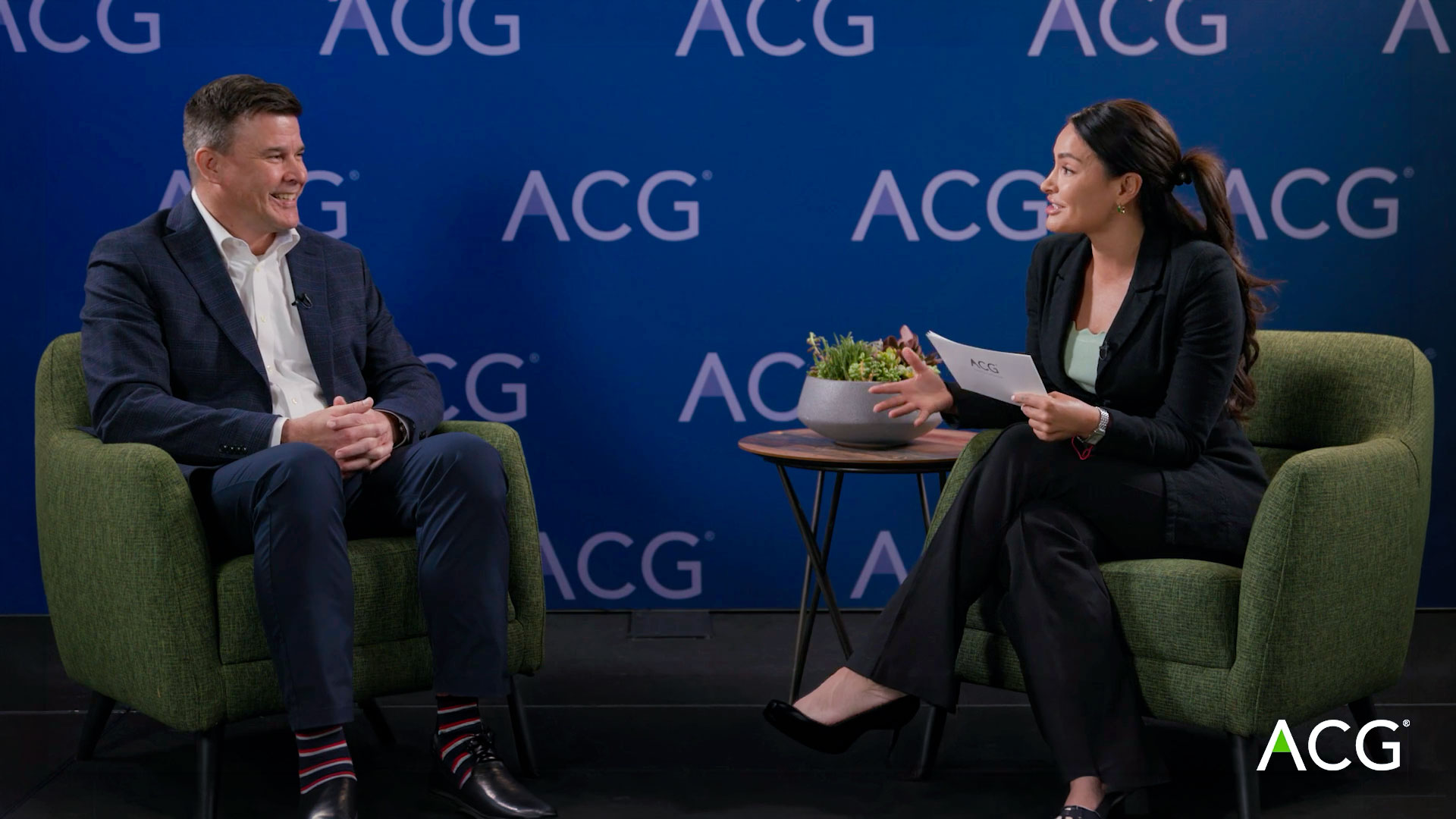
Today he is senior vice president and head of global marketing at SS&C Intralinks, the secure-collaboration company associated with virtual data rooms. In a recent video he also introduced himself as its chief marketing officer. Titles in large software companies can acquire extra syllables. The job beneath them is plainer: make a complicated product legible to people handling consequential work.
Partridge's public record is unusually consistent. Long before generative AI could digest a diligence folder, he was talking about who should touch a file, where that file should live and what happened when convenience outran control. The nouns have modernized. The anxiety has aged rather well.
A career told through the document
First came the filing cabinet with a login
In 2010, Partridge was general manager for eDOCS and legal solutions at OpenText. The work sat at the junction of document management, professional secrecy and a workplace beginning to expect consumer-style ease. Law firms wanted collaboration, mobile access and less friction. Their clients still expected privileged material to remain privileged.
By 2012, as vice president and general manager of the unit, he was presenting a cloud-based sharing product for law offices. His explanation stressed both halves of the problem: lawyers and clients needed to reach material on the go, but firms also needed a controlled environment. Secure collaboration was not glamorous. Then again, neither is a key until the day a door should not open.
A public recommendation from former colleague Erik Schmidt fills in the managerial picture. Schmidt wrote that Partridge helped rebuild and relaunch the eDOCS product family, led a global team of more than 50 and oversaw more than eight quarters of continuous revenue growth. He also credited Partridge with understanding customers and creating team camaraderie. The interesting combination is patience plus commercial movement, a temperament suited to software that customers notice most sharply when it misbehaves.
Partridge later moved to Intralinks. By 2014, he was its director of strategy and commenting on customer-managed encryption. His objection to a rival arrangement was wonderfully literal: adding vendors around the encryption key could add risk. The marketer's instinct was already visible. Turn architecture into a sentence a buyer can carry into a meeting.
The security essayist enters the deal room
Intralinks gave Partridge a broader stage. In 2016 he appeared at a Cloud Security Alliance summit as director of product marketing. During 2017 he published a run of essays with titles that read like a compact syllabus: phishing in file-sharing links, small data, enterprise security, three lines of defense, the meaning of “enterprise-grade,” and GDPR. By 2018 he was vice president of product marketing and strategy, discussing artificial intelligence with financial-services leaders.
This was useful apprenticeship for M&A. A transaction is a temporary society made of permanent secrets. Bankers, lawyers, executives and investors arrive with different permissions, incentives and clocks. A virtual data room gives that society a border. Marketing one credibly requires fluency in the buyer's excitement and the compliance officer's insomnia.
Partridge's writing avoided treating security as a decorative padlock beside a product name. His subjects were operational: data sovereignty, mobile access, phishing, governance and the path a document takes beyond the firewall. They form the backstory to his current position on AI. If software can read the room, someone still has to decide what it may remember.
His route through sales, product management, strategy and marketing also explains the range of his questions. He has had to hear the product as an engineer describes it, the customer as a salesperson encounters it and the market as an executive hopes it will become. The skill is translation without sanding away the difficult parts. In secure software, a caveat is often where the real product begins.
The fast adopters and the careful signatures
At DealMAX in 2026, Partridge discussed research drawn from 400 senior dealmakers. Just under half said they were using AI throughout the deal lifecycle. About 30 percent reported material time savings. Redaction, translation and document summarization, once headline features, were becoming ordinary expectations.
Then came the gap. Nearly 70 percent of analysts in the study said they used AI all the time. The comparable figure among managing directors and partners was 2 percent. It is tempting to package this as youth racing ahead while seniority squints at the start line. Partridge supplied the more useful complication: firms were using three to five AI tools, while nearly 80 percent had experienced security or accuracy problems.
The adoption split Partridge highlighted
Reported frequency: using AI “all the time.” Figures discussed from a 400-dealmaker benchmark study.
Both instincts contain information. Analysts experience every repetitive task as a tax and reach for relief. Partners carry accountability for the work and notice the blast radius of an error. The adoption problem is therefore not cured by another motivational keynote. It needs rules, trusted environments and fewer opportunities for a hurried person to paste sensitive material into the wrong box.
Partridge's advice is restrained: have a strategy, establish governance and watch the data. He described users moving files from data rooms into general AI tools and back again, sometimes casually. His case for purpose-built AI follows from that observation. A system trained around deals can supply context while keeping analysis closer to the controlled environment.
He is selling a product, of course. That fact does not make the underlying question less real. Every software category eventually discovers that convenience is a splendid salesperson and a careless custodian.
Marketing leaves the spreadsheet for a run
The more revealing side of Partridge's work may be the part with no documents at all. In 2024, Intralinks and All Day Running Co. started Deal Dash, a mixture of newsletters, meetups, webinars and a worldwide running challenge. The first goal imagined a route from New York through Europe and Asia to Sydney. The community passed it and accumulated 52,000 miles in year one.
Partridge said the idea was to connect customers, partners and colleagues outside the professional world while still offering lessons useful in work and life. It is a generous description of business-to-business marketing. Most campaigns ask for attention. A community gives people something to do with one another.
The Dealist podcast, introduced under his byline in 2025, applies the same instinct in a more conventional medium. Its promise is practical rather than ceremonial: market research, due-diligence frameworks and the war stories that reveal how transactions actually go sideways. In the opening episode of its third season, Partridge joined Reuters Events market-insights lead Liam Stoker to talk through the 2026 M&A outlook. The host became a participant, another small sign that his marketing is happiest when it has something specific to discuss.
His interview style supports the idea. In a long conversation with entrepreneur Jesse Itzler, Partridge moved briskly through questions about lessons, habits, planning and family. He listened for practices rather than mythology. Even his own anecdote was about an interface: his team once covered roughly 20 feet of conference-room wall with a paper calendar to plan 2025. Partridge had prided himself on becoming fully digital. The wall won.
There is humor in an enterprise-software marketer discovering paper at architectural scale. There is also a sound product lesson. A tool earns its keep when it makes the work visible. The form is secondary.
Context is the new locked door
Partridge now argues that AI will move deal technology from document access toward deal intelligence. In his formulation, the previous two decades helped professionals work a transaction; the next era will help them compete through faster understanding. He places particular weight on specialized systems that know the domain instead of repeatedly ingesting raw folders without context.
That is a marketing thesis and a career summary. At OpenText, the challenge was organizing legal records without losing control. At Intralinks, it became sharing files beyond the firewall without surrendering security. In AI-assisted M&A, the question is how to generate an answer without letting the evidence wander off.
The recurring object is not the platform. It is trust, translated for each technical age. Trust is an awkward thing to market because everybody claims it and nobody can demo the absence of disaster. Partridge's method has been to make the mechanics concrete: who holds the key, which tools touch the file, what rules govern the process, where context lives.
His career offers no grand conversion story. It offers something more useful: continuity. The marketer who once explained why legal files needed a managed repository is now explaining why an AI answer needs a managed route back to its documents. The room has become intelligent. He would still like everyone to check the door.