A successful payroll run rarely gets a standing ovation. People receive their money, close the application and get on with Friday. For Toby Williams, president and chief executive of Paylocity, that quiet departure offers a useful way to think about software. The customer has work to do. Every unnecessary step between a person and a completed task is time somebody could have spent elsewhere.
Williams arrived at that problem by a circuitous route: corporate law, investment banking, acquisitions, product strategy, finance and, eventually, the chief executive’s office. His career has crossed the departmental boundaries that business software is supposed to cross. Now he runs a company extending its reach from payroll and human resources into finance and IT. The question running through that expansion is surprisingly ordinary: how much of the working day can a software company give back?
Before the boardroom, a soccer coach
Start in Medina, New York, where Williams graduated from high school in 1991. Both his parents worked on the faculty of the local school district. He belonged to the National Honor Society and Ski Club, and played varsity soccer and baseball. There were classrooms, playing fields and, somewhere among them, the beginnings of a career that would eventually involve rather more spreadsheets.
When Medina recognized him as a distinguished alumnus in 2023, Williams credited his parents and supportive teachers for his educational foundation. He particularly remembered the encouragement of his soccer coach, Mr. O’Dea. That is a pleasingly specific name to survive the passage from high school to public-company leadership. Corporate biographies tend to accumulate institutions. His school’s account preserved a person.
His friend Eric Valley, Medina’s athletic director, accepted the honor on his behalf. Williams’s own career had taken him well beyond the district, but the recognition placed him back among its graduates. It also supplied a different starting point for his story: a student whose parents taught, who played team sports, and who remembered the adults who encouraged him.
A career that crossed the org chart
Williams earned a bachelor’s degree at Houghton College, followed by an MBA and a law degree at Ohio State. The combination gave him formal training in business and law before his professional path began moving between them. He worked in private legal practice from 1999 to 2004, including a period at Holland & Knight, handling securities and mergers and acquisitions work.
Investment banking followed. He worked at Citigroup in New York before joining Paychex in 2006 as director of corporate development. There he led mergers, acquisitions and corporate development through early 2011. Payroll had entered the picture. So had the practical question that follows any transaction: what happens when the businesses and systems actually have to work together?
He then spent more than six years at Ellucian, the higher education software company, ultimately becoming chief product and strategy officer. This matters to the shape of his career. The future CFO had already held a senior product job. Finance would become one part of his operating experience, alongside questions about what software should do and how customers should use it.
Several departments. One increasingly connected job.
The promotion came in two steps
Paylocity announced Williams’s appointment as CFO in September 2017, effective September 18. His initial remit included accounting, finance and security. Steve Beauchamp, then CEO, welcomed the mix of finance, strategy and business development experience. Williams, for his part, paired the prospect of growth with an explicit commitment to preserving the company’s employee culture.
By March 2022, the relationship had become a shared leadership arrangement. Williams was promoted to president and co-CEO and joined the board. Beauchamp remained co-CEO. Ryan Glenn moved into the CFO role. The former finance chief now had a different scope of responsibility, while the finance function passed to another executive already inside the business.
In August 2024, Williams became sole CEO as Beauchamp moved to executive chairman. Beauchamp continued to focus on product and corporate strategy. The sequence gave Williams more than two years in the shared role before the final change. It was a succession with an intermediate chapter, and with the previous chief executive still involved in the company’s direction.
The former CFO expands the conversation
A month after becoming sole CEO, Williams was discussing a transaction that made his earlier finance experience especially relevant. In September 2024, Paylocity announced an agreement to acquire Airbase, whose tools covered bill payments, expense management, corporate cards and procurement. The acquisition closed on October 1.
The logic was visible in the product list. A business pays employees, buys equipment, approves expenses and settles supplier invoices. Those payments may belong to different departments, but they draw on the same organization’s money. Paylocity wanted to bring payroll and other business spending into a more connected system, broadening its relationship with finance leaders.
For Williams, the move brought several chapters of his résumé into the same frame: acquisitions, product strategy and the CFO’s view of a company. That connection helps explain the appeal of the strategy without settling whether every customer will want the entire package. A broader suite creates more opportunities to be useful. It also gives the company more connections to make work.
By fiscal 2025, the Airbase business was being presented as Paylocity for Finance. Williams’s annual message described a platform growing beyond HCM, with new finance capabilities alongside additions to recruiting and other HR tools. His brief had become larger than the category printed on the company’s earlier payroll announcements.
The numbers carry a date
Paylocity ended fiscal 2025 with 41,650 clients and reported revenue retention above 92%. Those figures describe the business Williams and his colleagues were running, rather than a personal scorecard. A CEO inherits years of engineering, service relationships, sales work and decisions. Credit travels through a company much less neatly than a reporting line suggests.
The next full year added scale. For fiscal 2026, which ended June 30, Paylocity reported total revenue of approximately $1.771 billion, an 11% increase. Recurring and other revenue grew 12.2%. Net income reached $269.7 million. Williams linked the year’s growth to both a larger client base and higher average revenue per client.
Company results during Williams’s tenure as president and CEO.
These are useful measures of the company’s progress. They also leave room for the next question: what, exactly, is being added to the customer’s working day? The financial results and the product choices have to meet somewhere. Williams’s recent answer has centered on automating work inside the applications people already use.
A control panel for the new assistants
In July 2026, Paylocity introduced Ignite AI, including agents intended to handle tasks across areas such as payroll, time and recruiting. A central hub gives administrators visibility into the agents and control over their use. The proposition involves both automation and supervision: let the software take on steps, while giving the customer a place to see what is happening.
That approach fits a workplace where convenience alone will never answer every question. Payroll and employee records demand care. Adding AI creates another set of decisions about access, oversight and the use of information. An administrator needs to understand what a feature does before making it part of a routine that affects other people.
Recruiting offers a concrete example. Paylocity acquired Grayscale in April 2026 to add automation for high-volume hiring. The stated aim was faster candidate engagement and less delay between recruiting steps, with hiring decisions remaining with recruiters and managers. For an applicant waiting for a response, the gap between one step and the next can be the whole experience of a prospective employer.
Elevate Solutions, introduced that spring, took another route to reducing administrative work: combining the software platform with dedicated payroll and HR specialists. The two approaches address related pressures through different means. Some tasks can be automated. Others need a person who understands the question and can help resolve it.
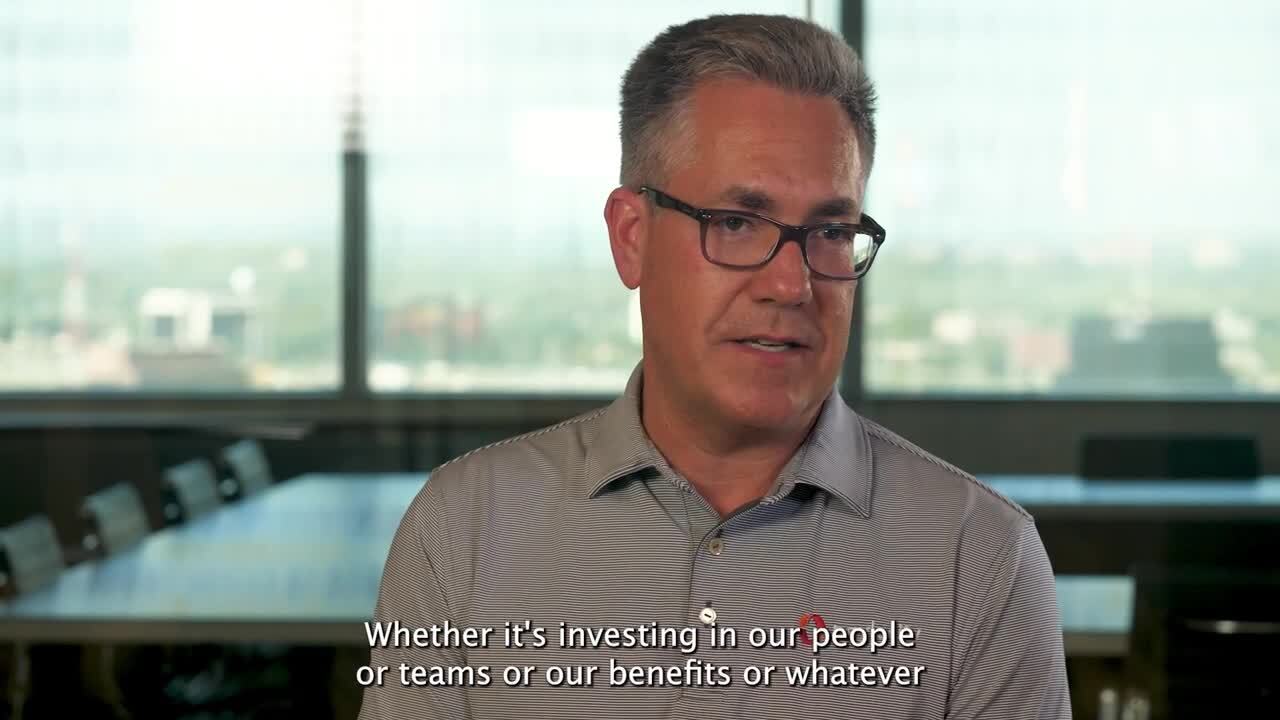
“If we could actually make someone’s day easier, that’s a huge victory.”
Toby Williams · HR Mixtape · October 2026
The law degree comes back into view
In April 2026, Williams joined the board of DISCO, the litigation technology company. The appointment brought his software leadership experience into a field adjacent to his first profession. DISCO’s chairman, Scott Hill, pointed to his experience across executive functions and public-company leadership. Williams expressed interest in working with the directors and senior team as the business developed.
The connection is a reminder of how much continuity can hide inside a varied career. Law, banking, payroll and education software look like different entries on a résumé. All have given Williams experience with organizations that depend on complicated information and reliable systems. His present role asks him to draw those experiences together.
There is also life beyond the application window. His own short biography makes room for the outdoors and a cheerful “Go Bucks!” after mentioning Ohio State. Neither detail requires an elaborate theory of leadership. Sometimes a person who has collected three degrees and several executive titles simply wants to be outside.
For now, Williams’s professional task is to make a growing collection of products useful together, while maintaining the service relationships underneath them. The measure at the other end is human in scale: a recruiter gets a response out sooner, a payroll team finishes a task, an employee moves on with the day. There is something appealing about a software ambition whose successful conclusion allows the customer to close the tab.
Keep the conversation going
Interviews, career milestones and more from Williams and Paylocity.
- Toby Williams on LinkedIn
- Official biography
- The October 2026 HR Mixtape conversation
- Read the interview transcript
- Medina’s distinguished alumni
- The 2017 CFO appointment
- The 2022 shared leadership appointment
- Airbase acquisition announcement
- Fiscal 2026 results
- Ignite AI launch
- DISCO board appointment
- Paylocity videos on YouTube
- Paylocity newsroom