The asparagus was headed for Miami. Somewhere along the way, its temperature began to swing. The refrigerated trailer was set to cycle rather than run continuously. In Alpine Fresh’s published account, Tive’s monitoring team caught the problem and helped save a shipment worth $90,000. A decidedly unglamorous setting had put a decidedly expensive vegetable in jeopardy.
A delivery map can show a truck making respectable progress while the goods inside deteriorate. Tive sells small trackers that travel with shipments, cloud software that interprets their readings, and an optional team that watches around the clock. Its commercial proposition is that a warning received during the journey leaves room to do something.
- Watch the goods: location and condition, across changing carriers.
- Choose the instrument: live Solo trackers or a passive temperature Tag.
- Arrange the response: alerts need someone empowered to act.
01A dinner interrupted, then a better question
In 2015, Krenar Komoni kept watching his father-in-law leave family dinners to telephone truck drivers. The trucks belonged to him, yet their whereabouts required detective work. Komoni, an electrical engineer with wireless-chip experience, built a GPS prototype and a phone-accessible application.
Then a driver named Tony showed him a passive temperature logger on a seafood pallet. Its readings were retrieved at the end of the shipment. The device could explain a disaster after arrival; it could hardly summon help halfway there. Komoni shifted his attention from the vehicle to the freight. The pallet needed a cellular connection.
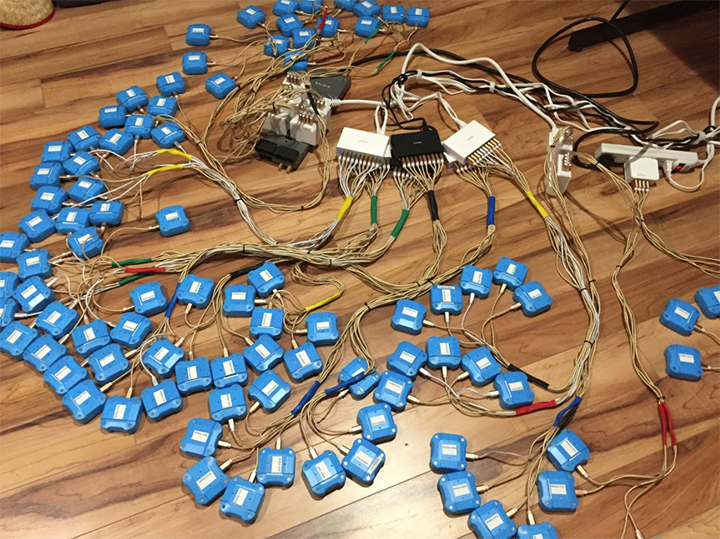
That choice still defines the business. Cargo changes hands between warehouses, carriers, ports, and customers. A tracker accompanying the shipment can gather its own evidence through those handoffs, rather than depending entirely on reports from each participant.

02The bank balance had an opinion
Technical ingenuity did not settle the commercial question. In a Qualcomm Ventures interview, Komoni recalled reaching an early cash squeeze with $20,000 left in the bank. Calling prospects forced a more practical education in what they wanted and would buy.
“And I knew that was too late.”
Krenar Komoni, recalling the passive logger
He described the difference between a $200 tracker and one priced at $50 or $40: enthusiasm could become a purchase. Those were his retrospective examples, not today’s price list. The lesson is portable. Ask about the budget while asking about the problem. A buyer who admires your invention has not necessarily agreed to finance it.
Tive’s June 2017 seed announcement said it had already attracted paying pilot customers on a limited budget. Outside money followed evidence of demand: $3 million in that round, then a $12 million Series A in 2020, $54 million Series B in 2022, and $40 million Series C in 2025.
03Different cargo, different instruments
The Solo family makes the hardware choice explicit. Solo Lite monitors location, temperature, and light, using cellular and WiFi positioning. Solo 5G adds GPS, humidity, and shock sensing. Solo Pro, introduced in 2025, targets pharmaceutical workflows with an ePaper display and optional probes for dry-ice or cryogenic shipments.
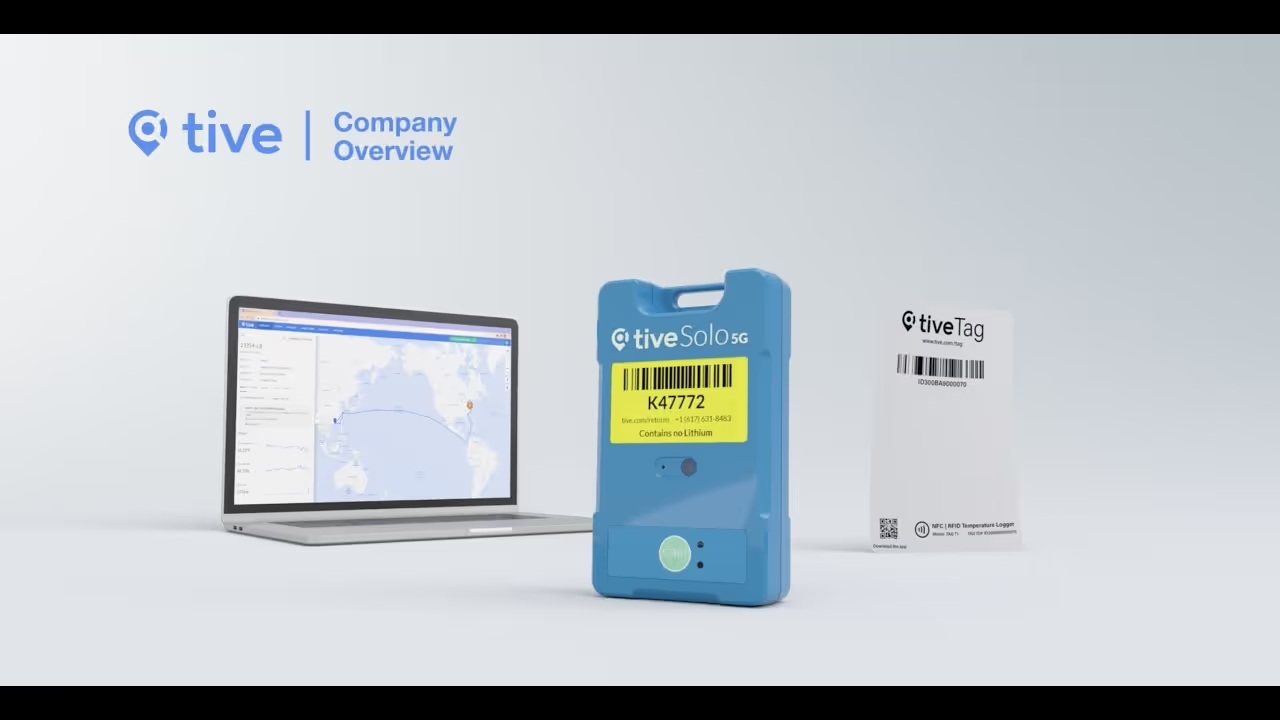
Tive Tag is the cheaper, quieter relative. Starting at $5, it records temperature for retrieval with an NFC-enabled phone. It supplies an audit trail, without live location or an in-transit alarm. For an economical, predictable lane, that may be precisely enough.
Temperature evidence
Retrieved by phone
Location + condition
Alerts during transit
The business combines tracker costs with a recurring software subscription and optional monitoring services. Solo pricing is quoted by volume and contract. The cloud platform brings shipment records, alerts, shared views, and analysis together; API integrations let suitable customers carry the data into existing systems.
04Nine trailers make a better argument
Crane Solutions tested the proposition rather than accepting the brochure. Its 2019 summer pilot installed reusable units in nine dedicated trailers, varied reporting intervals, and tested single-use trackers too. Data went into its existing transportation management system, where dispatchers already worked.
The attraction included battery endurance and several kinds of evidence in one device. Crane had relied on physical indicators to discover possible impact damage after delivery. Live shock readings offered earlier warning, giving staff a chance to notify a customer and prepare a replacement. They indicated a possible problem; a sensor reading was not a verdict on the equipment inside.
Alpine Fresh had another constraint: a major customer prohibited lithium-powered loggers in its facilities. Tive’s non-lithium option met that requirement. Here, differentiation was a battery choice that got the device through the door. Sensor-focused alternatives include Sensitech and Decklar, formerly Roambee. Tive also works with broader visibility providers, including FourKites and project44. Integration can make an apparent rival a useful neighbour.
05A wrong turn gets a second witness
Tive’s newer route intelligence adds context to coordinates. Smart Route Deviation Alerts use historical journeys to identify likely road routes. Two consecutive off-route location points trigger detection. The feature belongs to the Premium tier and does not apply to air, ocean, or rail legs.
In March 2026, according to Tive’s Venture Metals+ account, light and route-deviation alerts drew attention to a $250,000 recycled-copper shipment. Transportation director Fernando Boom checked the direction of travel and worked with police to recover the load. The software flagged the anomaly; people carried out the recovery.
- 01 / SenseCargo changes
- 02 / AlertSomeone learns
- 03 / RespondSomeone acts
Monitoring earns its keep at the third step.
A January 2026 investment added $20 million, led by Lightsmith Group. In September, Tive reported more than 1,400 customers and over $100 million in annual run rate. The latter annualizes a revenue pace; it is not a disclosed full-year revenue total.
06Buy the response time
For a buyer, Crane’s pilot is worth borrowing: test representative lanes, integrate the readings, and decide which alert changes a decision. Account for charging, device placement, and whoever answers overnight.
There are physical limits. Metal shielding and weak connectivity can delay uploads, even while a tracker keeps recording. Faster reporting consumes more battery. A low-value, low-risk shipment may justify only a passive log. And nobody can fix a refrigeration setting if nobody owns the response. The useful purchase is the interval between learning about trouble and losing the chance to help.
Follow the shipment
Explore the products, the customer accounts, and the conversations behind the company.