At eight, Tina Roth Eisenberg put up a handwritten poster in her Swiss village inviting people to join her fan club. The neighbors had a reasonable question: fans of what? She had enthusiasm. The subject could be arranged later. It was an early experiment in getting people together, conducted before she had a company, a business model, or much use for either.
Decades later, the invitation has acquired breakfast. Eisenberg founded CreativeMornings in New York in 2008, offering a free talk and something to eat to people who wanted creative company. The format traveled. By June 2026, the network spanned 252 cities in 70 countries. The girl asking her neighbors to be excited together had found quite a few neighbors.
That distance, from village poster to international gathering, makes her career sound planned. Its smaller details suggest something more interesting. A visual archive became a blog. A complaint about software became an app. A child's party favor became a business. Again and again, Eisenberg has treated an irritation as an invitation to make something. Sometimes other people wanted it too.
A ticket with an unusually flexible return date
She grew up in Speicher, in eastern Switzerland, with entrepreneurial parents. Her aunt Hugi, a fashion designer, offered a different picture of adult life: creative work could be a daily occupation. Watching a graphic designer draw lettering helped make the possibility concrete. Somebody was being paid to do the very thing that interested her.
She studied communication design in Geneva and Munich, finishing in 1999. Then came New York, supposedly for a three-month internship. She had a job and an apartment waiting in Zurich. Those were the arrangements of someone returning home. New York made a competing offer.
Matthew Waldman, who ran the small studio where she interviewed, quickly offered her an internship. Employment and a visa followed. The temporary stay acquired a longer future. Eisenberg remained in the city, eventually becoming design director at PlumbDesign, the company that became Thinkmap. Her work included branding and interface design for the Visual Thesaurus, a pleasing assignment for someone whose childhood fascination had been letters.
The move also changed her sense of what a career could contain. New York offered room to try another version of herself. For a designer, that was an appealing brief: take the existing materials and see what else they could become.
The filing cabinet other people wanted to read
In 2005, she started swissmiss as a personal visual archive. She wanted somewhere to keep things she liked looking at. A blog provided shelves without requiring a larger apartment. The name became her public shorthand; she is still widely known by it.
The archive attracted readers. In 2006, Jim Coudal invited her into The Deck advertising network, giving the blog an income stream and making the time she spent on it easier to justify. There is a practical detail inside this apparently accidental career: revenue from one experiment can buy room for the next.
She opened her own design studio in 2006. Four years later, she stepped away from client work for what she intended to be a year, concentrating on her own projects. The blog's income helped make that possible. The sabbatical kept being extended. A successful service business had given her the chance to discover she preferred making things of her own.
She has continued sharing finds long after the blog's original filing problem was solved. The activity itself matters to her: finding an object, an illustration or an idea, then passing it along. Curation, in her hands, has the social quality of pulling up a chair and saying, look at this.
Lunch was doing some of the work
Working alone did not suit her. Her answer was shared space: Studiomates, followed by FRIENDS Work Here in Brooklyn. A desk was useful; the people at the next desks were the point. Designers, developers and writers could compare unfinished thoughts before those thoughts had become anything worth announcing.
In her account of building TeuxDeux, a conversation about unsatisfactory task software reached someone who could help. She would design it; her collaborator would build it. A working prototype followed within days. The app kept the plainness of a paper list while putting it on a screen.
There is something wonderfully unceremonious about that origin. A complaint made over lunch could have remained lunch conversation. Instead, a person with a complementary skill was close enough to answer it. The workspace had made collaboration ordinary.
FRIENDS continues that preference for physical proximity. Eisenberg has described the pleasure of eating with people solving different problems from her own. It gives conversation somewhere to go. An office in which everyone discusses the same project all morning and then again over a sandwich can make even a good sandwich feel like a meeting.

The price of admission: show up
CreativeMornings grew from a related frustration. As a young designer in New York, Eisenberg had struggled to find her creative people and could not readily afford the conference circuit. She wanted an accessible gathering that kept happening. Breakfast and a short talk offered a manageable beginning.
Fifty people attended the first event in October 2008. Morning was part of the experiment, despite the doubtful reception the hour received. A gathering before work could become a recurring appointment in ordinary life. You could attend, hear something, meet someone, and still have a day ahead of you.
The local hosts who took the idea elsewhere needed clear rules and room to move. In a conversation with Yancey Strickler, Eisenberg described the essentials: a monthly Friday morning event, a short talk, free breakfast, free entry. Beyond those commitments, organizers were encouraged to experiment. Her recurring message was simple: “I trust you.”
Kevin Huynh, an early hire, helped turn the growing network into something that could operate across chapters. That required systems as well as affection. A volunteer needs enough structure to know what the work involves, and enough ownership to make the effort feel worthwhile. Eisenberg came to recognize that local organizers could keep the gatherings going beyond her own direct involvement.
A global network, built around a local invitation. Network figures: June 2026.
Keeping the ticket free also meant finding support elsewhere. Sponsors and patrons became part of the machinery. Mailchimp's Ben Chestnut offered support early on. Later, a $1 million pledge from Ruth Ann Harnisch helped fund the development of CreativeMornings Clubs, smaller gatherings around shared interests. Someone still has to organize the generosity.
“Our business model is radical generosity.”Tina Roth Eisenberg
A small tattoo, a serious arrangement
In 2011, Eisenberg's daughter brought home temporary tattoos from a birthday party. Eisenberg disliked their design. She knew illustrators. She could build a website. The list of reasons to keep complaining was getting shorter.
Tattly put artists' work onto temporary tattoos and paid royalties for the designs. By 2018, Eisenberg reported that the business had passed $1 million in artist royalties the previous year. The products could be playful while the arrangement behind them took creative labor seriously.
The brand's life continued beyond its founder's ownership. BIC acquired Tattly in 2022. In 2024, it introduced a Peanuts collection, bringing Charlie Brown and Snoopy into the catalog. In December 2025, BIC announced it would wind down Tattly and its other Skin Creative operations by the first quarter of 2026.
The ending belongs in the story alongside the beginning. A project can pay artists, reach customers and find a buyer, then encounter decisions its founder no longer controls. Tattly remains part of Eisenberg's record of making an idea tangible, even though the company has ceased operating.
Please open the confetti drawer
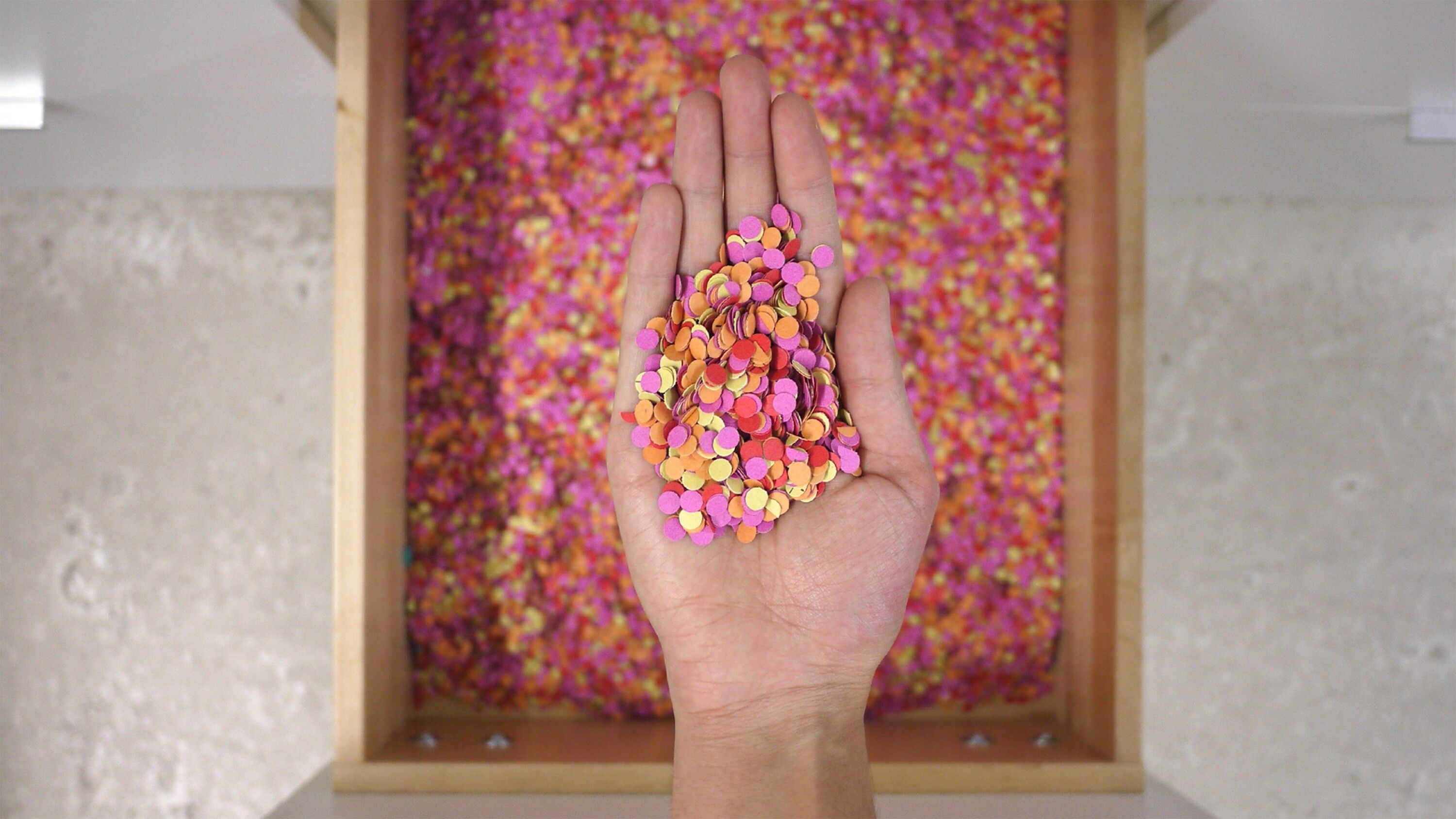
Eisenberg keeps confetti in her office. It is an unusually literal commitment to having something cheerful close at hand. The detail recurs in descriptions of her work because it makes her priorities visible: celebration need not wait until the annual party.
Her approach extends to the less photogenic parts of running an organization. She asks colleagues to put extra warmth into their emails. People should enjoy hearing from the team. It is a modest standard with considerable consequences for whoever is on the receiving end.
Enthusiasm also has its limits as a personal operating system. Eisenberg has openly described an overflowing task list and the difficulty of keeping up with her inbox. The person behind a to-do app can still have too much to do. “I do not want to portray that I have it completely together,” she has said. It is a useful admission from someone whose work is so often presented as a collection of happy outcomes.
Her public profile supplies other human details. She admires Maggie Doyne, names landscape architecture as a backup career, and offers to teach people a notoriously awkward Swiss German word. The common element is an appetite for people, places and the occasional difficult pronunciation.
A deadline with company
In May 2026, CreativeMornings joined Creative Quests and Adobe for Release Day. Created by Sam Furness, the project gave people a shared deadline, May 29, to put personal work into the world. The invitation allowed for small projects and imperfect ones. It offered company for an activity that can otherwise feel conspicuously solitary.
At the New York gathering at Newlab, the format made room for community members to present their projects in short slots. The people who ordinarily came to listen could step forward with something of their own. The stage had become another way to pass the invitation around.
By September, Eisenberg was discussing creativity and optimism on Creative Pep Talk. She was still concerned with what gets people making, and what helps them share. That question connects her current work to the blog, the desks, and the early breakfast gatherings.
The eight-year-old with the fan-club poster had left the subject open. The adult has spent years supplying occasions: a useful app, an artist's drawing, a talk before work, a project finally ready for another pair of eyes. There is usually something to be excited about. It helps if somebody thinks to invite you.
Follow the threads
- swissmiss: the blog
- CreativeMornings
- FRIENDS Work Here
- TeuxDeux
- Twitter / X
- Bluesky
- Watch: Don’t Complain, Create
- Watch: Leading with Joy
- Listen: Creative Pep Talk, September 2026
- Read: A Love Letter to the People Who Believe in People
- Interview: The Great Discontent
- Interview: Design Better, June 2026
- BIC: the Tattly acquisition
- BIC: discontinuing Tattly