In March 2020, a friend wanted a drink with other people. The difficulty, as TapRoom’s origin story tells it, was that an ordinary video call did not quite deliver the evening they had in mind. They wanted to drink together and meet someone new. A phone could already carry a familiar face across a room, a city or an ocean. What was missing was the possibility of a stranger at the next table.
- A free video-chat app organized around places and communities.
- Created by Rob “Rez” Resnick, one half of Timeflies.
- A 2020 experiment in making online company feel more like going out.
Resnick’s company, TapRoom, took that distinction seriously. Its invitation was compact: “Go out, from home!” The promise concerned the setting as much as the screen. You could meet at a recognizable place, with the possibility of finding people who shared an interest in being there. The bar supplied something a bare call link struggled to convey: a reason for the gathering.
A musician without a room
Resnick was already accustomed to bringing people together. As half of the electropop duo Timeflies, he came from a business in which an audience gathers somewhere and an evening becomes an event. TapRoom’s About page identifies him as its CEO and founder. Its founding anecdote gives the original wish a date, March 2020, and attributes it to a friend.
That background makes the product interesting, though it does not prove why any particular feature was chosen. A musician knows the difference between hearing a recording alone and hearing it in company. TapRoom approached video with a related question: what changes when the conversation has a venue?

The website’s language was rooted in the emergency of its arrival. Communities needed to move online because of COVID. TapRoom offered a digital home for those real-world groups, whether they wanted to hang out, network or learn something. The intended customer was recognizable: someone with people to miss, somewhere they liked going, or an appetite for meeting somebody new.
The invitation carries the product
Consider the difference between two invitations. One asks you to join a call. The other asks you to meet at your favorite coffee shop. In TapRoom’s proposition, the second invitation could still end in a video conversation. But it arrived carrying associations: the place, its habits, perhaps the people you expected to encounter there. This is an interpretation of the design, and its appeal is easy to understand.
The official product images make the distinction visible. One shows a map; another shows people arranged in a small video gathering. The geography is part of the interface. Instead of describing the product only in terms of audio and video transmission, the company describes communities and places. Its homepage instruction, “Put your community on the map,” gives the map a social job.
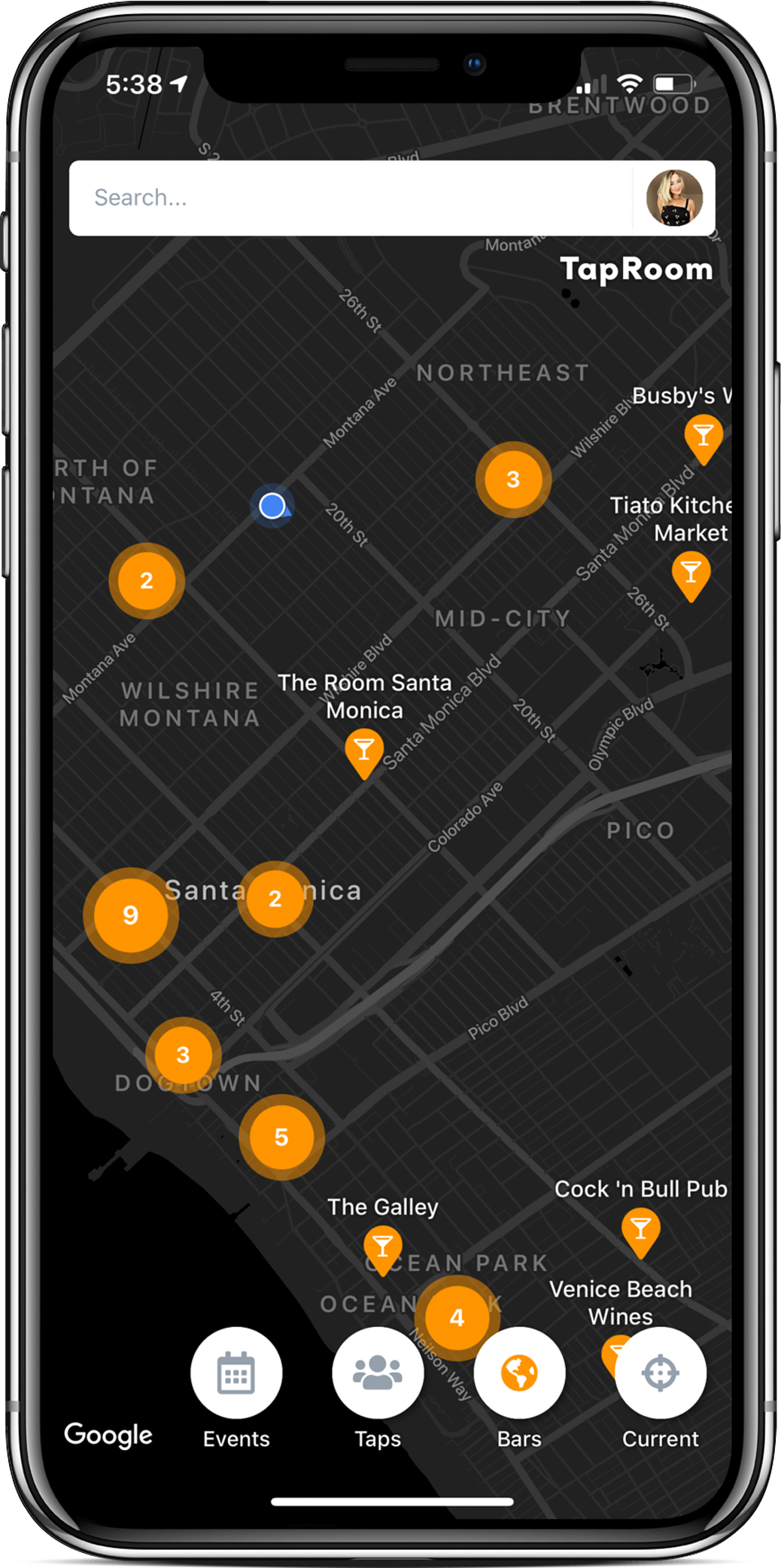
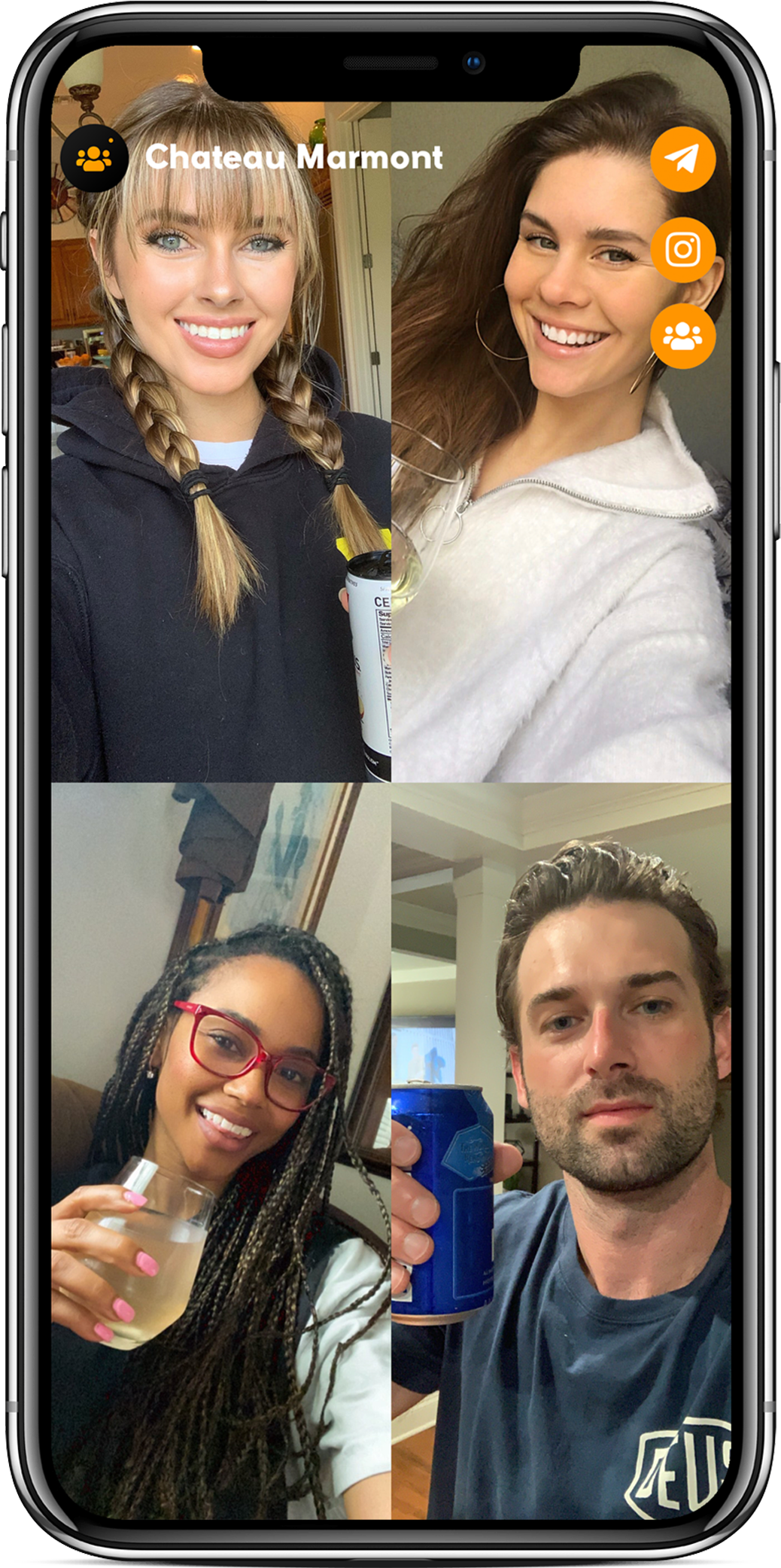
FaceTime appears in the origin story; the app description invokes the corporate video call. Those are useful clues to its position in the market. TapRoom presented itself as consumer entertainment and social connection. The gathering itself was the product. A familiar place could help someone understand what sort of gathering they were being invited into.
The little things that keep people talking
Its 2020 release history documents a series of practical additions: private tables, whispered messages, icebreakers, scheduled events and a photobooth. Profiles could include a favorite drink. These details concern the manners of a conversation. Sometimes people want a prompt. Sometimes they want a smaller group. Sometimes they want a picture of the occasion.
The same history records active-place shortcuts and notifications when somebody joined a favorite spot. Named communities, called Taps, followed in July. Read together, these changes suggest attention to finding company and returning to it. That is a reading of the sequence, rather than an account of what the founders privately decided. The useful lesson is specific: give people a recognizable gathering, then make the next arrival easy to notice.
“Go out, from home!”TapRoom’s product invitation
There is a condition attached to that lesson. A place becomes socially useful when people have a reason to share it. A map full of possibilities cannot by itself supply a friend, a host or a conversation. Anyone borrowing this approach would need to think about who arrives together and what brings them back. The interface can make those acts easier; the participants still perform them.
Free entry still needs a host
TapRoom’s privacy policy identifies Clove Group LLC as the provider and describes the app as free. That offer lowered the price of trying it. The same policy explains that the service may request personal information, including name, age, birthday and gender, and describes diagnostic log data. Even a casual gathering has an administrative side when software provides the room.
The support instructions supply another part of that room: users can report or block someone through their video icon. They can also share the app with friends, with an invitation directing newcomers toward the App Store. Those functions serve different needs, but both matter to a social space. People need a way to bring someone in and a way to put distance between themselves and someone else.

TapRoom’s public-facing humor fits the setting. Its support page invites feature suggestions by email or at a bar. That tells us something about the voice it chose for customers: approachable, informal, willing to imagine that the developers and users might occupy the same evening.
The enduring question in this small company’s proposition is an ordinary one. Where shall we meet? TapRoom supplied an answer with a map, a table and a camera. For a product designer, the copyable move is to begin with the invitation people wish they could make. The software then has a concrete social task: help that invitation turn into time spent together.