A grocery order is an awkward thing to turn into a technology business. It contains items that bruise, melt, leak and arrive with opinions attached. The bananas should be the right colour. The eggs should remain eggs. Tim Steiner has spent more than a quarter of a century organising a company around this apparently modest problem: getting somebody’s shopping to their door.
He came to it from bond trading. In 2000, Steiner left Goldman Sachs and founded Ocado with Jason Gissing and Jonathan Faiman. The subsequent career has involved delivery vans, a stock-market flotation, supermarket partnerships and warehouses full of robots. Along the way, the machinery built to deliver Ocado’s own groceries became something other grocers could buy.
Now there is a timetable for another change. In July 2026, Ocado set out a succession process expected to conclude around the start of its 2028 financial year. Steiner would keep leading the business while a successor was prepared, then move into a Founder role, remaining involved through 2029. After years spent persuading people to trust a different way of shopping, he faces a familiar founder’s problem: how much of the company can travel without him?
Eight years of bonds, then the weekly shop
Steiner grew up in North London and attended Haberdashers’ Boys’ School. He graduated from Manchester University in 1992 with an honours degree in Economics, Finance and Accountancy. Goldman Sachs followed, with eight years in fixed income across London, Hong Kong and New York. His working education was international before his grocery business had delivered a single bag.
The founding team had connections that preceded the business plan. Gissing was a Goldman colleague; Faiman also worked there and knew Steiner from their North London childhoods. These were three people leaving a world in which they had experience for an industry that offered them no automatic authority. A bond-trading desk provides useful training in prices. It does rather less to explain a missing yoghurt.
Yet one habit transferred. Steiner has described the discipline he took from banking as continually reconsidering decisions when new information arrives. That sounds unremarkable until a decision has a warehouse attached to it. A trader can alter a position quickly. A company building physical infrastructure has to keep paying for yesterday’s convictions while deciding what to do tomorrow.
“Naivety is possibly really important in starting a business.”
Tim Steiner, 2022 interview
The admission is useful because the founding story can otherwise look too tidy in retrospect. Grocery was a vast, established business with habitual customers and familiar competitors. Moving it online meant taking responsibility for work the shopper had previously performed: choosing items, assembling the basket and carrying it home. Convenience had to be built, item by item, before it could be sold.
The first orders leave Hatfield
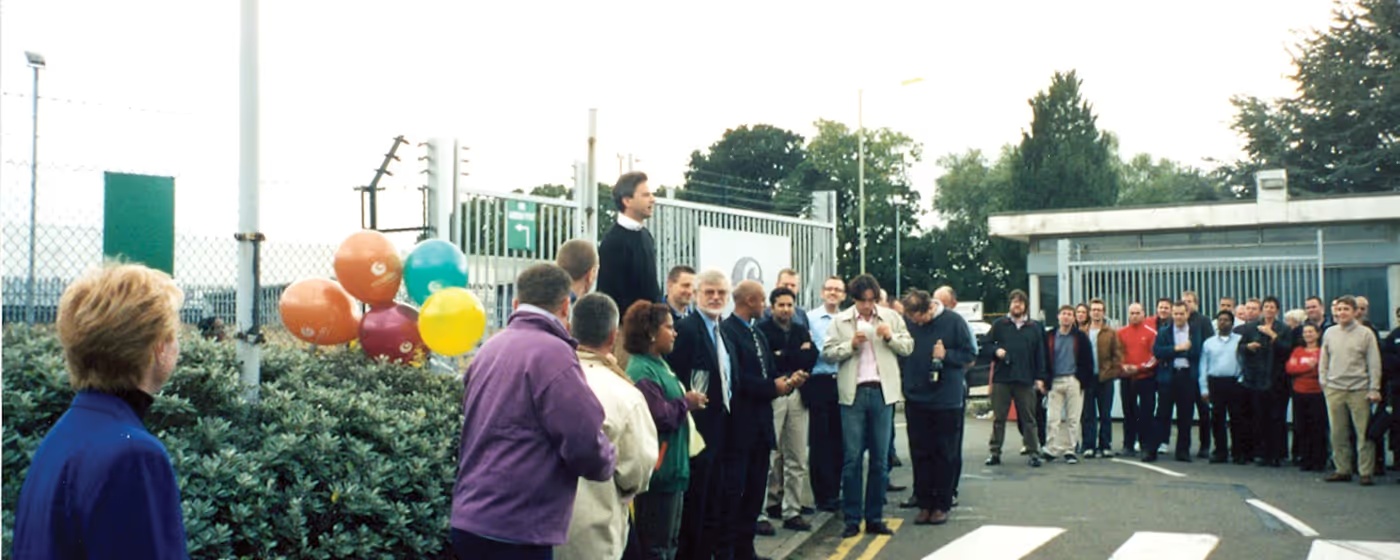
Pilot deliveries began in 2001. In 2002, Ocado opened its first customer fulfilment centre in Hatfield and began trading with Waitrose products. The warehouse mattered to Steiner’s argument. Instead of treating online orders as an extra task inside an existing supermarket, Ocado built a business around fulfilling those orders.
The distinction sounds small from the kitchen table. A customer sees bags arriving and judges their contents. Behind that ordinary transaction sits a choice about where goods are stored, how they are selected and how delivery routes are organised. Steiner’s career became a prolonged effort to make the organisation behind the bags valuable in its own right.
There was no overnight jump from a fledgling delivery operation to a global technology supplier. Ocado listed on the London Stock Exchange in 2010. By then, Steiner had already spent a decade on the project. The flotation gave the company a public market and gave the public a running argument about what, exactly, they were being invited to own.
That question would follow him. A retailer is judged on selling groceries well. A technology supplier is also judged on whether somebody else can use its systems successfully. Steiner was asking Ocado to do both, and asking investors to recognise a business whose second identity emerged from the work of building its first.
When another supermarket bought the machinery
The Morrisons agreement in 2013 made that second identity tangible. Morrisons paid £170 million to acquire the Midlands distribution centre and entered a 25-year arrangement to use Ocado’s technology. A supermarket with its own name, customers and commercial ambitions had agreed that Ocado’s infrastructure could help it trade online.
For Steiner, the significance extended beyond another delivery contract. A system developed within one retailer could become a product for another. That changes the founder’s job. He has to explain the machinery to people who already understand grocery shopping very well, and who will want the arithmetic to work under their own brand.
The international deals widened that test. Kroger’s May 2018 agreement began with a commitment to capacity equivalent to 20 fulfilment centres across the United States. For a British founder who had started with a local delivery proposition, it was a substantial expansion of the audience for his idea.
The Ocado Smart Platform brings together online shopping software, automated fulfilment and delivery capabilities. The robots make convenient photographs, but the proposition extends beyond their movement across a grid. Orders have to flow through a connected operation. Buying one ingenious component would leave a grocer with the rest of the problem still on its desk.
A schematic of the business’s evolution, not a measure of revenue or scale.
A founder with little appetite for a settled answer
Steiner’s public manner is more revealing when he talks about management than when the conversation turns to robots. He has spoken about setting ambitious targets and about expecting people to explain their work clearly. The latter is a practical requirement for a founder who must make decisions across disciplines he did not study at university.
Clarity has a particular value in this setting. Software, warehouse equipment, grocery retailing and finance each come with their own vocabulary. A chief executive who accepts an impressive phrase in place of an explanation can finish a meeting with agreement and very little understanding. Steiner’s stated preference is to keep pressing until the work makes sense.
There is a tension in that approach. Founding a business requires enough conviction to continue through doubt. Running it requires enough flexibility to recognise when doubt is justified. Steiner’s emphasis on reassessing decisions offers his answer to the tension. The idea can remain ambitious while the individual decisions around it stay open to revision.
Public recognition arrived along the way. He received an OBE for services to the economy in 2016 and won the Grocer Cup in 2020. Such markers provide dates for a biography. The more interesting measure of his working life is how often he has had to explain the same enterprise to people viewing it from entirely different angles.
The partner has a vote, too
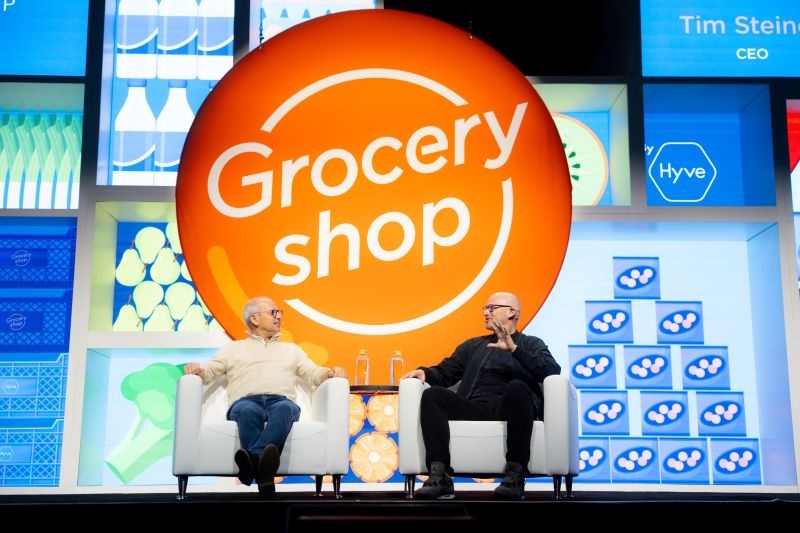
Partnerships also mean that a founder’s preferred timetable is never the only one. In 2019, Marks & Spencer agreed to pay £750 million for half of Ocado’s UK retail business, including a contingent element. M&S products replaced Waitrose lines in 2020. Steiner continued as Group chief executive and also chairs Ocado Retail, whose chief executive is Hannah Gibson.
Those roles are worth keeping distinct. The person answering for the technology group is involved in the grocery retailer, but the businesses have different management responsibilities. Ocado’s evolution has produced a more complicated organisation than the familiar vans suggest. The name on a bag does not supply a complete organisation chart.
By July 2026, the technology strategy was being tested by retrenchment as well as expansion. Kroger and Sobeys site closures affected recurring fees. Ocado’s half-year announcement reported 27% international fulfilment-centre volume growth excluding closed sites. The exclusion matters: growing activity in the continuing network sits alongside a smaller footprint elsewhere.
This is the difficult middle of a technology story. Building something that functions and persuading a customer to sign are substantial achievements. The customer then has to decide how much capacity it wants, where it wants it and what it can earn from using it. Engineering progress and commercial demand meet in the same warehouse; neither can politely ask the other to leave.
The next delivery is a handover
The succession announcement gives Steiner’s story a new time horizon. He remains chief executive during the process, working with the board to prepare the next leadership. His planned Founder role would retain strategic guidance and customer support through 2029. The document describes continuity, while acknowledging that executive responsibility will move.
There is something fitting about a logistics entrepreneur having to organise his own transition. The details matter. Who decides, who advises and when responsibility passes are operational questions, even when the cargo is a founder’s authority. A successful handover needs more than an agreeable title and a date in the diary.
Steiner began by asking people to change an ordinary habit. He has spent the intervening years building increasingly elaborate systems to make that change useful to shoppers and other retailers. The remaining test is just as concrete as the first: whether the enterprise he helped assemble can keep earning its place in somebody else’s weekly shop, with somebody else eventually in charge.