Tim Lawton has spent his adult life inside institutions that dislike a shrug. The Army wants a plan before the terrain cooperates. Investment banks want a model before the market behaves. A startup wants a decision while the evidence is still arriving. SightX, the consumer-research company he co-founded in 2015, can be read as his attempt to make that final condition less absurd: ask people directly, analyze what they say, and get to a defensible answer before the meeting has moved on.
His route to market research was indirect enough to be useful. Lawton graduated from the United States Military Academy at West Point in 2003, served as an active-duty Army infantry officer, and later served with the 75th Ranger Regiment. He then earned an MBA in corporate finance from MIT Sloan, worked at Barclays, and became a director in Prime Services at UBS. By 2015, he had gone from missions to models. The common material was decision-making under pressure.
A career in decision systems
At a 2017 NYU Tandon event for veteran entrepreneurs, Lawton drew the line himself. Military work and startup work, he said, can both put a small team in an uncertain environment where quick decisions carry weight. Then he gave the comparison some air: Industry City in Brooklyn, he admitted, was considerably nicer than Afghanistan's “bleak, lunar landscape.” The joke matters. It keeps the lesson from hardening into founder folklore. Discipline can transfer. The settings do not need to be romanticized.
“Every mission makes you think like an entrepreneur in certain ways. You're working with a small team in an uncertain environment.”Tim Lawton, at NYU Tandon
The startup began with conversation rather than category expertise. Lawton and Naira Musallam became friends, traded ideas, and kept returning to a larger possibility. Musallam brought a background in academia, statistics, and innovation consulting. Lawton brought military leadership, transactions, corporate finance, and sales. Neither had grown up professionally inside the market-research industry. That outsider status gave them permission to stare at the seams.
Traditional primary research could involve one tool for survey programming, another source for respondents, specialist analysis, manual cleanup, and a reporting layer at the end. Each handoff added time, opacity, or both. Yet the prize was valuable: direct evidence about why a customer bought, declined, preferred one package, rejected a price, or trusted a message. Lawton and Musallam saw an opportunity to automate more of the workflow without throwing away the rigor.
The first product was a vouch
They called the company Frontier7. The early growth story was almost stubbornly human. Asked how the company landed its first clients, Lawton credited networking. He and Musallam leaned on personal relationships to get meetings and asked people who knew them to make introductions. “People helping people,” he called it. For a company that would eventually sell machine learning, natural-language processing, and automated analytics, its first distribution system was trust passed from one person to another.
That is a useful founder detail because enterprise software begins with borrowed credibility. An introduction gets a meeting. A relationship lowers the perceived risk of trying something new. Then the product has to earn what the introducer loaned it. SightX's promise was concrete: bring project design, data collection, quantitative and qualitative analysis, visualization, and reporting into one environment so researchers could spend less time rearranging data and more time interpreting it.
Lawton's finance years also gave the proposition a useful severity. In banking, attractive language does not settle a transaction; assumptions eventually meet a number, a counterparty, and a consequence. Consumer research has its own version of that reckoning. A team may love a product concept, but preference data can expose which features buyers will trade away and what price changes their choice. The lesson is not to replace taste with a spreadsheet. It is to make taste show its work. SightX packaged methods such as conjoint analysis, segmentation, concept testing, and pricing studies so teams could test the hunch before attaching a launch budget to it.
In 2021, Frontier7 became SightX. The new name was a tidy bit of statistical theater. X is the unknown variable; “sight” is what the platform promises to give it. A name cannot repair a workflow, of course, but it can reveal what a company thinks it is for. SightX was no longer presenting itself as an adventurous frontier. It was offering visibility.
The machine still needs a why
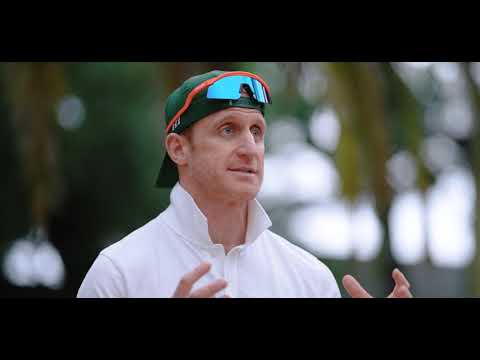
Lawton's case for primary research is less about collecting opinions than uncovering motive. Sales data can say what happened. Direct questions can help explain why. Why did someone buy the product? Why did another person walk away? Which feature matters, which price changes the calculation, and which piece of packaging speaks clearly? His language is practical because the destination is practical: company strategy, a launch plan, a price, a message, a product decision.
Artificial intelligence entered that system as an accelerant. SightX built Ada, a generative AI research assistant designed to help with project setup, knowledge transfer, analysis, executive summaries, and other steps that once demanded more time or specialist support. Lawton has argued that generative AI created an unusual opening for earlier-stage companies because the technology became public-facing and broadly legible. Suddenly, a small company could offer capabilities that buyers understood before the sales call began.
From curiosity to a decision
He is not arguing that a machine removes the need for judgment. His more durable point is economic: technology can make sophisticated work faster and less expensive, widening access to it. Templates can help a non-specialist begin. Automated methods can shorten the distance between fieldwork and an executive summary. A researcher can spend more time on meaning. The aim is not a dashboard that looks clever. It is a decision with evidence behind it.
“If you're guessing, good on you. But having data to back up your decisions is invaluable.”Tim Lawton, on primary research
Speed meets its chaperone
By 2026, however, a central problem for the research industry was not merely slowness. It was whether the respondent behind each data point was real, attentive, and relevant. An elegant analysis cannot redeem fraudulent input. A dashboard can make bad data look wonderfully employable. The more quickly AI can summarize a dataset, the more important it becomes to ask whether the dataset deserved a summary.
Rep Data's April acquisition of SightX joined two halves of that problem. SightX supplied the integrated platform for programming, analysis, and reporting. Rep Data brought sample sourcing and response-quality infrastructure, including Research Defender and ReDem. The combined pitch is a single workflow with quality controls closer to the core, fewer vendor handoffs, and less cleanup after fieldwork.
Lawton's language around the deal is revealing. He said research can change how companies think, influence how products are built, and shape how markets evolve. The integrated offering, he added, should make research both accessible and trustworthy. The pairing closes a loop in SightX's original idea. Automation can remove friction. Quality control earns the right to move fast.
Three operating ideas worth borrowing
- Inspect the seams. A mature industry may accept handoffs that a customer experiences only as delay.
- Borrow trust carefully. Early introductions open doors; a reliable product repays the person who vouched for it.
- Protect the input. Faster analysis creates value only when the underlying evidence can survive scrutiny.
After the exit, another workflow
An acquisition can flatten a founder story into a number, but no purchase price was disclosed here, and the more interesting measure is operational. SightX spent roughly a decade turning a fragmented research process into a product. Its new owner is trying to extend that product upstream, toward the identity and behavior of respondents, and downstream, toward a decision a client can defend.
Lawton remains publicly present in that work. He appeared with the Rep Data and SightX teams at Quirk's Chicago in April 2026, where he presented a case study about Pabst Brewing's brand tracking and innovation workflow. In June, the combined teams met in New Orleans. The following month, he appeared in a Brand Spotlight interview explaining how SightX grew from an idea into a full-service research platform and why joining Rep Data made sense.
There is a pleasing continuity to the path. The West Point graduate learned to work with a small team when the picture was incomplete. The banker learned how evidence becomes a commitment of capital. The founder built a tool for companies that have to decide before certainty arrives. Now the task is to make the evidence faster without making it flimsier.
SightX's old name suggested unexplored territory. Its current name promised a view of the unknown. The next chapter is less romantic and perhaps more valuable: make sure the thing coming into view is real. Lawton has spent a career moving between systems built to reduce uncertainty. He has not eliminated it. He has simply become very particular about what deserves to count as an answer.