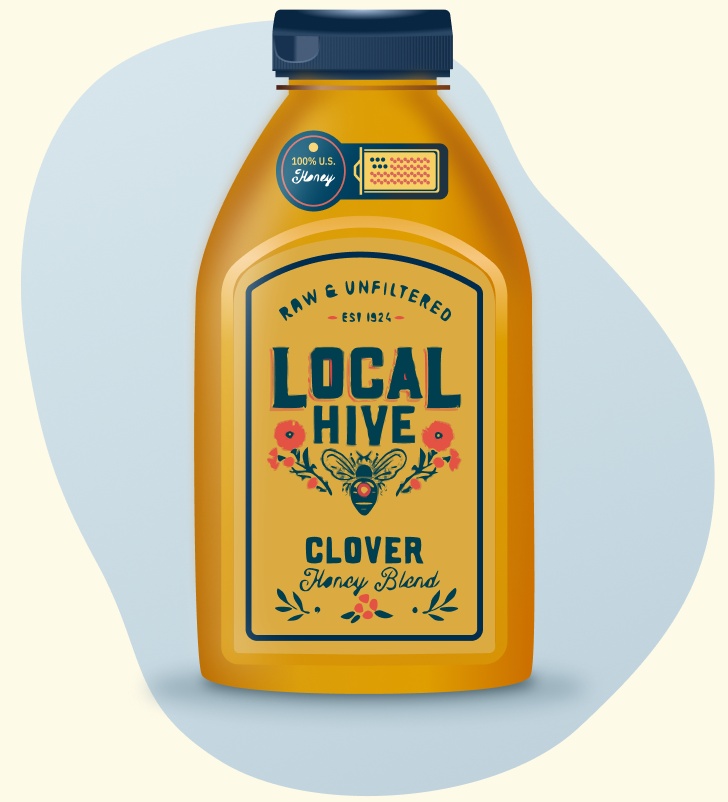
A bottle of honey has two biographies. One is printed on the label: raw, unfiltered, clover. The other lives in a retailer’s sales records: price, units, promotion, sales velocity. For a brand trying to earn another few inches of shelf, the interesting story begins where those biographies meet. That is the territory occupied by SPINS, the Chicago company that makes grocery data considerably more revealing than a list of things people bought.
- Combines retail sales with detailed product attributes, including ingredients and certifications.
- Helps brands pitch retailers, assess promotions, and spot opportunities for new products.
- Pairs software with analysts, then extends into product content and shopping tools.
The category was too blunt an instrument
Founded in 1995, SPINS built its business around natural, organic, and specialty products. Its central insight is easy to grasp: a category can conceal the very change a merchant needs to notice. Two products occupy the same aisle while answering quite different shopper priorities. An ingredient, a dietary requirement, or a certification may be the useful unit of comparison.
SPINS attaches that detail to point-of-sale records. Its Product Intelligence covers claims, certifications, nutrition, ingredients, and positioning. A brand can examine competitors through attributes that cut across conventional category boundaries. The resulting question becomes more precise: which kind of product is gaining ground, in which channel, against which alternatives?
This is also a maintenance business. SPINS says its product data is flagged for refresh every nine months. A beautifully designed dashboard built on an outdated formulation would make a confident mistake. Keeping the dictionary current is part of the product.
Conceptual workflow, not a claim of causal proof.
Honey needs a business case
Local Hive Honey offers a useful glimpse of what customers actually do with the information. In a SPINS testimonial, Cale Nelson describes commissioning an elasticity study to support a case about sales velocity and retailer dollar contribution. The honey’s origin story still matters. The buyer also wants to understand what happens to the economics of the shelf.
Carbone Fine Food describes working with a SPINS Client Insights Manager on a retailer presentation explaining why stores should carry its products. These are commercially specific assignments: assess a price decision, construct a selling argument, prepare for a buyer meeting. The deliverable may be a presentation rather than another login.
“These are tiny pieces of data that, when put together, create powerful insights.”
Audrey Burger, Primal Kitchen, in a SPINS customer testimonial
The customers range from emerging packaged-goods brands to enterprise manufacturers and retailers. For a small team, outside analysis can supply expertise it cannot staff internally. For a retailer, the same information can inform assortment and reveal demand beyond its own stores. Both sides gain a shared vocabulary for an otherwise rather subjective negotiation.
The spreadsheet is part of the product
SPINS Liftoff packages market intelligence with consulting. Its tools serve different appetites for detail: Brand Insights supplies dashboards; PowerTabs works in Excel; SATORI is the workbench for deeper custom analysis and extracts. That range acknowledges an ordinary workplace truth. The person making the decision and the person investigating the data may need different interfaces.
TriLens Panel adds a shopper perspective, using Circana-powered consumer data within SPINS’s hierarchy and attributes. Teams can examine repeat buyers, switching, and where customers shop. A sales increase can look encouraging until you ask whether new households tried the product, existing households bought more, or shoppers merely moved between outlets.
The business model combines paid data access, software, and services. Free monthly category insights provide an entry point for emerging brands; broader programs are sold through consultation. For a prospective customer, the useful buying decision begins with a task: name the retailer, the category, and the decision that better information could improve. Then choose the coverage and support around it.
A specialist among the measurement giants
NIQ offers a broad alternative in retail measurement. Circana occupies a more interesting position: it supplies conventional-channel data through a SPINS partnership, alongside SPINS’s proprietary natural, regional, and specialty coverage. The competitive map includes cooperation. SPINS’s proposition rests on the combination of channel access, product detail, and industry interpretation.
That combination also suggests a practical discipline. Compare velocity within a relevant competitive set before treating distribution growth as proof of demand. More stores and faster sales per store answer different questions. Attribute analysis can sharpen a hypothesis, but sales records alone cannot establish what motivated every purchase. A useful comparison still needs comparable periods, suitable outlets, and people who will act on the result.
From watching the shelf to shaping the journey
The ownership story helps explain the expansion. In January 2021, SPINS announced growth investment from Warburg Pincus, General Atlantic, and Georgian. The transaction’s terms were undisclosed. The stated uses included product development, sales and marketing, and new verticals. Jay Margolis became CEO in July 2023.
Acquisitions subsequently widened the job. Lucky Labs, acquired in May 2025, brought product-locator technology and beauty and wellness experience. Datasembly followed in June, adding hyperlocal pricing and promotion intelligence. In September, SPINS introduced Journey for digital marketing and Foundry for AI enablement alongside its Intelligence business.
The January 2026 acquisition of MikMak extended commerce intelligence and shopper engagement. In September 2026, SPINS launched Agentic Discovery to show brands how their products appear in AI-generated recommendations and where information gaps need attention. These moves address a changing route to purchase: discovering a product, locating it, and buying it can happen across several surfaces.
Seen together, the announcements show a company moving closer to the transaction. Measuring yesterday’s receipt remains useful. Helping a shopper find tomorrow’s purchase creates another commercial role. SPINS’s stated mission, connecting consumer values with product innovation, now reaches beyond the analyst’s desk.
The lesson a reader can copy is pleasingly unglamorous: improve the description before escalating the argument. Define the product carefully, compare it with the right neighbors, and translate the result into the buyer’s decision. A bottle of honey can carry an excellent story. SPINS helps its maker arrive at the meeting with the arithmetic, too.