Most people do not place philosophy and pharmaceutical forecasting on the same résumé. Thomas Han did, although not all at once. He graduated from Binghamton University in 1990 with a bachelor's degree in philosophy, then entered an industry that rewards a surprisingly philosophical habit: asking what must be true before the next decision makes sense.
For more than three decades, Han kept asking that question in progressively more complicated rooms. He worked across Bristol-Myers Squibb, Novartis, Merck, Biovail, and Bausch Health. He launched and relaunched brands, built commercial and strategic marketing teams in North America and Europe, and managed portfolios with more than $1 billion in annual revenue. He also directed commercial diligence and deal modeling for more than ten acquisitions and licensing transactions worth, in aggregate, over $2.5 billion.
Those numbers are not the interesting part by themselves. They describe scale, but Han's real subject has been sequence. A portfolio is a collection of bets with different clocks. A launch is a relay race disguised as an event. A licensing model is an argument about the future expressed through cells in a spreadsheet. The operator's craft is to know which question belongs now, which belongs later, and which should stop the project entirely.
One episode makes the pattern easier to see. At Bausch Health, Han helped expand the dermatology business from $250 million to $1 billion while leading brand, forecasting, and lifecycle strategy across multiple assets. Growth at that scale is not one decision repeated loudly. It is hundreds of coordinated choices about positioning, timing, resources, and what an asset can reasonably become. Han's later conference biography says his experience stretches from Phase 1 through launch and lifecycle management. In other words, he has watched early assumptions collect consequences.
Commercial diligence sharpened a related muscle. Han built models for more than ten acquisitions and licensing transactions, testing the stories that companies told about future demand against the unforgiving arithmetic of a deal. A model cannot know the future, but it can reveal where optimism is hiding. Change the timing, the uptake, or the cost, and the apparent opportunity changes with it. That habit of exposing assumptions would become especially valuable in a startup, where the sample sizes are smaller, the choices are harder to reverse, and the money has a very specific job.
The useful distance between an idea and a company
Han's move into company formation did not begin with Peroxitech. At VIRAZE Pharmaceuticals, a University of Pennsylvania spinout formed in 2015, he served as a co-founder and head of operations. A Penn account of the company's formation described him simply as a marketing expert recruited alongside an experienced pharmaceutical executive and academic inventors. It was a revealing assignment. The scientists had the discovery. The new company needed people who could turn discovery into an organized series of commitments.
In 2017, Han co-founded Peroxitech and became its CEO. The company originated in University of Pennsylvania research and operated from the Pennovation ecosystem in Philadelphia. Its lead program, PIP-2, was a compact peptide candidate with a complicated path ahead. Han's experience now had to run in reverse. At a large pharmaceutical company, he could see assets approaching the market and build the commercial machinery around them. At a spinout, he had to look far downstream while standing close to the beginning.
The hand-off Han keeps designing
That reversal explains why commercialization experience matters before commercialization is anywhere in sight. The choice of an experiment can shape the eventual product story. The development plan can create or destroy financing options. Manufacturing work can arrive as an unwelcome plot twist if no one invited it into the first act. Han had spent years watching those consequences travel through mature organizations. Peroxitech gave him responsibility for arranging them from page one.
“Developing compelling efficacy data in realistic, worst case scenarios has been a key aspect in Peroxitech's DNA and success.”Thomas Han, 2023
The line is revealing because it treats evidence as company culture. “Worst case scenarios” is not the usual language of a victory lap. It is closer to the language of a skeptical buyer, a careful investor, or an operator who has watched a fragile assumption wander too far through a budget. Han's point was that a company should not train its idea for applause. It should train it for the most demanding honest test it can design.
Small company, wide job description
The public milestones arrived in a disciplined order. Xontogeny seeded and incubated Peroxitech in 2021, supporting confirmatory preclinical work and development planning. In 2022, Peroxitech announced a $25 million Series A led by the Perceptive Xontogeny Venture Fund. The financing was intended to carry the lead program through the next set of enabling studies and toward clinical development. Han had moved from modeling other companies' transactions to making his own company ready for one.
He was not doing it alone. Peroxitech's scientific founders, Aron Fisher and Sheldon Feinstein, brought decades of research from Penn. Xontogeny executives Chris Garabedian and Ben Askew joined the board. External research organizations helped execute studies. Penn's innovation network supplied the institutional bridge out of the university. Biotech likes the portrait of the singular founder because portraits are tidy. The company itself is more like a subway map: specialists, institutions, money, experiments, and judgment all changing trains.
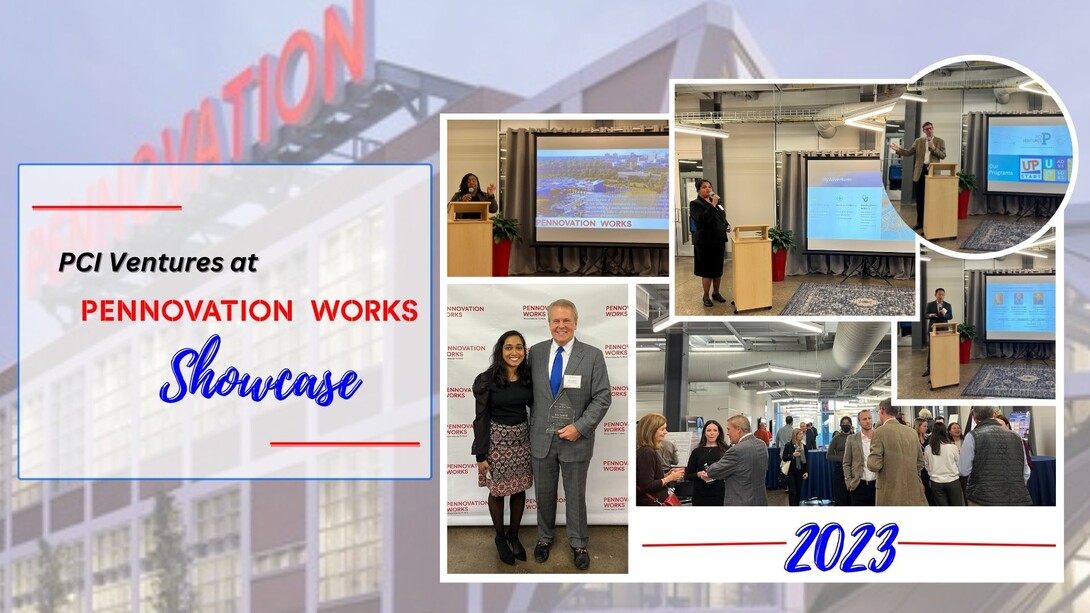
The 2023 showcase at Pennovation Works put that network in one room. Han and another Penn-affiliated founder spoke about their startup journeys while young companies displayed work around them. The setting was apt. Peroxitech was not visiting a ceremonial birthplace; it was operating from the same innovation campus that helped give the company form. Six years after co-founding it, Han could describe the route to people standing near their own starting lines. The journey had already included academic collaborators, incubator support, federal grants, outside development work, and institutional capital. “Founder” covered all of it with one convenient noun.
Han's role widened with the work. In a 2024 peer-reviewed paper, he was credited not merely as an executive but as a co-author who helped conceive and design the research, interpret results, and approve the final manuscript. That same year, an international patent application from Peroxitech named him as the inventor. Marketing expert, operator, CEO, research collaborator, inventor: the titles look like a transformation only if one ignores the connective tissue. Each role asks how an idea can become useful in the world.
The founder as translator
Han's résumé suggests a useful distinction between expertise and translation. Expertise answers questions inside a domain. Translation decides which domain needs to speak next. A scientist may ask whether an effect is repeatable. An investor may ask how much capital is needed before the next inflection point. A commercial leader may ask who will value the eventual product and why. A founder has to preserve the integrity of all three questions without pretending they are identical.
That job rewards fluency, but it also rewards restraint. Peroxitech has maintained a relatively small public footprint. The company's major announcements correspond to actual milestones: seed support, financing, preclinical evidence, publication, intellectual property, and selected public appearances. Han spoke about the company's journey at the 2023 PCI Ventures showcase. In March 2026, he appeared in a featured-company session at Philadelphia's Biotech Alchemy conference. The cadence is closer to a laboratory notebook than a content calendar.
The 2026 appearance also returned Han to a subject he knows from both sides: how a young company becomes legible to the larger life-sciences system. The event placed founders alongside investors, dealmakers, operators, and policy specialists. Han arrived with the unusual advantage of having occupied several of those vantage points across his career. He had evaluated transactions from established companies, built forecasts for large portfolios, operated a previous spinout, and raised capital as a CEO. The rooms changed. The underlying negotiation between evidence and belief did not.
There is an old temptation in business to confuse visibility with velocity. Han's record offers a quieter measurement. Does the new work make the next decision more informed? Does the study remove a meaningful uncertainty? Does the financing buy the evidence the plan says it will buy? These are unglamorous questions until they are the only questions that matter.
A career can look like a collection of titles. Han's looks more useful as a collection of hand-offs.
The philosophy degree belongs here after all. Han's career has been built around propositions: if the evidence holds, if the plan is coherent, if the capital arrives, then a program earns the right to proceed. Nothing in that chain is automatic. The operator's contribution is to make the assumptions visible, the sequence plausible, and the claims proportional to the proof.
Peroxitech remains a work in progress, which is the natural tense of an early biotech company. Han's larger achievement is not a finished story but a durable method for continuing one. He learned the downstream machinery at global pharmaceutical businesses, practiced the academic-to-company transition at VIRAZE, and then brought both experiences to a Penn spinout of his own. The bridge is still carrying traffic. That is what bridges are for.