In 2010, Sean Doughtie was asked to name his best business decision and his worst. He gave the same answer. Taproot Creative, then five years old, had bought a small Tallahassee advertising shop called Signeo. The timing was almost comically unfortunate. The economy buckled, and the sort of work that came with the acquisition promptly disappeared.
But a person came with it: Jonathan Edwards, a designer who became Doughtie’s partner and is now the agency’s president. The revenue vanished; the capability stayed. It is the kind of mistake that looks different depending on where you stop the story.
Taproot had begun in 2005 as one man’s web-design company, armed with the cheeky promise to “save the universe, one pixel at a time.” Doughtie had left a comfortable art-director job while married and raising two young children. He later explained that his “window of bravery” felt as if it were narrowing. Friends told him that a firm like his belonged in Atlanta or Orlando. He chose Tallahassee anyway.

The pivot hidden in the wreckageThe website was never the real product
A recession has a brisk way of separating what clients need from what agencies happen to sell. By 2009, Taproot had recruited public-relations strategist Stacey Getz to help turn its advertising-and-web business into an integrated marketing firm. In less than three years, the company more than doubled its staff, opened a South Florida office and added behavior-change research, brand strategy and public relations.
The lesson was not “offer everything.” That is how small agencies become mediocre menus. Taproot’s more interesting move was to put research ahead of production. The question changed from What should we make? to What do you need someone to do? A logo, campaign or website became a possible answer rather than the premise.
“You tell us what you want people to do, and we tell you how to get them to do it.”The Taproot Agency, describing its strategy practice
That 1,152 is useful because it makes “research-led” concrete. For a 2016 water-conservation campaign, Taproot conducted telephone interviews across Citrus, Hernando and Marion counties. The study measured attitudes, message recall and intended behavior, giving the water district evidence for designing public education. This was not a mood board with a few statistics taped to it. It was a sample large enough to produce a reported overall margin of error of plus or minus 2.9 percent.
The operating systemSix verbs, with the ego removed
Taproot describes its process in six stages. The sequence is less glamorous than a creative revelation and more useful because of it:
The sixth verb is the tell. Many creative processes end at “deliver,” because delivery is billable and measurement can be inconvenient. “Deliberate” makes the client’s result part of the agency’s job. It also exposes weak assumptions. A beautiful thing that nobody understands becomes a finding, not a trophy.
Three briefs, three audiencesThe difference shows up in who gets the front door
Consider a church, a music school and a barbecue chain. Greenhouse Church had multiple campuses and smaller “microchurches,” but its old site did not clearly show that they belonged to one family. Taproot simplified the structure and built a “live mode” that changes the home page during services. The interface behaves differently when the visitor’s intention changes.
Florida State University’s College of Music had the opposite problem: years of accumulated content made the site useful to insiders and awkward for prospective students. Taproot reorganized it around the person who had not yet enrolled, pairing clearer paths with photographs of actual instruction and collaboration.
For Sonny’s BBQ, the audience was not a diner looking for ribs. It was a possible franchisee trying to understand a consequential purchase. Taproot recast the franchising site around the steps from inquiry to grand opening, then folded the restaurant’s community story into the sales argument. In each case, “redesign the website” was accurate in the way that “move the furniture” describes renovating a house.
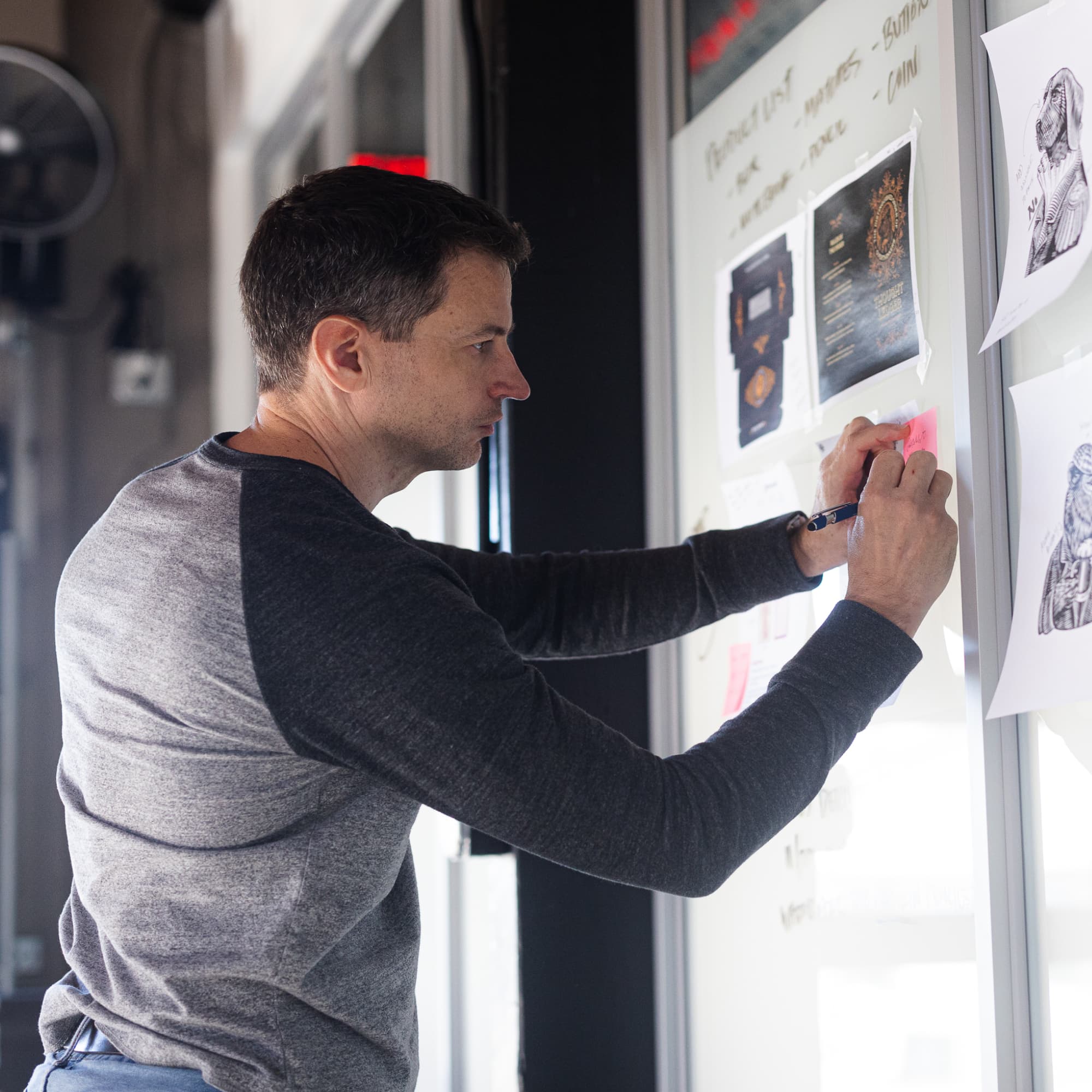
How the firm makes moneySenior attention, sold by the project
Taproot is a privately held services company. It sells research, strategic counsel, communications, identity work, public relations, web design and engineering through projects and ongoing engagements. The team’s public roster is small enough that the people writing the strategy can remain close to the people designing and coding the result. That continuity is the proposition.
Taproot does not publish standard rates, and those old invoices should not be mistaken for current pricing. They do show the basic commercial form: clients buy counsel and production, sometimes as a retainer, sometimes as a defined contract. A public 2024 agreement confirms the agency still competes for institutional professional-services work. Its market sits between a specialist studio and a large network agency - broader than the former, more intimate than the latter.
Its named customers make the niche legible: universities, government agencies, nonprofits, associations, churches, real-estate groups and consumer brands. These are organizations with multiple constituencies, internal politics and websites that have usually been edited by too many people. They do not merely need decoration. They need someone to decide whom a message is for.
The actual differentiatorPermission to say the awkward thing
Taproot lists five values: integrity, tenacity, trust, candor and laughter. Four could hang in almost any lobby. Candor has teeth. The agency frames pushback as an ethical responsibility - the duty to tell a client something it may not want to hear. This matters because the integrated model only works if research is allowed to overturn the brief. If the survey says the assumed audience is wrong, the agency must be free to redesign more than the color palette.
The culture carries this principle without becoming solemn. Team biographies include professional credentials alongside questions about irritating songs, obsolete technology and celebrity narrators. Doughtie’s page mentions advising governors and senators, then moves briskly to his red beard, Harley and leathercraft. The point is not manufactured quirk. It is that a compact advisory business sells the judgment of particular people. Sanding off their particulars would be odd marketing.
What another small firm can steal
- Write the desired audience action before naming the deliverable.
- Give discovery and measurement their own stages, owners and budget.
- Turn “we push back” into a working rule, not a brand adjective.
- After a failed bet, inventory the skills and relationships that survived.
There are limits. The model depends on client access, evidence and trust. It is poorly matched to a buyer who has already decided the answer, wants hands without counsel, or needs the throughput of a huge production network. Research also adds time before visible output. When a deadline permits no discovery, or an organization cannot agree on the behavior it wants, the six verbs become six bottlenecks.
But under the right conditions - a complicated audience, senior stakeholders, permission to question the request - Taproot’s compact range is useful. The researchers can influence the message; the message can influence the information architecture; the engineer can see the reason for the feature. Integration stops being a list of departments and becomes a chain of cause and effect.
The old acquisition story remains the neatest expression of the company. Taproot bought one thing and received another. It expected business and got a collaborator. The first value disappeared; the second compounded. Twenty years after Doughtie began with pixels, the agency’s best work appears to start by noticing that the first answer is often the least interesting one.