The first thing that failed was the second floor. On Las Olas Boulevard in Fort Lauderdale, the restaurant downstairs was loved; the open-air rooftop above it was not. It was an awkward piece of real estate - visible, available and persistently difficult to activate. PDKN Restaurant Group asked The Round Table Group to give it three months of life.
The agency did not begin with ads. It began with market research and focus groups. Millennials responded to the nostalgia of Lewis Carroll; Gen Z liked the promise of discovery. TRT rebuilt the space as The Hidden Garden, an Alice in Wonderland world with its own art, menus, drinks, characters, music, staff training and operational rules. A temporary cosmetic intervention became a functioning hospitality product.
The three-month pop-up ran for two years. TRT says it drew thousands of visitors and received a 2021 Best New Bar & Lounge recognition. The revealing detail is not the award. It is that the agency changed the job. The brief was to market a room. The answer was to make the room worth marketing.

A three-month test survived for roughly eight times its planned run.
A consultancy that likes the messy middle
The Round Table Group is an 11-person brand consultancy and experiential marketing firm based in Hallandale Beach, between Miami and Fort Lauderdale. Jason Shaw founded the current company in 2018, though its public materials describe more than twenty years of experience across its leadership and client relationships.
Its menu sounds familiar: brand strategy, digital marketing, social media, event promotion, websites, public relations, reputation management, research and analytics. The distinction appears in how much of an assignment the company is willing to absorb. On Anirudh Ravichander's 2023 North American tour, TRT describes work across routing, venue negotiation, production, advertising, community enrollment, ticketing, travel, hospitality, design and contracts. This is not the neat handoff of a strategy deck. It is the uncomfortable middle where the story, the spreadsheet and the loading dock have to agree.
The customers reflect that range: entertainment producers and artists, sports organizations, restaurant and hospitality groups, real-estate operators, consumer brands and digital publishers. Some hire TRT for a campaign. Others use it as an agency of record or operating partner. The business is privately held and appears to earn project fees and retainers; its engagements are custom rather than packaged like software.
Their focus on building community, analyzing data, and speed in execution helped us move from local stages to arena tours recognized worldwide.Kash Patel · Founder, Kash Patel Productions
That breadth can look like a lack of discipline until one notices the organizing idea. TRT treats a brand narrative as an operating system. The same story should guide the press release, the social calendar, the partner pitch, the live experience and the answer an employee gives when something goes wrong. Volume does not repair a confused brand. Alignment sometimes does.
A demographic has data. A community has group chats.
TRT's clearest market position is multicultural audience development, especially around South Asian diaspora communities in North America. The language can sound academic - cultural intelligence, diasporic learning, audience-centric strategy - but its practice is pleasingly concrete. The agency speaks with local partners, maps trusted messengers, runs geographically distinct creative, works with college representatives, and uses WhatsApp teams for neighborhood-scale outreach.
For Major League Cricket, TRT paired newsletter placements and concert cross-promotion with student representatives at FIU, FAU, the University of Miami, Nova Southeastern and Broward College. Promo codes and geo-targeted data supplied the feedback loop. For a West Indies-Pakistan T20 series in Florida, the work expanded into press coordination, local outreach and live matchday content. The point was not to tell cricket fans that cricket exists. It was to locate where enthusiasm already traveled and give it a shorter route to the stadium.
From stranger to standard-bearer
TRT's reported audience journeyA relevant first encounter, not merely a served ad.
The audience opts into a list, group or experience.
Interest becomes a ticket, visit, subscription or sale.
The customer recruits others and helps carry the culture.
Most funnels stop at conversion because the purchase is easy to count. TRT adds a fourth stage it calls championship - the moment a customer becomes an organizer, recommender or advocate. It is a useful name for an old social fact: people trust the person who knows which concert is worth the drive, which restaurant deserves the birthday dinner, and which story understands their family without footnotes.
This approach depends on actual access, patient listening and operational follow-through. A brand that wants the look of a culture without its feedback, or a splashy activation without a dependable experience, removes the mechanism that makes the model work.
Sixteen cities, one very distributed neighborhood
In 2025, the local method met the arena. A.R. Rahman's Wonderment Tour traveled through 16 North American cities and drew more than 115,000 people, according to TRT and its production partner Kash Patel Productions. Concerts West AEG and KPP presented the tour. TRT led community activation, brand narrative and marketing strategy across the United States and Canada.
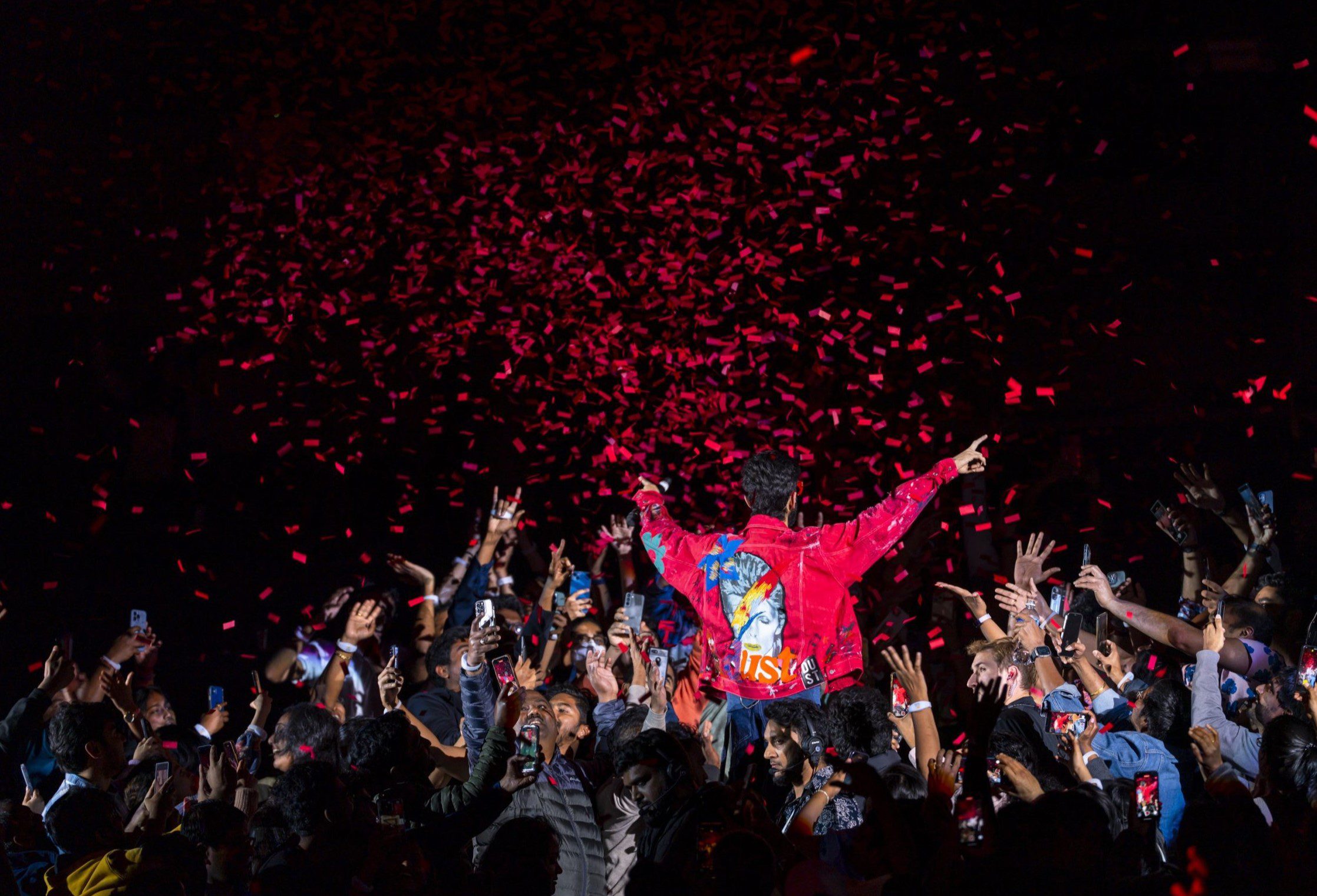
The channel list was as sprawling as the geography: streaming television, out-of-home, online video, search, native placements and influencers, supported by city-level community partnerships. The agency reported millions of impressions and thousands of first-time attendees to live Indian entertainment. That last group matters. A mature business sells another ticket to the fan who is already looking. A growth business helps someone decide that an arena show belongs in their life.
The same machinery helped build Sanskar Savvy, a Gen Z and Millennial South Asian media platform. TRT worked on its identity, website, editorial system, SEO, email, partnerships and audience retention. By late 2025, the agency reported more than 370,000 subscribers and over one million monthly unique visitors across six continents. The platform then became a media partner for the Rahman tour. Media created distribution for events; events created stories for media. Each part made the other less expensive to start again.
There is no public project budget for the tour, the rooftop or the media platform, so the useful comparison is structural rather than financial. TRT tries to lower the hidden cost of fragmentation: one firm inventing the message, another buying media, another running the venue, and nobody owning the seam between them. The tradeoff is concentration. A broad operating partner must be unusually good at prioritizing and unusually honest about what its small team can carry.
Start with the room everyone else ignores
The Round Table Group's method is copyable, but not by copying its aesthetics. Begin with the underused asset: the empty rooftop, the audience that has been reduced to a demographic label, the customer list that never became a community, the local enthusiasm that national media cannot see. Talk to the people closest to it before deciding what it should become.
Then connect the work. Research should change the product. The product should make the story true. The story should help partners explain their role. Distribution should lead to a measurable action. And the experience after the click should be good enough that somebody brings a cousin next time.
That is where TRT fits in the agency market: more operational than a pure brand consultancy, more research-led than an event shop, and more community-dependent than a conventional media buyer. Its competitors can do each piece separately. TRT's wager is that the handoffs are where cultural meaning gets diluted and commercial momentum leaks away.
Our roots are in Florida, but our work reaches audiences around the world.Jason Shaw · Founder and CEO
The sentence could be read as a claim about reach. It is more interesting as a description of method. Global work does not always begin by making something universal. Sometimes it begins by understanding one room so specifically that people in sixteen cities recognize it as theirs.