Somewhere in the vast machinery of the internet, there is a dog with a difficult past and an implausibly happy present. A stranger films it, someone sends the clip to a publisher, and a few million people see what happened between those two points. The Dodo made a company out of that middle step. Its editors turn an animal's experience into a short, legible story that travels through a feed and, occasionally, out into the world.
That sounds simple until one asks what a publisher is selling. The viewers get a moment of relief, a little practical knowledge, and sometimes a way to help. Animal shelters and rescuers get an audience they could never buy alone. Advertisers get access to people who have voluntarily stopped scrolling. The Dodo gets a business only if those pieces can be assembled again tomorrow.
- Founded in 2014 by Izzie Lerer and Kerry Lauerman as an animal-focused publisher.
- Built a large social-video audience before revenue caught up with attention.
- Expanded into recurring series, television, children's programming and books.
- Joined Penske Media's PMX portfolio in a deal announced in June 2026.
The animal was already famous. The story was not.
The internet hardly needed another picture of a cat. The opening The Dodo saw was editorial: a pet or wild animal could be the character in a compact narrative about fear, trust, recovery or mischief. The first frame gave viewers a reason to pause. The next frames supplied a reason to care. That distinction separated the brand from a generic stream of cute clips and from conventional pet advice. The Dodo was making entertainment with an animal-welfare ambition attached.
Lerer and Lauerman launched the site in January 2014. Its mission, later described in the company's own materials, was to tell stories connecting people to animals and to empower people to help those in need. The distribution decision mattered as much as the mission. The Dodo put its work where people already watched and shared: Facebook, Instagram, Snapchat, YouTube and eventually TikTok. In a 2018 interview, Lerer said the team tailored video to each platform. A publisher could no longer assume the audience would visit its homepage first.
A short Dodo story, anatomized
The formula is easy to parody and difficult to sustain. A reliable series needs footage, permission, editing, context and a supply of real events. The Dodo's particular skill has been finding a human-scale account inside the animal clip. Its subjects range from cats and dogs to koalas and elephants. The animal remains the star, but the person who cares for it often supplies the plot.
Views came first. A business came later.
In 2016, The Dodo reported about 500 million video views in a month. That was extraordinary distribution for a two-year-old publisher; it was also a challenge. Views on social platforms did not automatically become money in The Dodo's bank account. Contemporary reporting said the company was still prioritizing audience growth over monetization. It had raised outside capital, including a $4.7 million Series A in 2014 and an $11.5 million Series B in 2015 led by Discovery. Those are company funding amounts, not the cost of producing any one video.
The answer was to make a hit less disposable. President YuJung Kim described a shift toward recurring franchises such as Odd Couples and Pittie Nation. A recognizable series gives viewers a reason to return and gives advertisers or distributors something more concrete to sponsor. By 2019, the company was producing roughly 200 videos a month, according to Kim. This was a production system, not a lucky queue of rescued puppies.
“Prioritizing is harder than growing.”Izzie Lerer, 2018 interview
The limits are plain. A publisher that depends on social platforms lives with their changing distribution rules. The Dodo's response was to send its formats into other rooms: television, streaming, books, events and licensing. These channels do not erase platform risk, but they give a widely recognized animal story more than one place to earn its keep.
The rescue story left the phone
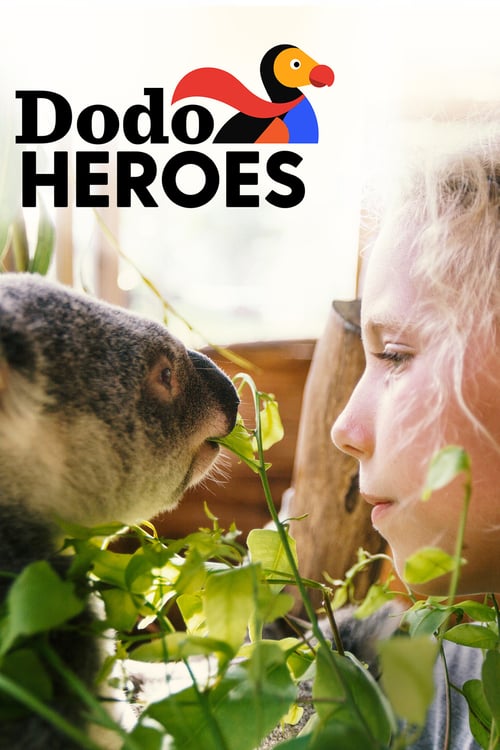
Dodo Heroes, made with Animal Planet and Nomadica Films, premiered globally in 2018. The show followed people helping animals in need, from wildlife work to prosthetics for injured animals. Animal Planet reported that one in five first-season viewers was new to its network, then ordered a second season. That is a useful clue to what made the partnership work: The Dodo brought people the television channel was not already reaching, while the channel gave a social publisher longer stories and worldwide distribution.
Families offered another route. The Dodo launched Dodo Kids with original shows on a dedicated YouTube channel in 2019, and Scholastic published nonfiction titles inspired by its animal programs. The idea came from observed behavior: parents were already watching and sharing the videos with children. A collaboration with Sesame Street later used that family audience to spotlight rescue dogs. There was no need to invent a new appetite; the company gave an existing habit its own format.
The commercial model stretches across branded content, sponsorships, social advertising and licensing, with books and other consumer partnerships alongside them. For viewers the product is mostly free. For a pet brand, a streaming distributor or a publisher, the value is The Dodo's audience and a familiar emotional language. Its closest alternatives range from animal television to other pet video channels. The Dodo's edge is the combination of feed-native pacing, a consistent rescue-and-relationship lens, and enough repeatable formats to move between platforms.
What a viral animal can actually change
The easiest outcome to count is a view. The more interesting outcome is a home. In a 2022 awards case study, The Dodo reported that its Foster Diaries and Adopt Me series raised awareness for more than 150 rescue organizations and helped more than 100 pets get adopted. That is a specific result from specific series, not a claim that every moving video becomes a rescue success. It shows how a publisher can attach a direct action to a story without turning the entire story into an appeal.
In 2024, The Dodo said its tenth-anniversary Day of Happy campaign invited followers to share the happiest moment in their camera roll. At the time it reported 140 million followers and 1.3 billion monthly social views. Those figures describe reach, not profit or animal-welfare impact. Still, the invitation reveals the flywheel: people bring stories, The Dodo gives them shape, and other people carry them forward.
The company now has a new corporate setting. After Group Nine joined Vox Media in 2022, Penske Media announced in June 2026 that The Dodo would enter its PMX publishing portfolio. Corporate names have changed more often than the editorial proposition. Find a real animal with a story worth finishing. Tell it with enough clarity that someone sends it to a friend. Then give that attention a job to do. The dog in the opening clip cannot read a balance sheet. It can, however, make one more person ask where the shelter is.