Company Profile / Pet Tech & Fundraising
The Wedding Registry for Shelter Pets Is Run by an NFL Referee
John Hussey officiated Super Bowl XLV. His day job is a Seal Beach platform that has routed more than $100 million to 4,600 animal rescues - by selling them dog food instead of taking a cut of their donations.
There is a specific kind of frustration in wanting to help an animal shelter and not knowing whether your $50 bought kibble or covered someone's parking. CUDDLY was built to remove that gap. Instead of a donate button that drops money into a general fund, the platform lets a rescue post exactly what it needs - a bag of prescription food, a bottle of antibiotics, a heartworm test for the beagle in kennel nine - and lets a donor buy that item outright. John Hussey, the company's founder and CEO, has a shorter description he has repeated for years: it's a wedding registry for pets.
That framing is doing real work. A wedding registry converts a vague good intention - "I should get them something" - into a concrete transaction with a visible recipient. CUDDLY applies the same psychology to animal welfare, a sector where the intention runs hot and the follow-through runs cold. Rescues are chronically underfunded and, by their own admission, not staffed to run marketing departments. CUDDLY's bet is that people give more, and give again, when they can see the animal their money reached.
What it actually doesA platform for one job, done narrowly
CUDDLY runs a handful of tools that all point at the same outcome. Wishlists let a rescue list physical goods it needs; donors buy the items, which ship to the rescue. Fundraising campaigns handle the urgent, emotional cases - the surgery, the litter of orphaned kittens, the dog pulled off a highway - tied to a named, photographed animal. CUDDLY Club turns one-time givers into recurring monthly donors, which matters because a shelter's costs do not arrive in neat, viral bursts. And an adoptable pets section lets rescues showcase animals before they find homes.

The narrowness is the strategy. General crowdfunding sites will host a fundraiser for anything - a wedding, a medical bill, a llama. CUDDLY only does animals, and it does them so specifically that a rescue's entire funding workflow can live on the platform. That focus is hard for a generalist to copy without diluting its own product.
Who uses itThe rescues on one side, the pet people on the other
CUDDLY is a two-sided operation. On one side sit the nonprofit rescues and shelters - more than 4,600 partner organizations, from large regional groups like Operation Kindness and the Humane Society of North Texas to small foster-based rescues that operate out of volunteers' spare rooms. These are the customers who post the wishlists and run the campaigns. On the other side sit the donors: pet owners, mostly, who already spend on animals and would rather aim some of that spending at a shelter dog they can actually see. The company has described a donor community in the hundreds of thousands, and notes that a majority of its givers are pet owners themselves.
What holds the two sides together is specificity. A donor is not asked to trust a logo; they are shown an animal, a name, a need, and a price. That is a different emotional transaction than dropping money into an annual-appeal envelope, and it is the reason a small rescue with no marketing budget can suddenly punch above its weight when a single foster dog's story catches fire.
The money questionHow a donation platform makes money without touching donations
Here is the part that makes CUDDLY unusual. Most fundraising platforms take a percentage of every dollar that passes through them - it is the obvious way to monetize other people's generosity. CUDDLY says it takes 0% of monetary cash donations. The company's stated split is that 97% of a cash gift goes straight to the rescue and the remaining 3% covers payment processing.
Where a $1.00 cash donation goes
So how does the business stay alive? On the product side. When a donor fulfills a wishlist, CUDDLY sources that food or supply wholesale and sells it at retail, keeping the margin. Add donor tips at checkout, CUDDLY Club memberships, and direct sales of its own food line, and the company earns on commerce rather than on a cut of charity. The incentive alignment is the pitch: CUDDLY makes more when more product moves to animals, not when it skims a larger slice off a grieving donor.
“Every bag purchased helps us feed a shelter pet, and that simple act of compassion has the power to transform communities.”
John Hussey, Founder & CEOThe 2025 moveWhen the give-back becomes the product
In April 2025, CUDDLY did something most software platforms never attempt: it launched a physical consumer product. CUDDLY Food arrived with a Salmon & Rice dog kibble - 26% crude protein, omega fatty acids, built for sensitive stomachs - and one blunt promise printed on the front of the bag: every bag feeds a shelter pet. By October 2025 the food had reached select Walmart stores and Walmart.com.
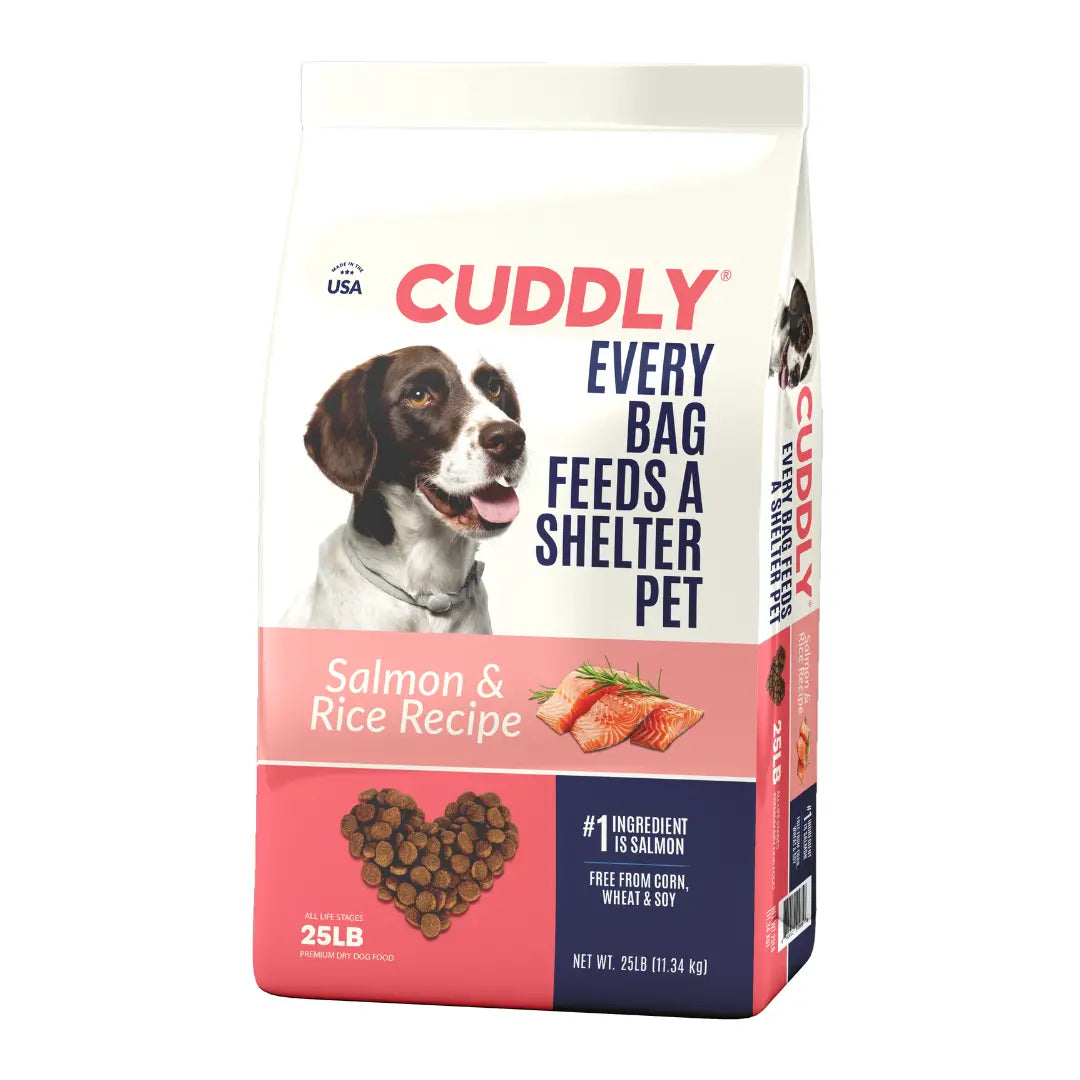
It is a tidy piece of strategy. For a company whose donors are, by definition, people who buy things for animals, a house brand of pet food is not a detour - it is the same customer, one aisle over. The meal-per-bag pledge is not a marketing garnish bolted onto the product; it is the reason the product exists.
The growth curveFrom a kid's idea to a national brand
CUDDLY did not start with this name or this scale. It launched in 2014 as PoundWishes, pitched as a Make-A-Wish for shelter dogs. Hussey, a longtime NFL official, came in as an angel investor and stepped into the CEO seat after a co-founder left for personal reasons. The company rebranded to CUDDLY around 2019, and the pandemic's adoption surge poured fuel on it - shelters emptied, donors mobilized, and, as Hussey put it, "the animals are actually winning."
Reported cumulative dollars raised (approximate)
Figures are company-reported cumulative totals and are approximate.
Capital followed the traction. Early seed funding in 2018 drew backers including 8VC and Bowery Capital. In September 2020, Lead Edge Capital led a $4 million Series A, adding debt financing afterward to fund growth. In January 2025, CUDDLY announced a further strategic financing round with RevTek Capital. The company today runs roughly 120 people out of Seal Beach, California, with a growing operation in the Dallas-Fort Worth area.
The founderAn unusual resume for a startup CEO
Hussey's biography is the kind of detail that sticks. He has worked as an on-field NFL official for more than two decades and was on the crew for Super Bowl XLV. He has said, more than once, that pitching investors rattled him more than officiating a Super Bowl - a startup pitch, unlike a penalty call, does not come with a rulebook you can memorize. The dual career is not a novelty act; the discipline of enforcing clear rules under pressure maps onto a business whose whole proposition is that donors can trust where the money goes.
That trust question is the sector's hardest problem, and CUDDLY has not been immune to scrutiny over how thoroughly it vets the rescues on its platform. The company leans on impact tracking and its direct-to-rescue payout structure to keep donors confident, but the tension between growth and vetting is a real one for any platform that turns strangers' generosity into transactions at scale.
The competitionNot broader than GoFundMe - narrower
CUDDLY's rivals split into three camps. There are the generalists - GoFundMe, Omaze - which can host any cause but know nothing special about pulling a dog off euthanasia lists. There are the pet-specific fundraisers like Waggle and GivingGrid, which focus on vet bills. And there are the retail giving programs, chiefly Chewy Gives Back and Amazon charity wishlists, which overlap with CUDDLY's product-fulfillment model.
CUDDLY's answer to all of them is the same: depth in one vertical. It is not trying to be where you fund a startup or a honeymoon. It is trying to be the single place a rescue runs its wishlists, its campaigns, its recurring donors, and now its food supply - a bundle that is awkward for a horizontal platform to assemble.
“It's like a wedding registry for pets.”
John Hussey, on the core ideaWhere it fitsThe plumbing under the viral rescue story
The honest tension in animal rescue is that emotion drives the donation but emotion does not pay the vet on a schedule. A dog with a heart-wrenching backstory can raise thousands in a weekend; the shelter's rent is due every month regardless. CUDDLY's real position in the market is as the plumbing underneath the emotion - the infrastructure that converts a viral moment into a fulfilled wishlist, and a one-time giver into a recurring member.
For a founder studying the company, the transferable lessons are specific. Pick a vertical narrow enough that a generalist cannot serve it well. Align your revenue with your users' outcome so the incentive to grow and the incentive to do good point the same direction. And when you build a give-back, make it the product rather than the press release. Where it would not work: a model that leans on product margin needs volume, and a promise to take 0% of donations only holds if the commerce side keeps paying the bills.
CUDDLY - Links & Handles
- Website
cuddly.com - Shop
shop.cuddly.com - Blog
blog.cuddly.com - LinkedIn
linkedin.com/company/cuddly - Instagram
@welovecuddly - X / Twitter
@welovecuddly - Facebook
facebook.com/welovecuddly - TikTok
@welovecuddly - YouTube
CUDDLY channel - CEO
John Hussey on LinkedIn