The original business had guests. The next one had clients. When Tharindu Malawaraarachchi and his friends started Fcode Labs, they had a mobile hotel concierge product called ISTAY. Remote software development brought in money on the side. Then, in 2019, Sri Lanka’s hotel industry ran into trouble, and the work on the side began to look rather more central.
They followed it. Mobile development became the focus, with cloud software and AI added to the offering. It is a pleasingly untidy beginning for a technology company: the founders’ intended product and the business customers were paying for turned out to be different things. Tharindu’s account of the pivot leaves room for a quality that polished founding stories sometimes misplace - the ability to notice when the plan needs changing.
The business hiding inside the business
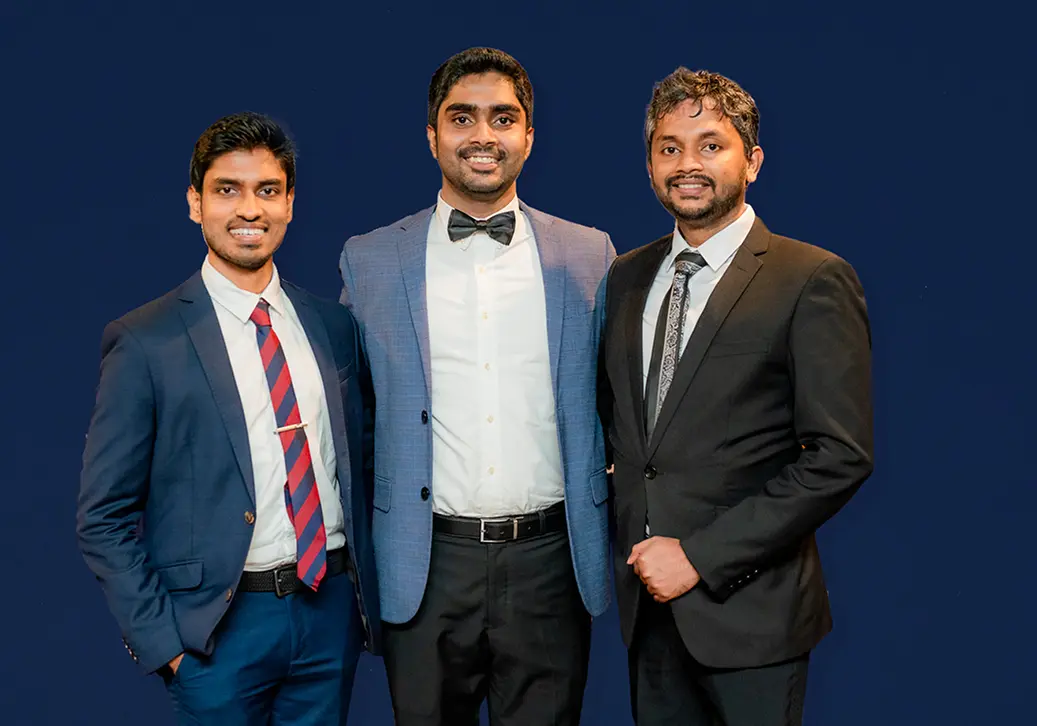
Fcode Labs was incorporated in Sri Lanka in December 2018 by Tharindu, Buddhishan Manamperi and Ramesh Rathnayake, all University of Moratuwa alumni. Its first workplace was a room in Buddhishan’s family home. A room in a family home has certain advantages over a grand headquarters. It makes the question of what the company actually does unusually difficult to evade.
The move to its first office, a two-storey house, came in June 2019. Singapore incorporation followed in November 2020. Those are modest, concrete steps: somewhere to work, then another jurisdiction in which to do business. The chronology gives a little texture to a phrase such as international expansion. Before it becomes a market on a presentation slide, a company needs an address.
An engineer with a second set of numbers
Before the company, Tharindu had accumulated an education with two useful vocabularies. He studied engineering at the University of Moratuwa between 2014 and 2018. He also earned an Advanced Diploma in Management Accounting through CIMA. Circuits and accounts make an interesting pairing for someone who would eventually help run an engineering business.
His academic results had already attracted attention. He placed second nationally in the physical science stream of Sri Lanka’s 2012 Advanced Level examination. A year later, he ranked seventh worldwide in CIMA’s Performance Operations paper. The achievements span two disciplines, with the accounting qualification adding a financial strand to his technical education.
His university projects included an autonomous robot car built for chasing and evading another robot inside a marked arena. Other work involved a solar tracker and a processor implemented on an FPGA board. His early portfolio involved physical systems: vehicles moving, sunlight being followed, instructions turning into hardware behaviour.
In February 2018, he was implementing a Ballerina connector for user administration in WSO2 Identity Server. He identified missing details in the documentation for its SCIM interfaces. It is a small piece of engineering history, and an unusually useful one in a founder profile. Here is the work at the level where it becomes specific: endpoints, documentation and the things another developer needs to know.
BSc (Hons)
Advanced Diploma
Three friends, one more attempt
The friendships predated Fcode Labs. The founders describe a shared history through school and university, and earlier ventures that did not survive. After graduation, they initially went their separate ways. Starting the company in 2018 meant returning to a possibility they had already tested, and sometimes found wanting.
The division of responsibilities mattered. Ramesh took the technical lead as CTO; Buddhishan and Tharindu became co-CEOs. Ramesh was the first to leave his job and work on the company full time. The others followed. Their account of those years puts considerable weight on trust between the founders, and on having skills that complemented one another.
Tharindu’s current remit joins global partnerships with operational strategy. That is a broad patch of ground: the relationships that bring work into the company, and the arrangements that help the company deliver it. It also places him at the meeting point of two different kinds of promise, the one made to a customer and the one a team must fulfil.
The work between the code
On Fcode Labs’ digital transformation service page, Tharindu is the person associated with remote engineering setups and communication workflows. It is a revealing assignment. Distributed development requires a way for people to understand what is happening without being in the same room. The organisation of the work becomes part of the service.
The firm’s remote-team offering describes engineers extending a client’s existing team. That arrangement puts a premium on integration: developers need to fit into workflows, understand the product and communicate across locations. A useful technical contribution has to arrive in a form the rest of the organisation can use.
Tharindu has also written publicly about improving productivity with remote teams. The subject keeps recurring in his work because it sits close to his responsibilities. Once a business sells engineering across borders, communication becomes something more consequential than a preference for one meeting tool over another. It affects whether people know what to build next.
A growing company keeps changing the exam
In a public reflection on scaling, Tharindu describes what happens when a company’s old arrangements stop fitting. More stakeholders bring more opinions. A team that moved quickly at one size can struggle at another. A sales approach that once supplied enough work can become inadequate. The discomfort is recognisable even without a software background.
“Every growth stage breaks something that used to work.”
Tharindu Malawaraarachchi, on scaling a software company
His comparison is to replacing an engine while the vehicle is still moving. It is a much less restful picture than the usual upward-sloping growth chart, and probably more useful to anyone responsible for operations. Customers still need their work while the company revises its own machinery.
At Fcode Labs’ Awards Night 2025, Tharindu and Buddhishan delivered opening keynotes about the company’s progress and direction. The awards recognised customer collaboration, technical performance and behaviour reflecting the company’s values. Those categories put names to work that can otherwise disappear inside a delivery schedule: quality engineering, analysis, ownership and the effort of helping colleagues succeed.
The company’s stated values include accountability, attention to detail, diverse perspectives and an enjoyment of the relationships formed along the way. Those commitments give the operational job a human dimension. A process must help people work together; the details matter because somebody has to use them after the meeting ends.
Partnerships have a street address
Tharindu’s international work has included the patient business of turning visits into relationships. A 2023 European tour took Fcode Labs through Nordic markets, with meetings in Gothenburg and Copenhagen and a presence at a retail technology exhibition in Stockholm. The trip also produced a Netherlands partnership involving railway projects.
By 2025, the company had announced a Swedish partnership with Anton Lundberg. By August 2026, the partnership’s work included a portal allowing a Swedish recruitment firm’s clients to follow their assignments. It is a welcome piece of specificity. An international strategy becomes easier to picture when someone can log in and see how a search is progressing.
In a LinkedIn post about meeting Lundberg in Stockholm, Tharindu mixed next-year planning with thanks for lunch and an invitation to visit the Fcode Labs office. The business relationship had room for both the strategy and the meal. Even software partnerships eventually require someone to choose a place to eat.
There is another outward-facing relationship in the company’s recent history: its investment in Linkify, a Sri Lankan startup building AI tools for personal branding on LinkedIn. Announced in 2025, the collaboration included product engineering and support for taking the product to market. Tharindu described an ambition to help local innovations reach users abroad. It connects his partnership work to a younger company’s attempt to find its audience, with Fcode Labs contributing experience alongside capital.
A longer horizon, a shorter roadmap
Forevate, launched in 2026, brings another product chapter into the story. The offering combines a company’s internal information with external signals such as competitor moves, pricing changes and market trends. Its initial focus includes manufacturing, logistics, retail and consumer goods.
Tharindu’s explanation begins with how the client organisation functions. His team maps decision-making responsibilities, works with internal data and connects it to relevant outside information. The tools are adapted to that organisation. He describes a five-year planning horizon, accompanied by a twelve-month roadmap aimed at useful work in the nearer term.
- 01Understand the organisation
- 02Connect internal and market signals
- 03Build a practical twelve-month roadmap
Five-year horizon. Decisions made day by day.
The emphasis fits his operational role: technology needs to join the decisions people already make, then improve how they make them. It is an ambition with a daily timetable. The value has to survive contact with an actual business.
Keep the foundations, change the plan
Tharindu’s public advice to people entering technology is grounded in fundamentals. He recommends an analytical mind, curiosity and an appetite for learning independently. Technologies keep changing; understanding the basics gives a newcomer somewhere firm to stand while they do.
“Learning the fundamentals well is key, because the foundation has to be strong.”
Tharindu Malawaraarachchi, advising future engineers
He has contributed to the practical preparation, too. On January 1, 2022, he conducted a CV session for University of Moratuwa students ahead of their careers fair, covering structure and examples. It is a satisfyingly concrete contribution from a graduate: helping the next group explain what they can do.
His own path has required several explanations. Engineer. Accounting student. Product founder. Co-CEO. International partner. Each describes some of the work; together, they describe a career built around adjusting responsibilities as the company changes. The early hotel product belongs in that history because it records a decision. The founders saw another part of their business working, and gave it more room. Much of Tharindu’s job since has involved making that room usable for other people.
Follow the work
Interviews, writing and the company’s channels.