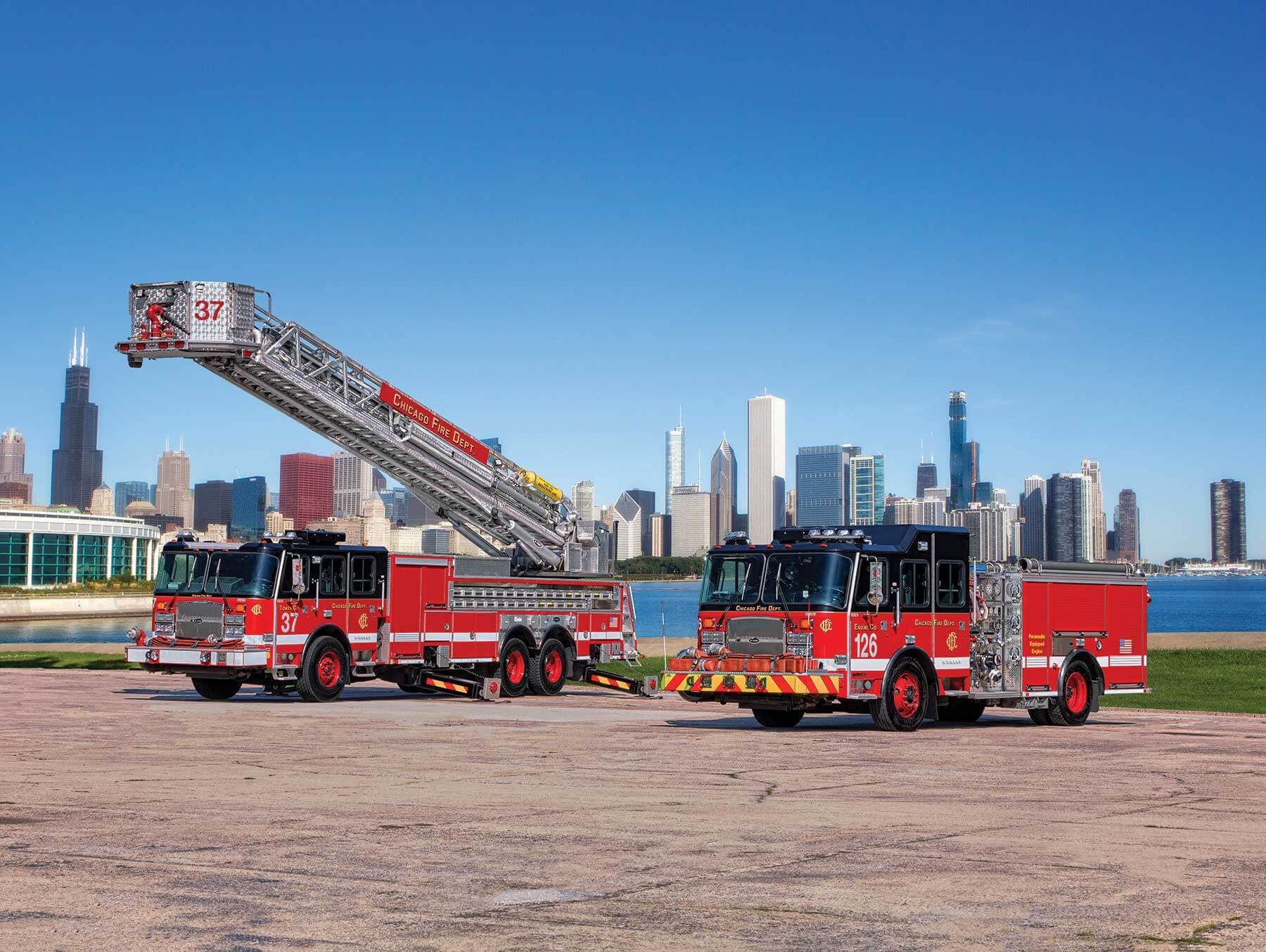
In June 2026, Chicago’s fire department placed an order for 120 emergency vehicles from E-ONE and Wheeled Coach. The value exceeded $100 million. An order like that belongs to a familiar municipal story: aging fleets, replacement schedules, public money. But it also belongs to a less familiar corporate story. Four months earlier, the companies behind those vehicles had become part of Terex.
If you know Terex, you may picture a blue Genie lift outside a building or a Powerscreen crusher chewing through rock. A fire engine seems like a departure. Follow the customer’s problem, however, and the connection becomes clearer. Somebody needs a specialized machine to do a difficult job, repeatedly, without an expensive interruption. Terex wants more of those jobs to be ones a city cannot postpone.
- Machines for construction, waste, utilities and emergency services.
- ESG and REV changed the customer mix.
- The buying test: productivity, service and downtime.
The king of earth learns new routes
Terex traces its origins to George A. Armington’s Euclid Company, founded in 1933 to build hauling trucks. General Motors later owned the business. Its corporate history dates the Terex name to 1970, combining terra and rex: earth and king. A grand name for equipment that spends its life getting dirty.
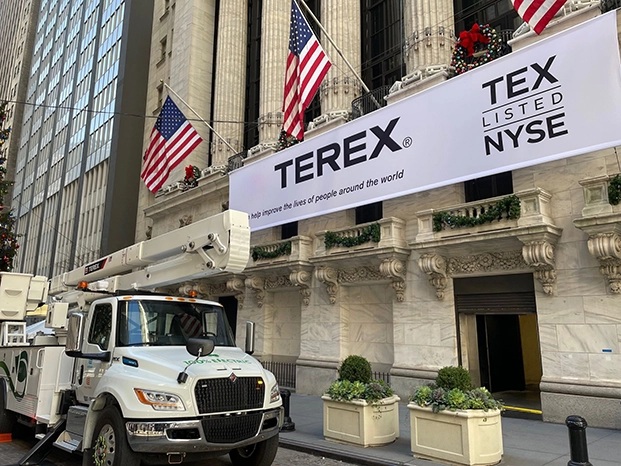
The modern corporation was incorporated in Delaware in 1986. That distinction matters: Terex is an accumulation of businesses, histories and workshop knowledge, rather than the uninterrupted creation of one founder. It became listed on the New York Stock Exchange in 1991. Its evolution is best understood through the jobs it has bought its way into.
Consider Genie. In 2002, Terex acquired the aerial-platform manufacturer for $75 million in cash and shares, while also refinancing approximately $175 million of debt. Genie’s own history describes the pressure behind the deal: construction projects stalled during the 2001 downturn, and the business needed resources, markets and cash. Specialized equipment could have a strong reputation and still be vulnerable to its customers’ spending cycles.
A $2 billion change of route
In October 2024, Terex bought Environmental Solutions Group from Dover for about $2 billion in cash. The acquisition brought Heil refuse-collection equipment, Marathon compactors, 3rd Eye vehicle technology and Soft-Pak waste-management software into the portfolio. Here was an opportunity to participate in the collection route, the equipment behind it and the information used to run it.
Then came REV. The merger closed on February 2, 2026, adding fire apparatus, ambulances and recreational vehicles. The June quarterly filing put provisional purchase consideration at $3.384 billion, comprising stock, cash, debt settlement and converted awards. That accounting figure is different from the cash paid to shareholders. Calling this simply a cash acquisition would hide how the transaction actually worked.
Terex’s declared direction was toward less cyclical markets; alongside the merger announcement, it announced plans to exit Aerials through strategic options that could include a sale or spin-off. The argument is easy to follow. Construction activity fluctuates. Waste collection and emergency response remain necessary. That does not make their customers immune to budget constraints, but it changes the mix of reasons customers buy.
“The combination with REV Group is a defining moment in Terex’s transformation.”Simon Meester · President & CEO · February 2026
Four businesses, one costly interruption
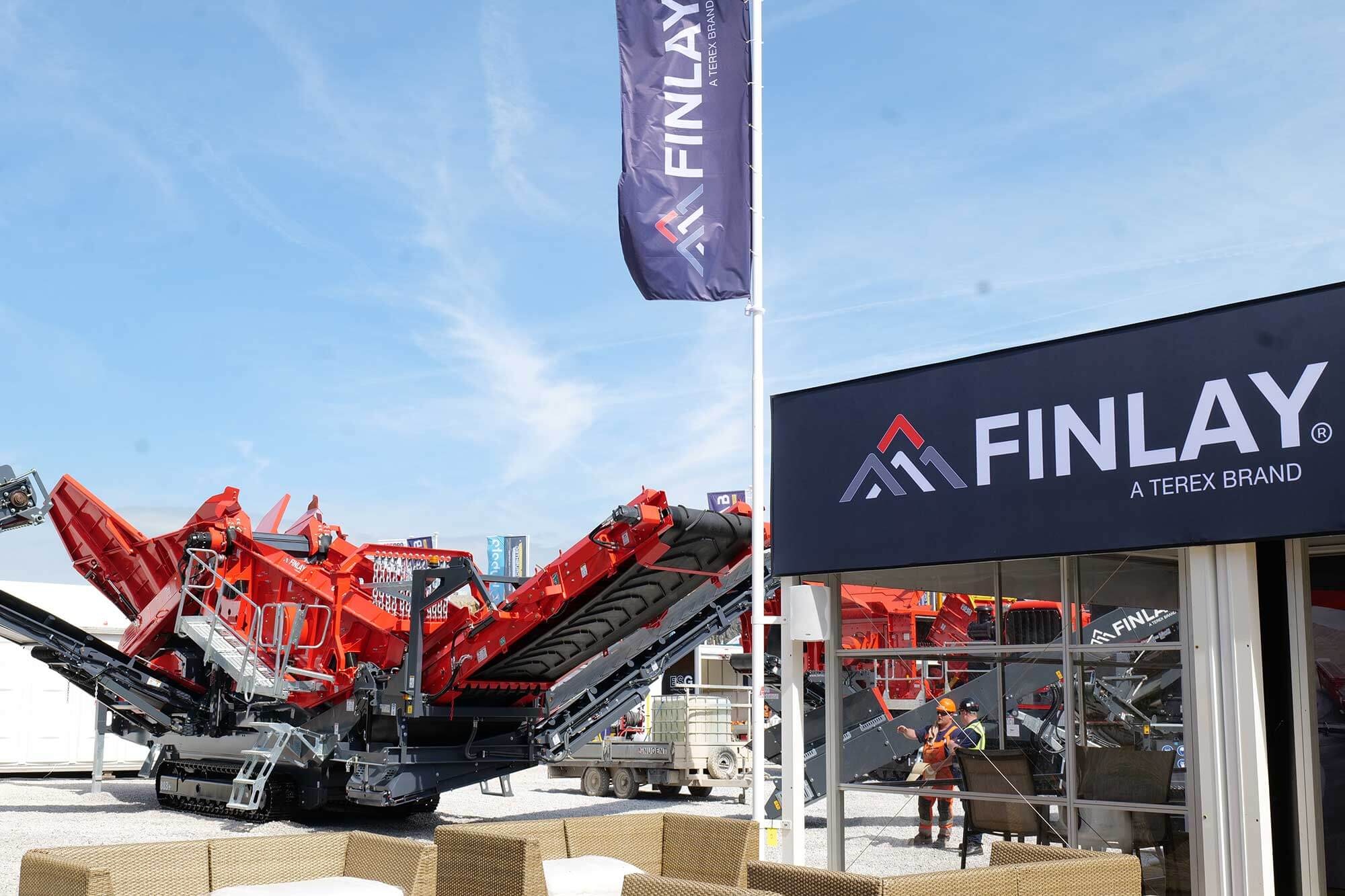
The portfolio still spans four reported segments in the second quarter of 2026. Materials Processing covers crushing, screening, washing and related equipment. Powerscreen, Finlay and EvoQuip address different applications and machine sizes. Fuchs handles materials; CBI and Ecotec process wood and waste. The expertise lies in moving awkward physical material through a repeatable industrial process.
Environmental Solutions combines waste equipment with utility products such as aerial devices and digger derricks. Specialty Vehicles houses the acquired REV operations. Aerials includes Genie’s lifts and telehandlers. Their customers include rental companies, contractors, quarry operators, waste fleets, electric utilities and public agencies. There is no single typical buyer, and no single rival that duplicates the whole portfolio.
The alternatives depend on the job: JLG and Skyjack in access equipment, Metso and Sandvik in crushing, Oshkosh businesses in fire apparatus and refuse vehicles. Terex’s breadth is useful when it brings relevant engineering, distribution or support. A quarry operator still has to judge a crusher against competing crushers. Owning an ambulance brand does not settle that decision.
Terex sells equipment through dealers and direct channels, then supports it with parts, repairs, training and digital tools. Financing arrangements can help customers obtain machines. For a fleet manager, the useful comparison extends beyond the purchase price: output, maintenance, downtime and eventual resale all affect the economics. A cheaper machine that repeatedly misses work can become an expensive purchase.
The numbers refuse to flatter
The first pressure point in the recent transformation was the legacy business. During 2025, revenue excluding ESG fell 11%. Acquired sales helped total revenue rise to roughly $5.4 billion, while operating profit declined. Buying a new earnings stream can change the consolidated picture before the existing factories improve. Readers should keep those two developments separate.
The second-quarter 2026 results show why that distinction remains useful. Reported sales rose 50.5%; on a pro forma basis that accounts for the changed portfolio, growth was 8.5%. Both describe real comparisons. They answer different questions. The larger figure measures the changed company; the smaller one better isolates growth against a comparable business.
Even essential work has manufacturing problems. Environmental Solutions reported inefficiencies as Utilities production ramped up and lower refuse-vehicle volumes left factory costs spread across fewer shipments. Aerials faced tariff and inflation pressure. Terex targeted $75 million in annual merger synergies by 2028. That was a target, with integration work still required.
Q2 2026 sales vs. Q2 2025. Pro forma adjusts for the changed portfolio.
Copy the question, then check the workshop
There is a practical lesson here for anyone buying equipment or building an industrial business: ask what interrupts the customer’s day, then work outward from that interruption. Terex’s Viatec collaboration offers a concrete example. Electric power-take-off technology lets utility equipment operate with less engine idling. The partnership addresses noise, fuel consumption and engine hours through a specific subsystem.
The company’s stated values include improvement, servant leadership and a Zero Harm safety focus. Treat those as declared operating principles, then ask for evidence at the dealer, the service counter and the job site. Customers can copy that discipline too: compare service access, operator training and application fit before comparing the badge on the bonnet.
The strategy becomes less persuasive when municipal budgets delay orders, factory execution slips or financing costs overwhelm the benefit of diversification. Chicago’s order demonstrates demand, not guaranteed profitability. The interesting thing about Terex is how directly that distinction appears in its products. The machine earns its place when the work gets done. The corporation must pass the same test.