Founder of Product Talk. Author of the book your PM lead keeps leaving on their desk. The person who turned "talk to your customers" from a platitude into a practice with edges.
March 2025. Teresa Torres goes down on the ice, ankle gone wrong. Surgery follows. Then weeks of couch, pain medication, and immobility. Most people watch television. Torres built a product.
Ninety days later, she published "Building My First AI Product: 6 Lessons from My 90-Day Deep Dive" - a dispatch from someone who had never written a line of Python, never touched Jupyter Notebooks, never used Git for anything personal. She learned all three. During recovery. While running Product Talk.
This is not a story about resilience. It is a story about what happens when someone who has spent 14 years telling product teams to keep learning actually does it herself - publicly, messily, with her husband (an engineer) sitting nearby to help when Apple Notes corrupted her JSON quotes.
Torres is the founder of Product Talk, the author of Continuous Discovery Habits, and - with near certainty - the first person in the world to hold the professional title "Product Discovery Coach." She did not inherit this category. She built it from a graduate school homework assignment in 2011 and kept going.
Product Talk Academy has trained more than 18,000 product professionals. Her clients include Spotify, Tesco, CarMax, and Snagajob. Lenny's Newsletter community named her one of the top five people globally who have helped the most product managers. She charges $10,000-$20,000 per speaking engagement. She runs the company largely by herself.
She is, in the words of product teams who have sat through enough bad PRDs to know, the person who actually changed how they think.
"When I hear product managers say they don't have time to do research, what I hear is 'I don't care enough about building a product that matters.'"
- Teresa TorresThe path here is not a straight line. Torres graduated from Stanford with a degree in Symbolic Systems - a program that stitches together computer science, psychology, linguistics, and human-computer interaction in a way that makes you genuinely difficult to classify. She started as a front-end developer and interaction designer because "product manager" was not yet a job title that most companies were hiring for. She worked her way up to President and CEO of Affinity Circles, an online community platform for Fortune 500 companies and university alumni, before realizing she did not love being an executive.
What she loved was figuring out what customers actually needed. So she built a career around that exact thing.
She enrolled at Northwestern to study Learning and Organizational Change - the science of how people build new habits - and began writing about product discovery as a mandatory weekly assignment. She never stopped. The blog became Product Talk. Product Talk became an academy. The academy became a book. The book became, in the words of practitioners who use it in team onboarding, "the Bible."
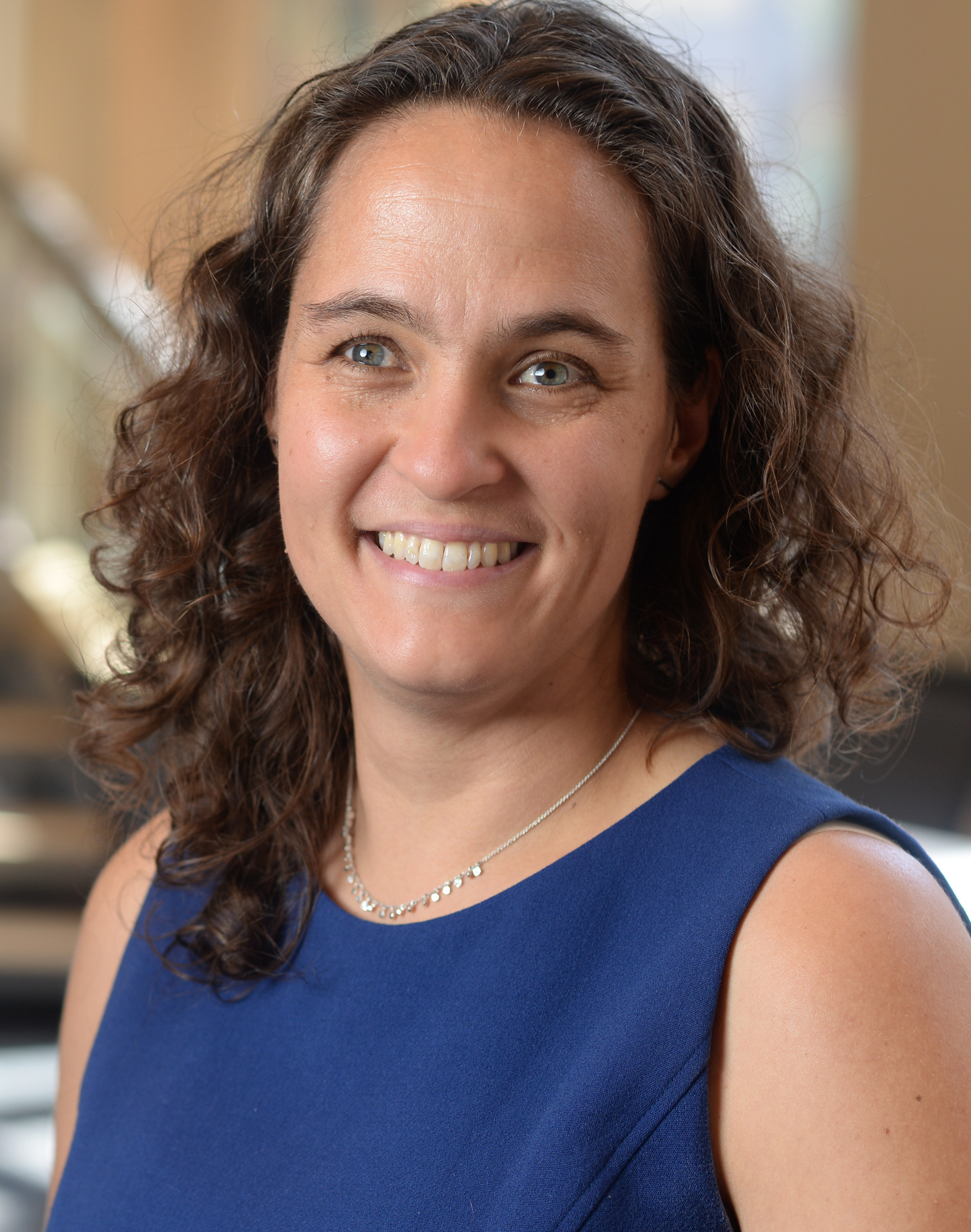
She started Product Talk as a graduate school homework assignment in 2011. The assignment ended. She did not stop.
Before Torres, "product discovery" was a vague term. After Torres, it has edges. It has a cadence. It has a tree.
A visual map that forces teams to show their work: desired outcome at the root, customer opportunities as branches, potential solutions as sub-branches, and assumption tests as leaves. Published in 2016 as a blog post. Still being referenced in team onboardings nearly a decade later.
"At a minimum, weekly touchpoints with customers by the team building the product, where they're conducting small research activities in pursuit of a desired product outcome." Not a quarterly user study. Not a big launch debrief. Weekly. Small. By the team itself.
Product manager, UX designer, software engineer - working together throughout discovery, not handing off to each other. Simple in concept. A genuine shift in how most organizations are structured. The concept has spread widely enough that Torres notes it is now "taking hold across our industry."
Published April 14, 2021. Self-published, which is a choice that says something: Torres knew the audience, knew the message, and did not need a publisher to validate either.
Continuous Discovery Habits is the systematic answer to a question every product team has faced without realizing it was a question: how do you talk to customers in a way that actually changes what you build? Not once a quarter. Not after a failed launch. Continuously. With the whole product trio involved.
The book sits at the intersection of behavioral science and product practice - Torres's M.S. in Learning and Organizational Change shows on every page. She is not just describing what to do. She is designing for how humans actually form habits, and building a framework inside that reality.
Longlisted for the Porchlight Business Book Awards. Called "an absolute Bible on the topic of product discovery" by practitioners who use it with their teams. Available in paperback, Kindle, and audiobook.
"Continuous Discovery Habits is the culmination of my work over the past eight years helping hundreds of product teams adopt successful discovery habits."
- Teresa Torres, on publishing"If you can't find 30 minutes a week to talk to a customer, how in the world are you going to build something that meets that customer's needs?"
Teresa Torres - on time and priorities"The only person in the room who is an expert on the customer's context is the customer."
Teresa Torres - on expertise"Be prepared to be wrong. It removes the burden to be right. But it also adds the burden of iterating until you get it right."
Teresa Torres - on product mindset"I'm firmly in the 'AI should augment (not replace) humans at work' camp. I'm concerned about brain rot in the rest of us who seem so willing to outsource our thinking to AI."
Teresa Torres - on AI in 2025Here is the sequence: Torres plays hockey. She breaks her ankle in March 2025. Surgery follows. She is largely immobilized, on pain medication, with nothing to do but think.
Most people would rest. Torres built an AI product.
The Product Talk Interview Coach - an AI-powered tool designed to help product professionals sharpen their customer interviewing skills - emerged from 90 days of deep diving into a technology she had never built with before. She learned Python from scratch. Jupyter Notebooks. Git for personal projects. Node.js for business logic. Her husband, an engineer, sat nearby and suggested Jupyter when Apple Notes started corrupting her JSON quotes.
The project culminated in a detailed public post: "Building My First AI Product: 6 Lessons from My 90-Day Deep Dive." She also published technical documentation on how she designed and implemented evaluations for the Interview Coach - the kind of writing that earns credibility not through credentials but through specificity.
She also launched "Just Now Possible" - a podcast about how AI products are actually built, featuring product teams, engineers, and founders from companies like Todoist, Healio, Stack Overflow, Incident.io, and ZenCity. The show exists because Torres noticed a gap: everyone talking about AI, almost nobody showing the real work.
How AI products are actually built - not the hype version. The one with the evals, the failed experiments, the Jupyter Notebooks at 2am.
Torres is building with AI while being clear-eyed about it. She is not a booster. She is not a skeptic. She is a practitioner who writes about where the technology actually works and where it falls short - and has done the unglamorous implementation work to know the difference.
Hockey Player
Broke her ankle on the ice in March 2025. Used the recovery time to build an AI product. The ice does not scare her.
Secret Learning Network
She maintains a "personal community of practice" - a list of people she learns from. Most of them have no idea they're on it.
Symbolic Systems, Stanford
Her undergrad program combines CS, psychology, linguistics, and HCI. One of the few degrees that genuinely explains how she thinks.
The Homework That Never Ended
Product Talk started as a mandatory grad school writing exercise in fall 2011. The requirement ended after one semester. She has never stopped writing.
Torres describes herself as an introvert. She runs a company of one. She coaches some of the largest product organizations in the world, then goes home to Bend, Oregon, where she presumably plays hockey until a bone objects.
Her graduate degree is in Learning and Organizational Change - not product management, not business administration. This was intentional. She was not interested in what product teams should do. She was interested in how people actually change behavior, and how you design a practice that makes the new behavior stick.
This explains why her frameworks feel different from most product advice. She is not describing best practices. She is designing for habit formation. The cadence (weekly customer touchpoints), the structure (the product trio, not solo PMs), the tree (making thinking visible) - each piece exists because Torres thought carefully about how humans actually work, not how they should work in theory.
She is also plainspoken about AI in ways that stand out in a field full of evangelists. She is building two AI products for Product Talk while publicly worrying about "brain rot" from outsourcing thinking to AI. Both positions are consistent with someone who spent decades thinking about how people learn. Augmentation, not replacement. That is her position, and she has the code to back it up.
"Nobody on that list knows they're in my personal community of practice."
Teresa Torres - on how she learnsThrough Product Talk Academy. The number has grown from ~8,500 to 18,000+ as the academy expanded its course catalog and moved toward on-demand formats.
Named by the Lenny's Newsletter community as one of the top 5 people globally who have helped the most product managers. In a field with many voices, that is a specific thing.
Product Talk launched as a grad school blog. Fourteen years of consistent, public thinking. No venture funding. No co-founder. Just the work.