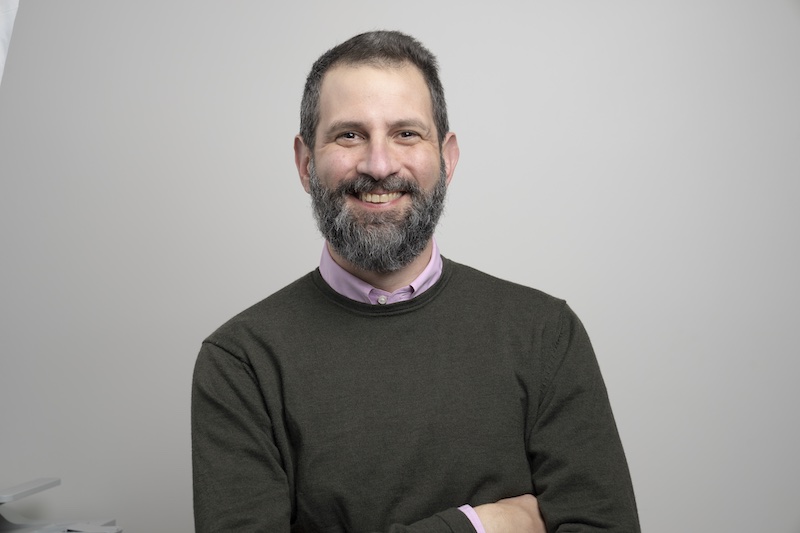
Hunter Walk does not look at a startup and see a spreadsheet. He sees a product. That's not a small distinction - it is the whole point. After a decade building products at some of the most consequential platforms in tech history, Walk co-founded Homebrew in 2013 to do something most investors only claim to do: back founders at the very beginning, when it still costs something to believe in them.
Walk's path to Sand Hill Road was not linear. Before he was a venture capitalist, he was a research assistant for Conan O'Brien. Before that, a management consultant. Then an MBA candidate at Stanford. He has also worked inside a video game division at Mattel. None of this is the standard origin story - and that turns out to be the point. Each stop shaped what Walk looks for in founders: not the credential, but the conviction. Not the market slide, but the personal "why."
From Second Life to YouTube: The Operator Years
In 2000, Walk joined Linden Lab as an early employee. Linden Lab was the company building Second Life - a user-constructed virtual world that would eventually attract millions of people to a life they invented inside a computer. Walk was on the founding product and marketing team. His job title was, by his own description, "director of everything non-engineering." He was there before "metaverse" became the tech industry's favorite meaningless word. He understood what it meant to build a community-powered platform when the playbook did not yet exist.
The best businesses are constructed by founders with empathy for the problem they're solving.
- Hunter WalkIn 2003, he moved to Google. The company had roughly 1,000 employees at that point. Walk worked on product and sales for contextual advertising - what eventually became AdSense, Google's flagship monetization engine. He was present for the part where Google went from "interesting company" to "the thing that changed everything about how the internet makes money."
Three years later, Google acquired YouTube. Walk joined the YouTube team when it had 65 people. He became Head of Consumer Product Management and oversaw billions of daily video playbacks across phones, tablets, computers, and TVs. This was not a maintenance gig. This was the period when YouTube transformed from a curiosity into the backbone of online video. Walk was the product person making decisions about what that backbone looked like.
Building Homebrew: The Audacious Simplicity of It
In 2013, Walk and his longtime collaborator Satya Patel - both veterans of the Google years - decided to start a fund. Homebrew was conceived as a seed-stage vehicle with an extremely specific thesis: back teams of five to fifty people attacking incumbents in industries the internet had not fully disrupted yet. They called this the "Bottom Up Economy." The idea was not complicated, which was the whole point. Walk had spent enough time in big companies to understand that most disruption comes not from above, but from the edges - from founders with direct experience of a broken system and the stubbornness to fix it.
Homebrew grew steadily through the bull market that stretched into 2022. Its portfolio included Chime (banking), Plaid (financial infrastructure), Gusto (payroll), Cruise (autonomous vehicles), ShieldAI (defense tech), and Tia (women's healthcare). These are not obvious-in-hindsight categories - they are structurally underserved markets that Homebrew found early because Walk and Patel were willing to believe in founders when most investors were still asking for traction.
Your company is your first product.
- Hunter WalkThen came the 2022 decision that set Homebrew apart from almost every other fund in its peer group: Walk and Patel decided not to raise another fund from external LPs. Instead, Homebrew would become self-funded - an evergreen vehicle backed by the returns from its own portfolio. This was a contrarian bet at a contrarian moment. When the rest of venture was raising mega-funds and competing on brand, Walk chose alignment. If you're investing your own capital, you care differently about how a company is built.
Screendoor: Who Cuts the Checks Shapes What Gets Built
Walk's other significant institution-building project is Screendoor LP. Launched alongside eight other venture firms with a $50 million initial vehicle, Screendoor backs emerging venture managers from underrepresented backgrounds - women, people of color, and others who have historically been excluded from the GP table. The logic is direct: if the people writing the first checks come from a narrow slice of humanity, then the companies that receive those checks reflect that narrow slice too. Screendoor is Walk's attempt to intervene at the point where the funnel is most broken.
This is not charity. Screendoor's thesis is that underrepresented GPs often see opportunities that the traditional VC ecosystem misses entirely - because they have lived experience of markets and problems that Sand Hill Road does not encounter on its regular rotation. Walk is not just the LP here; he is actively involved in mentorship and access for the fund managers Screendoor backs.
The Blogger Who Publishes His Gmail
Walk has maintained a personal blog at hunterwalk.com since 2006. The subtitle is "Self-Aware Self-Promotion" - which captures something important about his voice. He is not naive about what he is doing when he publishes opinions on the internet as a venture capitalist. He knows that accessibility is a strategy. He publishes it clearly and then tries to mean it anyway. The blog covers product thinking, founder psychology, ethics in tech, the mechanics of seed investing, and occasionally what it means to get older in an industry that worships youth.
He also publicly shares his Gmail address as a contact point. This is, in the world of partners at VC firms, a mildly radical act. Most investors build walls between themselves and inbound founders. Walk built a door and put a sign on it. He is active on X (formerly Twitter) at @hunterwalk, on Instagram at @hunterwalk, and more recently on Bluesky and Threads. He writes about AI's implications for knowledge work, the ethics of participating in systems you can't fully control, and why you should ask whether a process should exist before you automate it.
Write your principles in pen but your strategy in pencil.
- Hunter WalkOn Values: The Redlines
Walk has personal investment redlines. He does not invest in gambling-related businesses. This is not a legal or LP restriction - it is a choice. He has explained it as a matter of keeping his identity independent of his portfolio. It matters to him what he is helping build. He writes about this class of decision with unusual candor for someone in his position: the tension between participating in systems you didn't design and maintaining integrity within them.
He believes organizational culture is not something you bolt on after the product-market fit party. It is established in the first decisions a founding team makes - who they hire, how they treat people when things go wrong, what they refuse to do for growth. He has said that the only reliable way to change culture later is to change who is at the table. He has spent considerable energy ensuring Screendoor changes who is at the table in venture itself.
What Homebrew Looks For
Walk and Patel are explicit about their criteria. They want founders with a personal "why" - a connection to the problem that goes beyond market opportunity excitement. They look for teams that have mutual self-selection with their investors, not just the best term sheet. They believe that the seed stage investor's job is to create the conditions for founders to succeed, not to run the company by committee. Their blog posts, podcast appearances, and writing all return to the same theme: be the kind of investor you would have wanted when you were a founder.
Walker holds a BA in History from Vassar and an MBA from Stanford's Graduate School of Business. He lives in San Francisco with his wife, their daughter, and a dog. He is, by his own estimation, someone who keeps finding himself at the beginning of things - Second Life before "metaverse," YouTube before a billion daily users, seed investing before it became a crowded asset class. Whether that is luck or pattern recognition, the record suggests it is worth paying attention to what he bets on next.