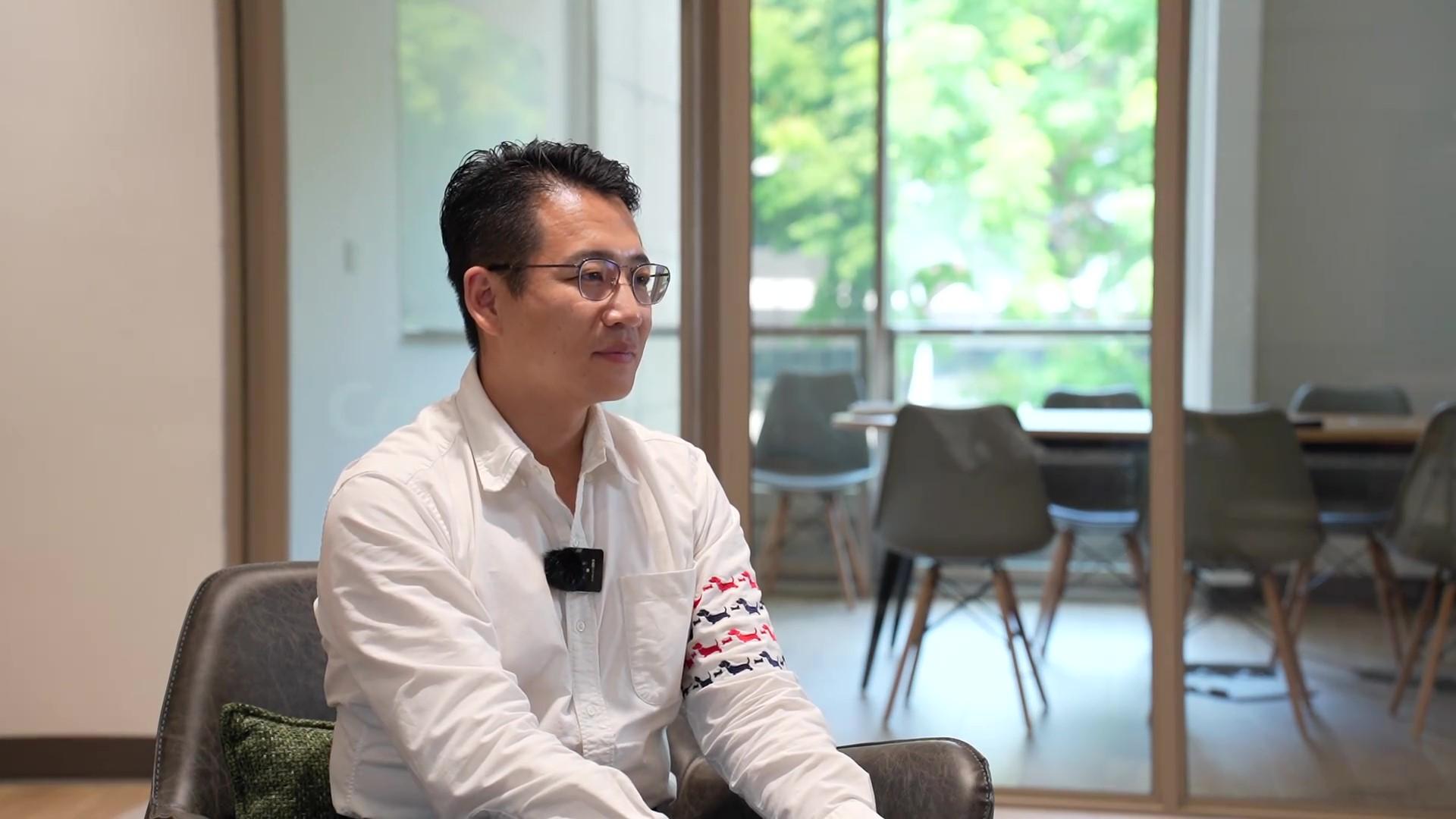
Teng Ren has an objection to the phrase “small language.” In a public interview, he pointed to Indonesian and the people who speak it. A label that sounds harmless from a large market can look rather peculiar from the other end. Imagine telling a country its conversations are a niche. The country might reasonably ask who drew the chart.
The objection suits his career. Ren spent years working on software that helped people type what they meant. At AI Rudder, the company he founded in 2019, the work moved to spoken conversations between businesses and customers. Indonesia became an early market. The change of interface was substantial; the attention to language carried through.
His story runs through a university computer science program, a smartphone keyboard, a New York listing and a second company based in Singapore. It also returns to a classroom. Having spent much of his working life helping computers understand people, Ren wanted more opportunities to learn by talking to them himself.
The keyboard years
Ren co-founded CooTek in 2008, before completing his bachelor’s degree in computer science and engineering at Shanghai Jiao Tong University in 2010. He joined the company after graduation and worked as the architect responsible for the TouchPal Smart Input engine through 2012. The job placed him close to an everyday difficulty: getting language into a phone.
Touchscreens offered convenience and plenty of opportunities for mistakes. An input engine had to make sense of what a user was trying to write. The problem belonged to the unglamorous part of software, where a successful result could be a sentence that arrived intact. Nobody throws a party because their keyboard understood them. They tend to notice when it does not.
From 2012 to 2015, Ren was the principal architect responsible for CooTek’s Big Data Department. In July 2015, he became chief data officer. The progression took him from a product engine to a broader responsibility for data, giving his later venture a technical history that began well before conversational AI became a familiar business pitch.
CooTek listed on the New York Stock Exchange in 2018. Its IPO prospectus recorded Ren’s role and the steps leading to it. For his career, the listing marked a visible milestone after a decade with the company. The next venture would ask him to apply that experience to a different customer and a different form of conversation.
A country before a continent
AI Rudder began in 2019. Its early work in Indonesia concentrated on a recognizable business need: customer communication. Financial companies and other enterprises had recurring interactions to handle. Language technology offered a way to automate some of the straightforward, repeated exchanges, while people dealt with work that called for more judgment.
For Ren, this was a move into business software rather than another consumer keyboard. A useful product now had to fit an organization’s operations. It needed a place in the customer-service process, with a purpose the buyer could explain beyond the pleasure of hearing a machine speak.
Indonesia also gave the company experience with differences that became central to its international approach. Language, customer expectations and business practices all mattered. A product arriving from abroad still had to work in the country where someone would answer the call. The telephone, inconveniently for a grand expansion plan, reaches one person at a time.
In 2021, AI Rudder moved its headquarters from Shanghai to Singapore. Its business subsequently reached more than 20 countries across Asia, Africa and Latin America. The sequence gives the expansion a clear starting point: a specific market and a specific kind of work, followed by more countries with their own requirements.
TouchPal engine
architect
CooTek chief
data officer
AI Rudder
founded
Headquarters move
to Singapore
The work behind a voice
A talking product has a wonderfully distracting feature: it talks. The voice attracts attention while much of the work remains underneath. AI Rudder’s technology brings together speech recognition, natural language understanding and text-to-speech. Each has a separate job in moving from a customer’s spoken words to a response.
Speech recognition turns the sound into usable text. Language understanding helps identify what the person is asking. Text-to-speech produces the audible reply. This is a useful way to understand the system Ren’s company builds: several responsibilities assembled into an interaction, with the business process giving that interaction a reason to exist.
As large language models became more prominent, Ren discussed the difficulty of turning broad capabilities into dependable applications. His focus remained on the circumstances in which a technology would be used. Enterprise tasks require systems that can follow the relevant process and operate within the demands of the customer’s business.
That emphasis makes the product less like a performance and more like a piece of working infrastructure. A customer-service conversation has somewhere to go. Perhaps it concerns an order or a routine reminder. The point of the software is to help that exchange reach a useful outcome, with other parts of the operation ready to take over when needed.
- ListenSpeech recognition
- UnderstandLanguage + business context
- RespondText-to-speech
Fifty million dollars, and a calendar
In March 2022, AI Rudder announced a US$50 million Series B led by Tiger Global and Coatue. Cathay Innovation, First Plus and VenturesLab joined the round, alongside existing investors Sequoia Capital India and Huashan Capital. For a company founded in 2019, it was a substantial financing milestone.
The announced plans included developing the voice technology, adding languages and supporting international expansion. Those uses fit the shape of the business. Each additional market brings a commercial opportunity and more work: a language to support, customers to understand and an operation to establish.
The date matters alongside the amount. Ren’s account of fundraising described preparing for a less forgiving capital environment. Funding gives a young company time to build and sell, and the calendar can determine how much room it has to make those decisions. A financing round is a public event with a very practical private consequence: work can continue.
Capital for technology development and international expansion. A company financing milestone.
Partners who know the room
Ren’s work becomes more concrete when the map gives way to named partners. In 2024, he publicly welcomed AI Rudder’s partnership with AmBank Group in Malaysia. His comment focused on customer experience and efficiency, the kind of operational aims that give voice technology a place inside a bank.
In the Philippines, Asticom and AI Rudder announced a partnership on November 22, 2024. The alliance brought AI Rudder’s voice technology into Asticom’s service portfolio for businesses in banking, financial technology, e-commerce and logistics. Its stated purpose included handling routine interactions so agents could devote attention to complex cases.
The arrangement joined a technology supplier with a local services organization. That combination helps explain why Ren gives local teams a place in his account of global growth. Software has to meet the people who will deploy it, operate it and judge whether it has made their work easier.
“Customer expectations, business processes, and local teams all play a role in how the technology is applied.”
Teng Ren · September 2026
His comment places the model among several participants in the outcome. The result depends on the organization around it too. For a founder trained in software, international expansion adds a continuing education in how businesses and their customers behave.
Back to asking questions
Ren entered the National University of Singapore’s Chinese EMBA program, Intake 32, and received its Overseas Entrepreneur Scholarship. His public profile lists study dates of 2023 to 2025. For someone already running a company, the classroom offered a different setting for examining a decision.
He described the program as a place for dialogue and exploration, where discussion with professors could go beyond conventional textbook knowledge. That interest gives a useful glimpse of what he wanted from executive education: the exchange itself, and an opportunity to examine economic, management and technology questions with other people.
Outside work, he has spoken about rowing and the “mental toughness” he associates with it. He also described trips, bicycle rides and watching meteor showers with his children. These details bring the founder back to an ordinary calendar, with time to allocate and people to be present for.
Rowing provides an apt, modest echo of the company’s name. A rudder belongs to the vocabulary of boats; Ren’s Chinese company name also connects science with going overseas. There is a pleasing consistency there, although a company has considerably more meetings than a rowing boat. The boat may have the better arrangement.
Another kind of incoming call
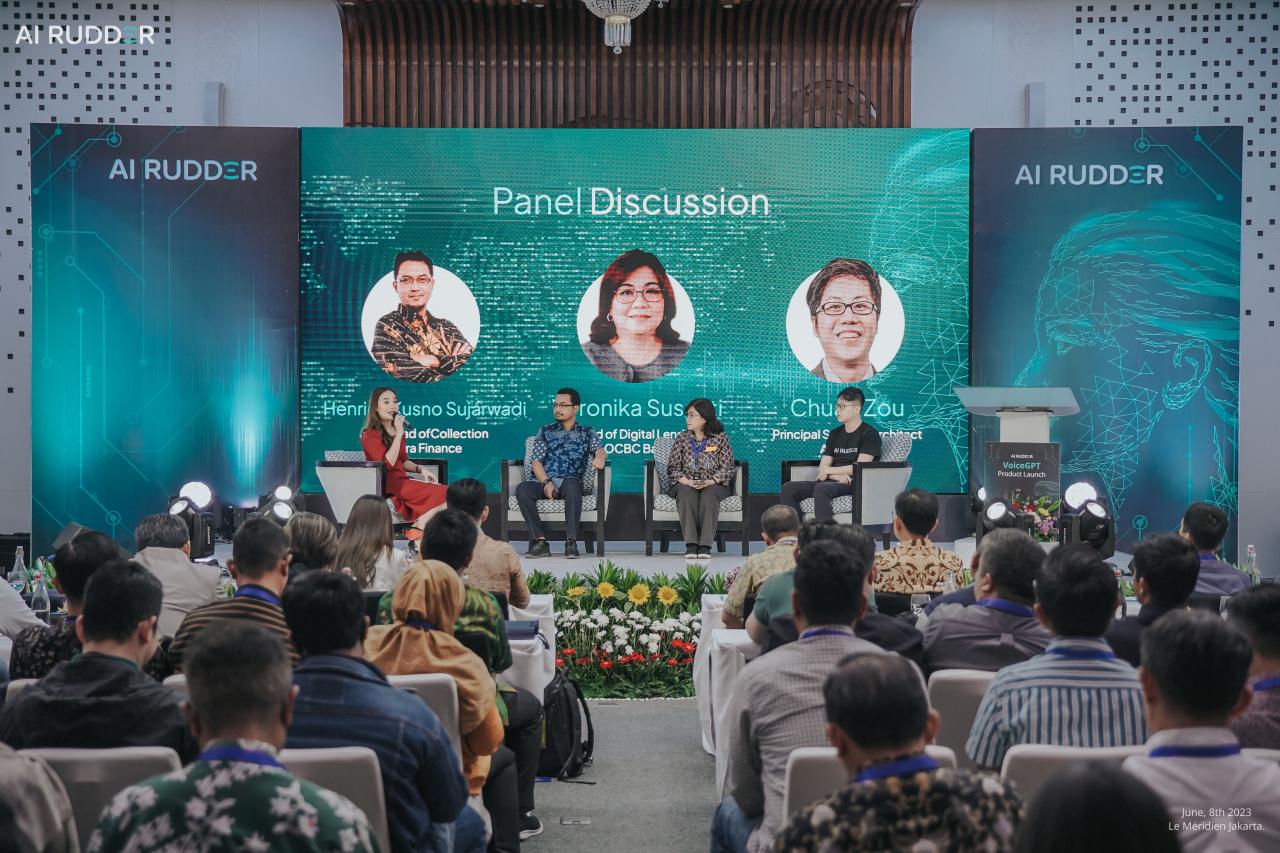
Recognition followed the international work. Forbes China included Ren among its 2025 globalization leading figures. In September 2026, AI Rudder announced his selection for Fortune China’s 40 Under 40. Both add a public marker to a career whose daily subject remains communication.
There is another current detail: Ren is listed as a judge for the CALL-E hackathon, whose site gives an October 19, 2026 date. It invites developers to turn code into AI agents that make telephone calls. The judging criteria include identifying a real phone-related problem and making a credible case for solving it.
That question fits the arc of his work. A keyboard engine helped a sentence get onto a screen. Voice AI brings language into a business conversation. The next application still needs someone to answer, and something useful to say when they do.