A text message can leave your phone and still have nowhere useful to go. In May 2014, TeleCommunication Systems reported that its technology served 52 of the 56 American emergency agencies then listed as accepting texts to 911. The striking number is 56. A country fluent in texting was only beginning to teach its emergency infrastructure to read.
- TCS connected carriers, emergency centers and people asking for help.
- It also built portable satellite networks for government customers.
- Comtech acquired it in 2016; the public-safety business now runs through the parent’s broader portfolio.
TCS occupied the awkward space between having a communications device and having a working connection. Its customers bought routing, location software, satellite equipment and the services needed to keep them useful. The person holding the phone might never see its name. That invisibility makes the company worth a closer look.
01 The gateway had to speak old languages
In 2012, Verizon selected TCS for a national text-to-911 gateway. Sending ordinary SMS was familiar. Delivering it into emergency centers required translation. Some centers used older teletypewriter equipment; others could receive messages through browsers or newer Internet Protocol connections. A gateway had to accommodate that uneven landscape.
Consider Erath County, Texas. Its December 2013 announcement introduced emergency texting for Verizon customers, particularly people with hearing impairments or those unable to speak safely. The rollout depended on a particular carrier and a particular local receiving capability. A national network did not automatically create a national service.
There was another essential function: saying when delivery was impossible. TCS described bounce-back messages telling people to call 911 where a center could not receive texts. For a product designer, that is the detail to borrow. An unsuccessful handoff needs an unmistakable outcome. Silence is a terrible interface when someone is waiting for help.
Competition happened at this connecting layer. Florida’s statewide planning document identified TCS as the text control center provider for Verizon and T-Mobile, while AT&T and Sprint selected Intrado. The distinction was buried beneath the phone’s familiar message screen. Behind it were separate vendors, contracts and interoperability questions.
02 A network you could carry
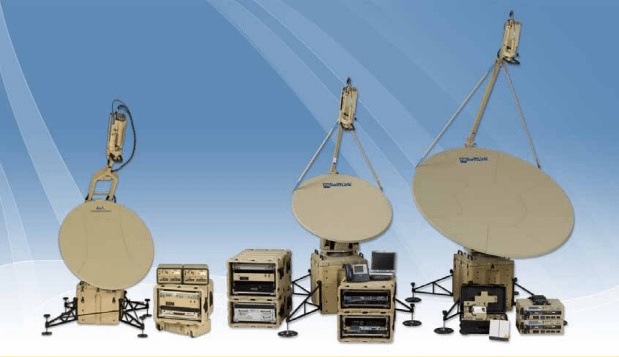
The other side of TCS looked less like software. Its SwiftLink family included deployable satellite communications systems. SNAP terminals carried voice, video and data for military users. In places without dependable terrestrial connections, the equipment provided a way to bring communications infrastructure along.
A 2006 hands-on review of the SwiftLink DVM-90 Mongoose makes the proposition tangible. The terminal automated satellite acquisition, and the reviewer established a two-megabit-per-second connection. The listed government price was $95,000. Trees and buildings could still block the signal; the antenna needed a clear view. An expensive connection remained subject to ordinary geography.
The sale could continue long after delivery. In October 2015, the Army added $5 million for SNAP sustainment, bringing funding on that contract to $23.6 million. Its nearly $91 million ceiling included options, rather than guaranteed spending. Maintaining the connection was a business of its own.
TCS also assembled other companies’ technology. Wavestream supplied amplifiers for SwiftLink terminals. Northrop Grumman and Lockheed Martin collaborated with TCS on protected satellite communications. Integration mattered: customers needed a functioning system, including the pieces made elsewhere.
03 The navigation bet met a pricing decision
Founder Maurice B. Tosé came from the Naval Academy, where he studied operations analysis, and had directed Defense Department programs at Techmatics. He founded TCS in 1987. The later portfolio stretched from government communications into consumer-facing mobile applications distributed through carriers.
In December 2009, TCS bought Networks In Motion for about $170 million in cash, notes and shares. The attraction included roughly 3.5 million navigation subscribers. Recurring fees offered the prospect of a steadier business than repeated equipment sales.
The vulnerability surfaced in 2012. A significant navigation customer notified TCS of a pricing adjustment. The company reassessed the unit’s expected cash flows and ultimately recorded a $125.7 million impairment. This was an accounting write-down, not a fresh cash payment. It nevertheless marked a serious retreat from earlier expectations.
The customer could change the price. TCS had to change the forecast.The navigation business, 2012
The lesson is about bargaining power. Monthly revenue can look reassuring while depending on a distributor whose decisions the supplier cannot control. TCS’s navigation experience is a useful question for any subscription business: who owns the customer relationship, and who can rewrite the economics?
04 Selling equipment. Operating the connection.
TCS combined several ways of getting paid. Hosted communications earned monthly fees tied to measures such as subscribers, cell sites and call-center circuits. Alongside them sat software licenses, hardware and professional services. Its expertise included location, messaging, cybersecurity and field support.
That mix fit buyers with complicated networks and continuing operational obligations. It also brought dependencies: government appropriations, contract renewals, carrier decisions and local equipment readiness. A supplier could solve one link while another organization controlled the next. Buyers needed integration and support budgets alongside the technology purchase.
05 The connections outlived the name
In July 2015, TCS formed a committee to explore strategic alternatives. Comtech’s November offer valued the enterprise at approximately $430.8 million and offered shareholders $5 per share. The deal closed on February 23, 2016. Comtech wanted complementary markets, including public safety, and a broader customer base.
Comtech’s November 2015 offer
The two sides have since followed different paths within Comtech. Allerium, its public-safety and wireless business, announced a carrier agreement exceeding $130 million in November 2025 and made its Mira cloud-native call-handling platform available in June 2026.
By October 14, 2026, Comtech was awaiting completion of an agreed $157.5 million sale of most satellite operations to a Gilat affiliate, while retaining cybersecurity training and related services. The corporate map was changing again. The enduring question behind TCS’s work was familiar: after someone presses send, who makes sure the message reaches a person who can do something?
Comtech ↗ Allerium ↗ TCS on LinkedIn ↗ TCS on X (historical) ↗ Company news ↗