The next time your phone holds a signal beneath a city, spare a thought for the company whose name never appears on the screen. Boldyn Networks builds the infrastructure that makes those connections work. It has chosen an awkward piece of the telecommunications business: places where people expect a connection and where installing one can be expensive, cramped or operationally inconvenient.
Its territory includes underground railways, crowded venues, industrial sites and university campuses. The paying customer might be a mobile operator, a transport authority or an institution outsourcing its technology. The person benefiting might simply be trying to send a message before the train reaches the next station. Boldyn sits between those two experiences, turning access to difficult places into an infrastructure business.
One build. Several phone companies.
The industry calls this a neutral host. A company finances, designs, builds and operates network infrastructure, then leases access to mobile operators and other service providers. Several carriers can use the same installation to reach their respective customers. The appeal is especially obvious underground: separate networks mean more equipment competing for scarce space.
Boldyn’s catalogue includes distributed antenna systems, or DAS, which spread cellular coverage around a site; small cells that add local coverage and capacity; fibre; and managed Wi-Fi. It also builds private mobile networks for organisations that need dedicated connectivity. The distinction matters. A shared public cellular system serving spectators and a private network supporting industrial equipment solve different problems, even when both involve 5G.
This is also where Boldyn fits in the market. It supplies the physical and operational layer beneath familiar digital services. Its expertise combines radio engineering, network management, site access and financing. A buyer gets a company that can undertake the installation and remain responsible for operating it. That continuity is a substantial part of the sales proposition.
The Tube does not respect a deadline
London provides a useful test. In June 2021, Transport for London awarded predecessor BAI Communications a 20-year concession to extend mobile coverage across the Underground. At the time, the ambition was coverage in all stations and tunnels by the end of 2024. TfL’s 2026 business plan instead targets coverage across all lines by the end of 2026.
The timetable slipped. The physical work helps explain why this is a demanding assignment, although it does not establish a single cause for the delay. In a December 2025 interview, UK and Ireland chief operating officer Nick Hudson described a midnight-to-4am working window, restrictions on leaving tools underground, heritage requirements and roughly 320 engineers working nightly.
Then there is heat. The Tube is already warm in places; communications equipment adds more. Finding room for cooling becomes part of the connectivity job. His account describes fibre running from data centres into stations, with radios extending coverage into tunnels. A bar on a phone screen has an unexpectedly long supply chain.
“We’re just making it hotter in some respects.”
Nick Hudson / on equipment heat in the Tube
December 2025
The practical lesson for infrastructure buyers is to separate the contract horizon from the construction schedule. Twenty years gives an operator time to run a network and recover investment. It does not make a narrow tunnel wider or a night shift longer. Access arrangements, installation approvals and operating constraints deserve attention before a rollout date becomes a promise.
A company assembled around difficult places
Boldyn arrived as a name in June 2023, combining BAI’s Northern Hemisphere businesses with Mobilitie, Signal Point Systems, Transit Wireless, Vilicom and ZenFi Networks. These were established operations with existing customers and infrastructure. The launch joined their capabilities under a common identity; the Australian BAI business remained separate.
The acquisition trail explains the range of work better than a founder legend would. In 2024, Boldyn bought Cellnex’s private-network business, largely comprising Finnish specialist Edzcom. Cellnex’s financial statements put the consideration at approximately €31 million and the completion date at February 29. Cellnex was concentrating on towers and adjacent assets; Boldyn was adding expertise in dedicated enterprise connectivity.
Apogee Telecom followed in May 2024, bringing US campus networks and managed technology services. In January 2025, Boldyn announced an agreement to acquire Germany’s Smart Mobile Labs, adding private-network and application expertise. Its company history now names nine constituent businesses. The strategic pattern is to buy teams that already understand particular customers and environments, then offer them a broader portfolio.
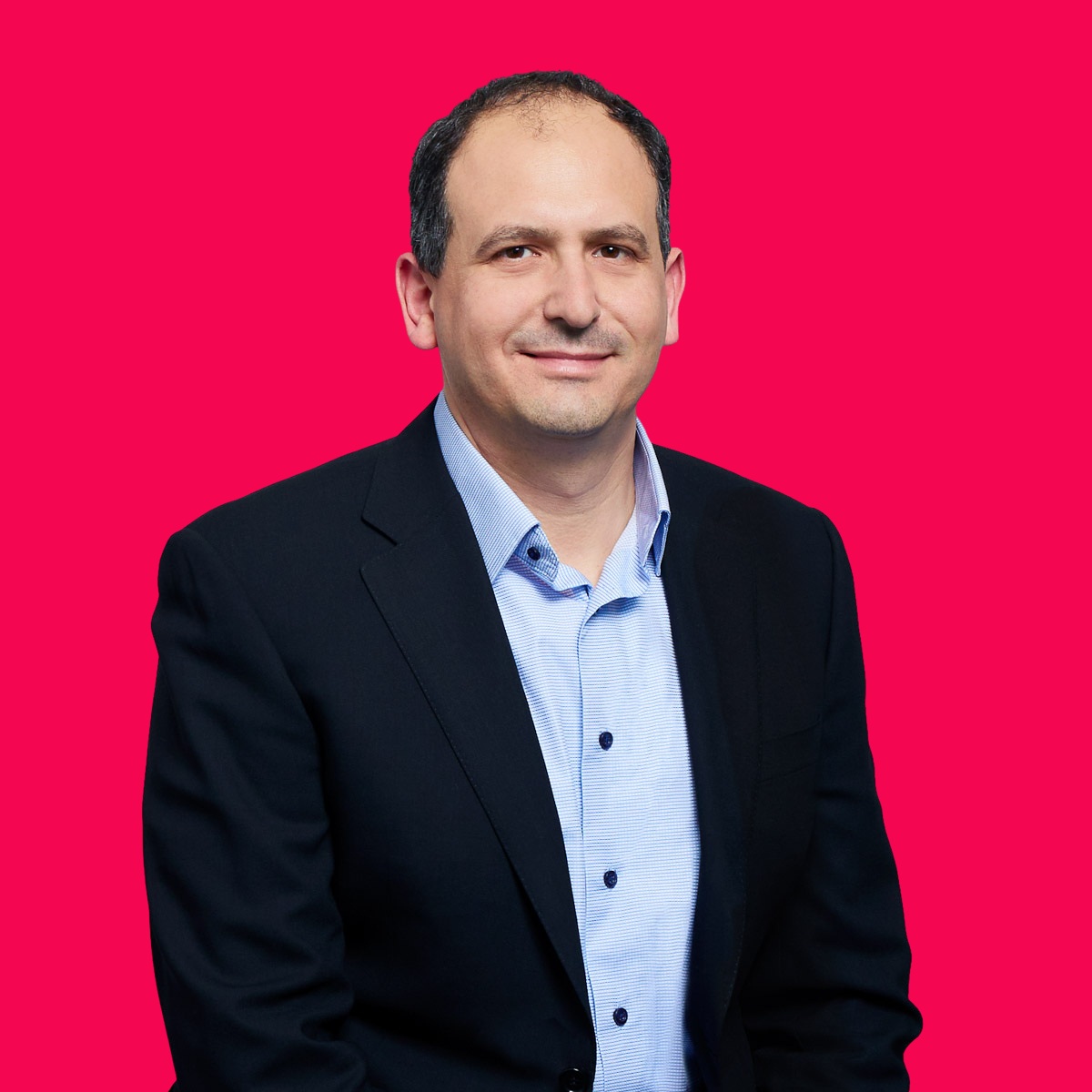
The public leadership roster places Christos Karmis in charge of the group and US business, with Brendan O’Reilly leading Europe and Asia. Boldyn’s stated workplace principles stress collaboration, customers and learning. Its careers page makes that more tangible through training programmes and up to four volunteering days a year. Those are published employer commitments; the harder organisational task is making acquired teams work together on a customer’s project.
The money has three different jobs
Boldyn is majority owned by CPP Investments. That ownership fits a business that must fund construction before infrastructure can earn its keep. In January 2025, its US operation announced approximately $1.2 billion of debt financing, comprising senior secured credit facilities and fixed-rate notes. CIBC handled advisory, arranging and placement roles.
January 2025
Completed February 2024
2024 commitment
Debt financing, an acquisition price and a customer invoice answer different questions. The US financing supports expansion across markets including transport, campuses, military properties and venues. Separately, Boldyn announced a €300 million investment programme for private networks. Neither figure tells a factory what its installation will cost. That depends on the site, the required service and the agreed commercial arrangement.
For a buyer comparing proposals, the useful number is the cost over the contract’s life, including operation and change. For Boldyn, the challenge is matching that long-term revenue opportunity to the money and effort spent building the network. A portfolio of projects can offer scale, but every difficult site still needs a workable construction plan.
Private 5G gets a payment plan
Boldyn’s October 2024 launch of Private 5G as a Service addressed another obstacle: customers who want an operational result without making a large initial network investment or creating a telecom operations team. The offering packages delivery and ongoing management into monthly payments, with service levels matched to different requirements.
The launch announcement explicitly connected the model to demand for instalment payments and services built around use cases. That is evidence of a changed commercial offer, rather than a dramatic corporate conversion. At Finland’s Port of Kemi, an early customer, the company described support for vessel and cargo information in difficult weather. The subscription also puts network management and maintenance with the provider.
For prospective customers, the copyable move is to start with one operational requirement: a moving asset that must stay connected, a camera feed that needs dependable capacity, or equipment in an area with poor coverage. Define the required outcome before choosing the network. Private 5G needs compatible devices and an application worth supporting; a subscription changes how the bill arrives, not whether the project makes economic sense.
A racetrack, a college and a cattle pen
The range of recent projects makes this business unusually revealing. At Silverstone in June 2026, O2 became the first operator live on Boldyn’s permanent shared DAS. The deployment spans 570 acres, including the Grand Prix circuit. Previous event connectivity had relied on temporary infrastructure. A permanent system makes network planning a year-round venue responsibility.
It also illustrates a limit of the neutral-host label: infrastructure designed for several operators does not mean every carrier goes live simultaneously. O2’s first-mover status matters to the fan holding a phone. Venue owners should ask which operators are contracted, when service will launch and what coverage the agreement actually includes.
At Río Hondo College in California, an August 2026 agreement reaches into managed applications and enterprise resource planning. Boldyn is to support work including cloud migration planning, database administration and continuity planning. This is the Apogee side of the business expanding beyond connectivity: helping a college’s internal IT staff keep essential institutional systems running.

And in West Sussex, a private 5G network connects Pneumonitor’s environmental monitoring device inside livestock pens. The Growing Sussex programme had four partner sites live by December 2025; the livestock integration was announced in August 2026. The device measures conditions where animals are housed, using 5G Reduced Capability technology designed for less demanding connected devices. Here, the useful outcome is timely information for farmers.
Buy the outcome. Read the operating agreement.
Boldyn has competition. Boingo offers overlapping DAS, Wi-Fi and private 5G services across venues, transport and military settings. Mobile operators and systems integrators provide other routes to enterprise connectivity. Boldyn’s distinguishing proposition is the combination of specialist deployments, infrastructure finance and long-term operation across several markets. Buyers still need to compare actual bids.
Sharing works best when several users can benefit from the infrastructure and the parties can agree on access, cost and responsibility. A private network needs a different justification: operational requirements that make dedicated connectivity valuable. Where existing Wi-Fi already does the job, devices cannot use the proposed system, or site access cannot be secured, enthusiasm for 5G will not resolve the mismatch.
The question to copy from Boldyn’s projects is disarmingly ordinary: what needs to work here? Answer it precisely, test it under the conditions people actually face, and put responsibility for maintaining it in writing. Somewhere between the tunnel, the racetrack and the cattle pen, a network stops being a technology demonstration and starts earning its place.
Go behind the signal
Boldyn’s website ↗Private-network products ↗Company news ↗Inside the London rollout ↗TfL’s 2026 plan ↗US financing announcement ↗Cellnex transaction details ↗Watch: Threads of Connectivity ↗YouTube: Christos Karmis on 5G Talent Talk (2024) ↗Boldyn’s YouTube channel ↗LinkedIn ↗Instagram ↗Facebook ↗