Look at a cell tower from the highway. The interesting part is the empty space. A carrier needs enough height to reach its customers, a place for equipment and permission to stay there. A second carrier needs much the same thing. Building two structures would repeat a considerable amount of work. American Tower has made a business out of the space left over.
- One structure can collect rent from competing networks.
- CoreSite extends the business into buildings where networks meet.
- The India exit shows why a signed lease still needs a solvent tenant.
Its role is easy to miss because the consumer relationship belongs elsewhere. You pay your carrier. The carrier pays for somewhere to put its network. American Tower supplies that somewhere, then looks for another customer who can use it, too. The arrangement makes an apparently ordinary piece of steel an unusually instructive business.
The second tenant changes the arithmetic
The company began in 1995 inside American Radio Systems, with Steven B. Dodge among the people behind its creation. It became a standalone public company in 1998. That origin matters: a tower could be treated as infrastructure attached to a broadcasting business, or as an asset capable of serving other businesses. American Tower pursued the latter possibility.
Today its customers include wireless operators, broadcasters and government users. The landlord typically provides the structure and real estate; tenants generally own and maintain their antennas, backhaul and base station equipment. A subscriber can change networks without ever knowing that the two networks have the same landlord.

Initial carrier leases generally run five to ten years, with renewal options and contractual rent increases. The attraction is incremental cost: another tenant does not require another entire tower. There can be engineering work and upgrades, but much of the original asset is already there. American Tower describes relatively limited additional operating costs when tenants join existing sites.
The customer gets an alternative to securing land, obtaining approvals and building from scratch. American Tower also offers site applications, zoning, permitting and structural analysis. These are unglamorous skills with direct consequences: a proposed antenna must fit the structure, the property rights and the rules before it can improve anybody’s reception.
The financial structure follows the asset. American Tower began operating as a real estate investment trust in January 2012. It trades on the New York Stock Exchange as AMT. Investors therefore encounter it as a property business whose rent comes from communications infrastructure. The distinction is useful: its customers must keep competing on network technology while the landlord concentrates on the sites those networks need.
There are other landlords. Crown Castle and SBA Communications compete for tower business; regional owners and carrier-owned sites provide alternatives. American Tower’s particular proposition combines international tower operations with CoreSite’s U.S. data centers. For a buyer, however, the decisive advantage remains local. A vast portfolio cannot make a badly positioned site useful.
The cloud has an address
In December 2021, American Tower completed its CoreSite acquisition. The deal had been announced at approximately $10.1 billion; the subsequently reported total consideration was approximately $10.4 billion, including assumed and repaid debt. The closing was financed with revolving-credit borrowings and term loans. Buying the address book of the internet required real money.
CoreSite supplies colocation, power, cooling and interconnection. Enterprises can place equipment in its facilities and connect with networks and cloud providers. The useful distinction is between renting a building and joining a meeting place: connections to the other occupants can be part of what makes the address valuable.
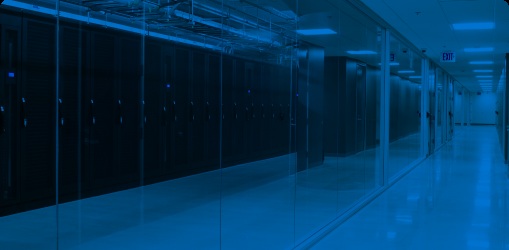
Stonepeak subsequently invested $2.5 billion in the U.S. data center business in August 2022 and another $570 million that October. American Tower retained operating control. This was minority capital for an established infrastructure business, rather than a startup funding round.
By year-end 2025, American Tower reported 30 data centers across 11 U.S. markets alongside approximately 150,000 communications sites. Its stated vision, “Building a More Connected World,” spans both. The tower helps connect a device to a network; the data center gives networks and computing services somewhere to connect with one another.
A useful tower and an occupied tower could still produce an unpaid invoice.The landlord’s complication
Then a tenant stopped paying in full
India supplied the awkward qualification to the rent story. In the third quarter of 2022, Vodafone Idea told American Tower it would make partial payments of its contractual obligations. The first visible problem in this sequence was collection. A useful tower and an occupied tower could still produce an unpaid invoice.
American Tower initiated a strategic review in 2023. Third-party indications of value came in below the India business’s carrying value; the company recorded a $322 million goodwill impairment in that year’s third quarter. Those are documented changes in financial evidence. They explain the reassessment more securely than guessing what an executive privately thought.
2021 · includes debt
2024 · approximate
These figures describe separate transactions. They do not measure a return on investment.
In September 2024, the company closed the sale of its India operation to Brookfield-sponsored Data Infrastructure Trust. Total associated cash proceeds were approximately $2.5 billion. The lesson is specific: long contracts do not eliminate counterparty risk. More mobile traffic does not automatically make every tenant a better payer.
Copy the question, not the steel
There is a useful idea here for anyone building an expensive asset: can the next customer use what the first customer already helped justify? That is an inference from the model, not a recipe for guaranteed returns. It requires suitable locations, available capacity, enforceable rights and enough customers willing and able to pay.
For network planners, the practical starting point is a coverage requirement and a site search. For venues, distributed antenna systems can address indoor demand where a macro tower cannot do the job. For enterprises, CoreSite offers a different purchase: equipment space and access to networks and clouds. Each solves a particular physical constraint.
The business remains exposed to carrier consolidation, cancellations, financing costs and construction limits. Still, its latest reported quarter showed demand: second-quarter 2026 revenue reached $2.749 billion, up 4.7%, and management reported record CoreSite leasing activity. The proposition endures because competitors often need the same thing: somewhere useful to stand.
Follow the signal
Explore American Tower, CoreSite and the company newsroom. Follow LinkedIn, X and Facebook.
↗ Watch Steve Vondran on NYSE Floor Talk↗ Explore CoreSite videos on YouTube↗ Read the CoreSite blog