satellite-communications
(8)
Kim Layne Built a Marketing Career Where the Signal Runs Out
At Roadpost, marketing is not about manufacturing urgency. Kim Layne’s work begins where cellular coverage ends - turning satellite technology into something people can understand, buy and trust.

Roadpost Spent 35 Years Selling the Last Bar of Signal - Then It Bought the Product
The Toronto satellite reseller saw its middleman model getting squeezed, wrapped rugged hardware in software and subscriptions, and fought its way to full ownership of ZOLEO. The useful lesson is not about rockets - it is about owning the layer customers actually touch.

Space Capital Is Betting the Next Great Software Platform Is 12,000 Miles Up
The New York venture firm treats rockets as plumbing and satellite data as raw material. Its real wager is that GPS, geospatial intelligence and satellite communications will become the quiet infrastructure beneath everyday business.
RBC Signals
RBC Signals is a Seattle-area space communications company that runs a global Ground Station as a Service (GSaaS) network, moving data between satellites and Earth for commercial, government, and research operators. Built on a sharing-economy model, it stitches together company-owned antennas and unused capacity from partner-owned ground stations into a single on-demand network of more than 80 antennas across 60-plus locations. Alongside downlink and telemetry, tracking and command (TT&C) services, the company has expanded into dynamic and fractional spectrum leasing through its STORM platform, giving satellite operators flexible, pay-for-what-you-use access to the ground and spectrum they need.
Ron Faith
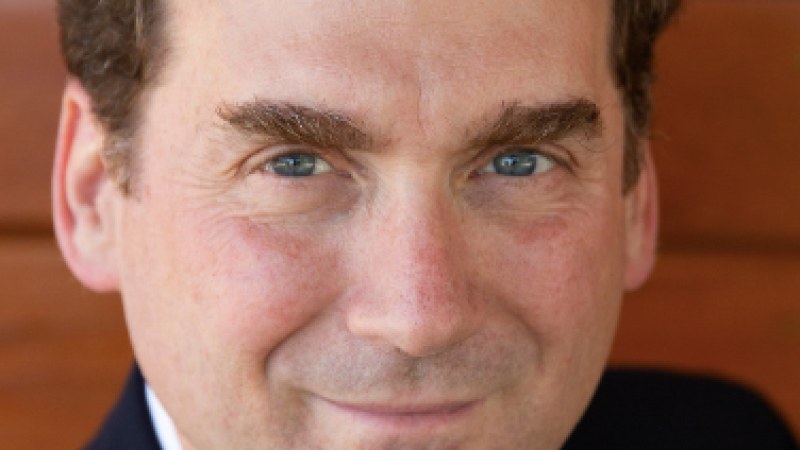
Ron Faith is the President and CEO of RBC Signals, a Redmond, Washington company that runs a global ground station network letting satellite operators downlink data on demand instead of building their own dishes. A serial entrepreneur who launched Apple's first standalone internet product in the mid-1990s, ran mobile commerce at Qpass, and led cloud data-protection startup Datacastle to an acquisition by Carbonite, he returned to his aerospace roots in 2019 and took the top job in January 2024. He pairs a Dartmouth engineering-and-philosophy double major with a University of Washington master's spent researching frequency selective surfaces for Boeing.

Northwood Space
Northwood Space is an El Segundo, California company building the ground side of the space economy: rapidly manufactured, software-defined phased-array ground stations that pull data down from satellites. Its flagship product, Portal, electronically steers beams to track many satellites at once instead of mechanically pointing a single dish, which the company argues removes the bottleneck choking modern satellite constellations. Founded in 2023 by CEO Bridgit Mendler, CTO Griffin Cleverly, and head of software Shaurya Luthra, Northwood has raised $136.4M total, including a $100M Series B in January 2026, and holds a $49.8M U.S. Space Force contract to modernize the Satellite Control Network.

Akash Systems
Akash Systems is a San Francisco deep-tech company building chips and systems cooled by lab-grown diamond. Its patented GaN-on-Diamond technology pulls heat away from transistors at the nanometer scale, powering everything from CubeSat radios that beam data at 5 Gbps to AI servers that run cooler at higher density. Backed by Khosla Ventures, Founders Fund and the U.S. CHIPS Act, the company is building a 40,000 sq ft diamond-semiconductor fab in West Oakland.
Chris Biddy
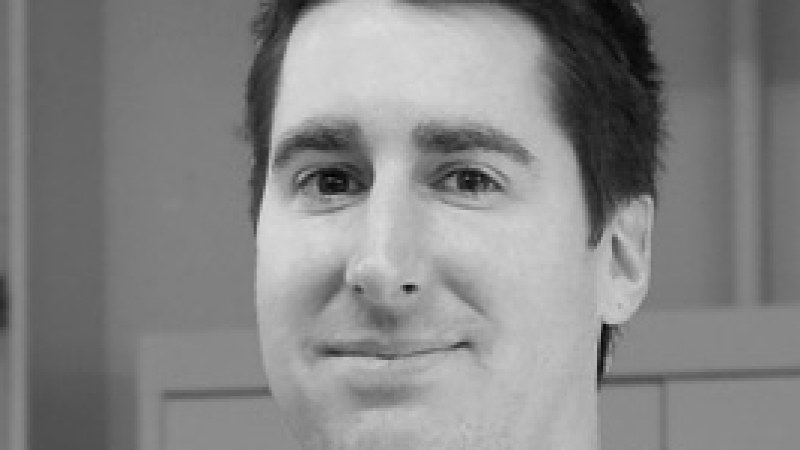
Chris Biddy is the Co-Founder and CEO of Astro Digital, a California-founded aerospace company that has delivered 35+ satellites and operates 10+ missions in orbit. A mechanical engineer by training (M.S., Cal Poly San Luis Obispo), Biddy steered Astro Digital from an Earth observation startup into a full Mission-as-a-Service platform - cutting the cost, schedule risk, and complexity barrier for organizations wanting to put hardware in space. He previously led engineering at Canopus Systems, and has been active in the commercial smallsat movement since its early commercial days.