The emergency satellite phone is a peculiar product. It can spend eleven months in a drawer, become the most important object in the building during the twelfth, and still disappoint if nobody remembered to charge it, activate the airtime or walk outside. Roadpost has spent 35 years making that awkward purchase feel less like provisioning a radio network and more like buying a dependable service.
The Toronto company does not own a constellation. It sits closer to the ground. Roadpost sells and rents satellite phones, communicators, push-to-talk devices, docks and antennas; connects them to Iridium or Inmarsat airtime; and supports the accounts after the box arrives. Its customers range from backcountry travelers to helicopter operators, government teams, utilities, disaster planners and employers responsible for people working alone.
That sounds like distribution, and for years it was the center of gravity. The sharper description today is a bundle: specialist hardware plus connectivity, account software, monitoring, support and recurring plans. When cellular service ends, Roadpost tries to preserve a thin but vital thread - a voice call, a check-in, a location, an SOS.
The middleman reads his own obituary
Founder Morris Shawn saw the structural problem early. In a 2019 industry interview, he predicted consolidation among satellite service providers and warned that ordinary resellers were too far from network operators, carried higher selling costs and risked being cut out. The survivors, he argued, would need specialized solutions or integration skills. It was an unusually candid diagnosis from somebody running exactly that kind of business.
“That distribution layer is going to get disintermediated.”Morris Shawn, speaking to SatMagazine in 2019
Roadpost had already begun working its way out of the trap. It participated in the early development of DeLorme's inReach and became its master Canadian distributor before Garmin bought DeLorme. It built GeoPro, a cloud platform for employee tracking, scheduled check-ins and SOS escalation. In 2016, its US subsidiary bought substantially all the assets of Fonebill, gaining the BlueCosmo and Satworx brands, their subscribers and a Seattle operation. The price was not disclosed, but the logic was visible: more direct customers, more accounts and more service revenue.
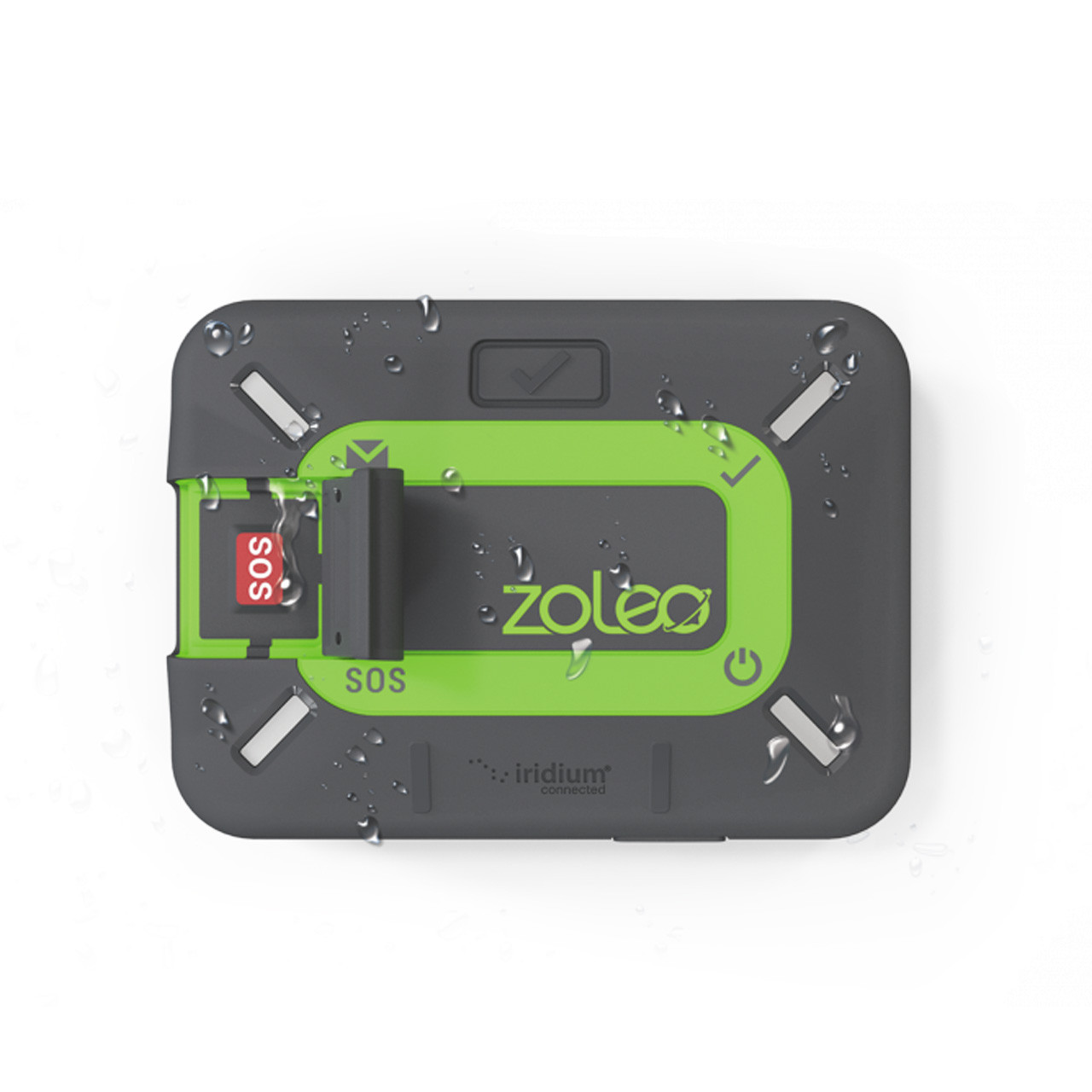
Then came ZOLEO. Formed in 2018 as a 50/50 venture with Australia's Beam Communications, the company paired Roadpost's distribution and service experience with Beam's device engineering. The result launched in 2019: a pocket-size communicator that connects by Bluetooth to a phone, routes messages over Wi-Fi or cellular when it can, and uses Iridium short-burst data when it must. Physical check-in and SOS controls keep the essential functions available even if the phone is dead.
A box that keeps charging rent
The device is the visible product. The business is everything around it. Roadpost sells hardware and accessories, rents phones to occasional users, activates prepaid airtime, offers monthly service, provides online management and supports customers around the clock. Enterprises can add monitoring and lone-worker workflows. Dealers and national retailers widen distribution; subscriptions keep the relationship alive after checkout.
The price ladder makes the model legible. In August 2026, BlueCosmo's Canadian store listed the current ZOLEO communicator at C$269 before a required service plan. A customer who needs a full voice handset, a vehicle dock or a regional prepaid card can spend hundreds or thousands more; a buyer with one temporary expedition can rent instead. That range lets Roadpost serve the weekend paddler and the emergency-management office without pretending they have the same procurement problem. The common purchase is readiness. Hardware creates the account, airtime makes it useful, and support reduces the chance that an expensive object becomes dead weight when someone finally needs it.
Hardware
Phones, communicators, PTT radios, docks, antennas and rugged accessories.
Service
Prepaid cards, monthly airtime, rentals, activation tools, support and monitoring.
Ownership
BlueCosmo controls the retail relationship; ZOLEO adds product IP and recurring subscriptions.
This “whole product” approach is Roadpost's useful distinction. A buyer does not want to compare satellite burn rates, learn an international dialing pattern, coordinate a monitoring provider and discover during a storm that the antenna cannot see the sky. Roadpost packages those loose ends. Competitors include other Iridium and Inmarsat dealers, Garmin inReach, Globalstar's SPOT products, ACR Bivy Stick and newer direct-to-device cellular offerings. Roadpost's defense is not exclusive access to space. It is accumulated expertise at the irritating seams.
The ownership deal did not follow its original flight plan.
After arbitration required Beam to sell its ZOLEO stake, an independent valuation put the joint venture at a US$17.1 million enterprise value and US$13.7 million equity value. Beam's half was initially valued at US$6.9 million, payable in installments. Roadpost missed the first scheduled installment in September 2025, and Beam issued another arbitration notice.
The parties eventually replaced the installment plan with cash up front. In January 2026, Beam reported receiving US$9.03 million: US$6.5 million for its shares plus US$2.53 million, after adjustments, under a separate settlement. Future payments were accelerated and discounted at 8.5 percent. Both sides withdrew their disputes, and ZOLEO became a wholly owned Roadpost subsidiary effective January 23.
It is tempting to make that ending neat. It was not. The venture produced a real product and recurring revenue, but the breakup involved arbitration, a missed deadline, insurance for representations and warranties, and revised economics. The strategic destination survived an ugly route. Roadpost paid to control the product layer it had spent years proving.
The idea worth stealing
Roadpost's copyable move is not “buy your supplier.” Most companies should not. The better lesson is to map every point where a customer must leave your product to complete the job. Roadpost filled those gaps one at a time: device selection, activation, airtime, account management, technical help, safety monitoring and retail availability.
Sell the finished job
The outcome is a safe worker or a reachable traveler, not a radio in a cardboard box.
Route around expensive infrastructure
Use ordinary networks when they work and reserve satellite capacity for where it adds value.
Turn rare use into readiness
Plans, tests, support and monitoring create value between emergencies without pretending the device is daily entertainment.
Learn in distribution, build with evidence
Roadpost spent years watching customers struggle before putting those lessons into GeoPro and ZOLEO.
Management has made the change explicit. Dror Nir, appointed CEO in May 2025, was hired as Roadpost described a move from a distribution-centric business toward a product-driven satellite communications company. The current job board asks for mobile app product managers and software engineers. Meanwhile, the older retail operation is becoming less visually complicated: in 2026, Roadpost began moving Canadian and US satellite products, plans and accounts under BlueCosmo while Roadpost remains the parent.
Start with access
Roadpost is incorporated in Toronto and builds a global mobile communications service business.
Buy the customer base
The Fonebill asset deal adds BlueCosmo, Satworx, subscribers and a Seattle operation.
Build the product
Roadpost and Beam form ZOLEO and launch a hybrid off-grid messenger.
Own and simplify
Roadpost appoints a product-minded CEO, buys all of ZOLEO and consolidates retail under BlueCosmo.
Where the signal stops
Satellite service is not magic cellular. Handsets generally need a clear view of the sky. Buildings, terrain and dense cover can interrupt a connection. Voice and data are expensive next to ordinary mobile plans, messaging bandwidth is deliberately narrow, and safety still depends on charged equipment, current subscriptions and people who know the procedure. An SOS button can begin a response; it cannot guarantee rescue conditions.
It works when...
- Cellular coverage is absent or likely to fail.
- The cost of losing contact exceeds the plan price.
- Teams train, test and maintain the equipment.
- Brief messages, location and voice are enough.
It does not work when...
- Reliable terrestrial service already does the job.
- Users expect broadband speed or unlimited media.
- The antenna cannot see enough open sky.
- The device is treated as a talisman instead of a system.
That constraint is also Roadpost's market boundary. Apple and carrier satellite messaging can satisfy casual users as phone coverage expands. Professional buyers still need durable hardware, managed accounts, push-to-talk, emergency escalation, installation and support. Roadpost belongs in that gap between a consumer phone's emergency feature and a custom communications integrator.
The company has survived several generations of “global” connectivity by selling what the mainstream network still cannot promise: continuity everywhere. Its next chapter is more concentrated. BlueCosmo carries the retail shelf. ZOLEO carries the product bet. Roadpost sits behind both, no longer content to be merely the shop between a satellite operator and the customer. The smallest useful message in telecom may still be the one that gets through.