The strange thing about a backup is that you can possess one without knowing whether it will save you. A file has been copied. A dashboard has turned green. Somewhere, a computer has recorded success. Then the original server stops, and a different question arrives: can anybody work?
Datto has spent years working on the distance between those two questions. Its backup systems can keep copies nearby, send them offsite, and run a recovered machine on replacement computing resources. The ambition is wonderfully ordinary: let a business get back to its afternoon.
- The buyer: managed service providers, the outsourced IT teams behind smaller businesses.
- The job: recover data and systems, then help technicians manage the rest of their work.
- The catch: subscriptions, capacity and recovery drills still need someone’s attention.
The middleman was the point
Austin McChord founded Datto in 2007 after building a backup device in his parents’ Connecticut basement. The company says the first version included a LEGO brick. It is a pleasingly specific beginning for a business concerned with assembling things that must hold together.
The more consequential assembly was commercial. A 2015 profile identified McChord’s move from direct selling to partnerships with managed service providers, or MSPs, as a turning point. These firms install and maintain technology for clients that cannot justify a large internal IT department. They already have the customer relationship.
For Datto, one partner could bring many businesses. For the partner, recovery technology could become a repeatable service. This arrangement helps explain the company’s preoccupation with technical support, partner training and DattoCon gatherings. Even its stock-market symbol, chosen when it went public in 2020, was MSP.
“The Experts behind the Experts”Datto’s description of its SIRIS support team
The spare computer hiding in the backup
SIRIS, Datto’s core business continuity and disaster recovery platform, combines backup software, local deployment and a purpose-built cloud. A technician can recover individual files or virtualize a protected system locally or in the cloud. In practical terms, a saved machine can become a running machine while the original is repaired.
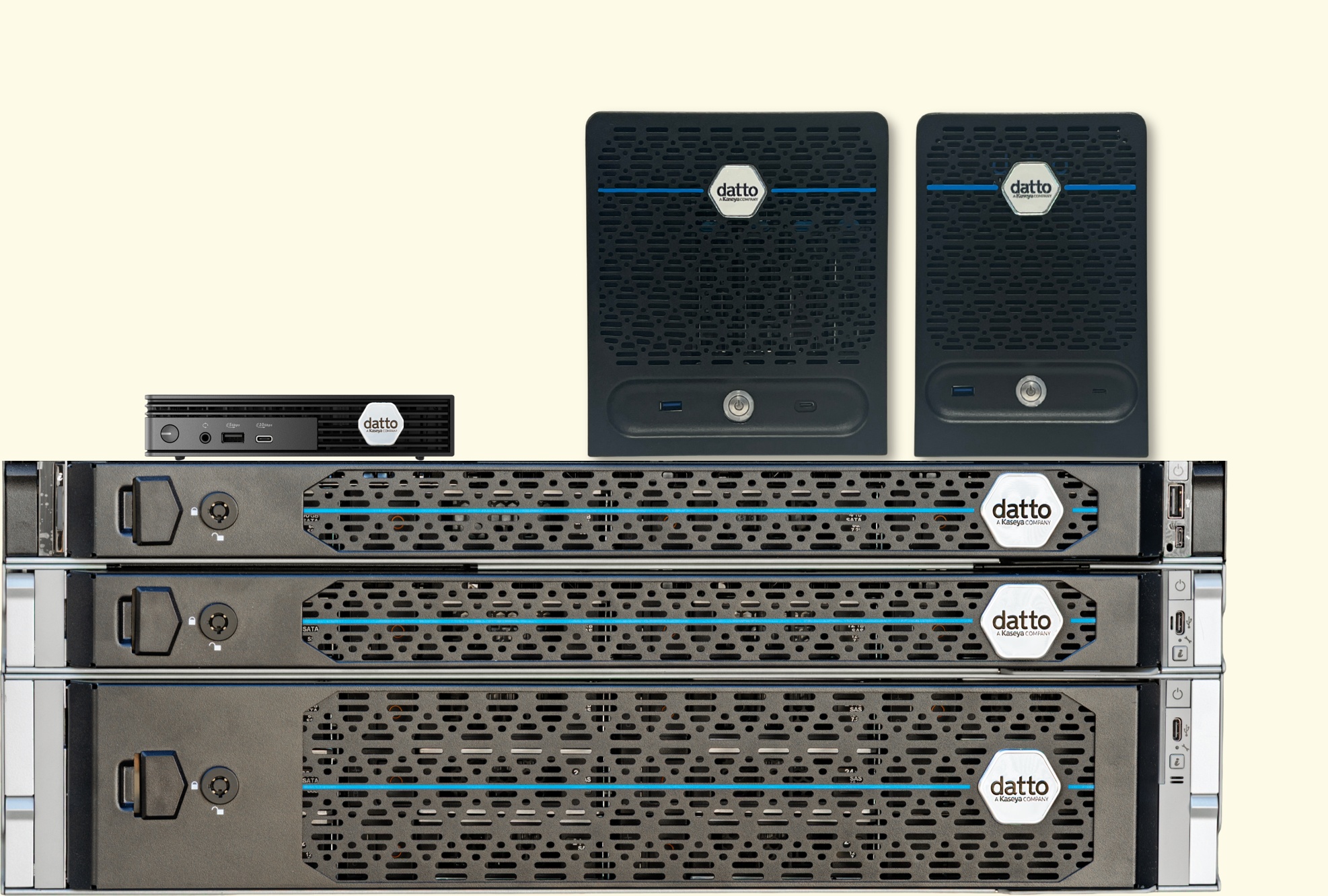
The local copy matters because moving a large recovery across a network takes time. The offsite copy matters because a problem affecting the office may also affect equipment sitting inside it. SIRIS offers appliance and software deployment options, giving MSPs choices about where that recovery capacity lives.
- 01ProtectLocal + offsite copies
- 02VerifyCheck the saved system
- 03RecoverRun locally or in cloud
Conceptual workflow. Recovery time depends on the environment.
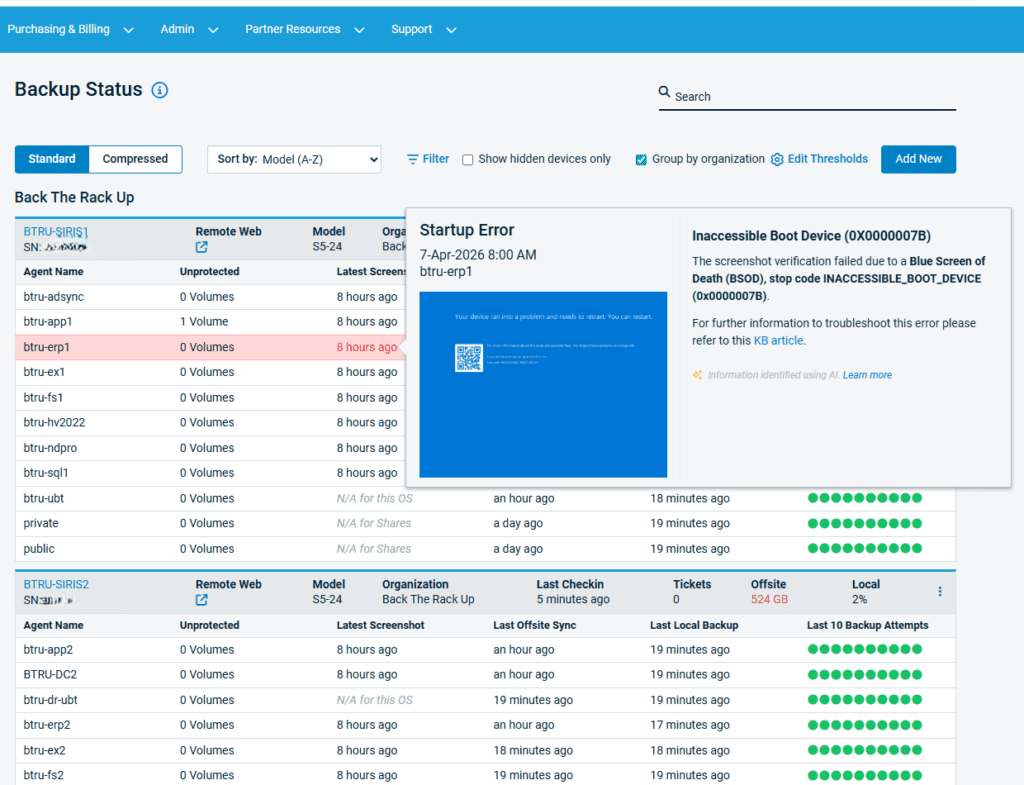
Then comes verification. Datto’s screenshot checks examine whether a backed-up system boots; its current offering adds AI analysis of boot states and screens. This makes the evidence more useful than a completed copy alone. A boot check, however, cannot answer every question about an application, its dependencies or the people trying to use it. A real recovery drill still earns its place.
The cloud needs a spare, too
The office server is only one part of the problem. Datto acquired Backupify in 2014, adding protection for data living in cloud applications. Today, SaaS Protection makes independent backups of supported Microsoft 365 and Google Workspace data three times daily, with granular restoration options. An accidental deletion can be quite disruptive without becoming a spectacular cyberattack.
The 2017 combination with Autotask widened the company again. Datto RMM handles monitoring, remote access, patching and automation. Autotask PSA handles the service desk, contracts and billing. Their integration lets device information reach the technician dealing with a ticket. Datto also sells endpoint security and networking products.
That puts it among vendors serving the daily machinery of outsourced IT. Acronis, Veeam and N-able offer competing approaches to protection and recovery. Datto’s recognizable proposition is the combination of local recovery, its own disaster recovery cloud and adjacent MSP workflows. A buyer should compare supported workloads, recovery procedures and costs against the actual client environment.
The price of a quieter afternoon
The boxes are photogenic. The recurring fees explain the business. In 2021, Datto reported $618.7 million in revenue, approximately 93% from recurring subscriptions. It ended that year with more than 18,500 MSP partners. Those are historical figures, useful for understanding the model rather than measuring today’s footprint.
Approximately 93% recurring subscriptions.
$618.7 million total annual revenue.
Its financing followed that expanding distribution. Datto raised $25 million in 2013 and $75 million in 2015. The latter announcement described an already profitable company raising money for expansion and products. Vista bought Datto and combined it with Autotask in 2017. Kaseya completed its $6.2 billion purchase in June 2022.
For an MSP, the relevant cost is closer to home. Datto supplies tailored backup quotes. Kaseya’s October 2025 SIRIS 6 announcement offered free base hardware at any term, attached to a service business with ongoing charges. SIRIS advertises flat-fee disaster recovery without compute or egress fees. The quote still deserves careful reading.
Billing also changed. Effective December 2025, Datto RMM replaced high-watermark pricing with a committed minimum plus variable consumption. Falling below the minimum does not lower that minimum bill. The useful calculation includes licenses, retention, technician labor and contract obligations alongside the appliance.
Read the small, unglamorous updates
Release notes provide a sharper test of the recovery promise than a launch stage. In August 2026, Datto documented a fix for scans that could report no ransomware detected after timing out. September’s IRIS update addressed boot and virtualization defects and added encrypted transport for Hyper-V restores. These details show where operational trust needs maintenance.
For a smaller business, the conversation can start with two numbers: how much recent work could you afford to lose, and how long could you afford to stop? Those answers give the MSP something concrete to design and demonstrate. Buying more storage alone will not settle either question.
The habit worth copying is to rehearse the outcome you sell. Choose a recovery point, boot it, check the application and practice returning to production. Capacity, connectivity and supported configurations set the boundaries. Datto supplies machinery for that exercise. Someone still has to know whether the business can finish its afternoon.