business-continuity
(16)
Centerprise International builds IT for the awkward jobs
From cramped naval desktops to military classrooms and Treasury meeting rooms, Centerprise has made a business of the details that a hardware catalogue cannot solve.
IWCO's $50 Million Bet on a Smarter Mailbox
The direct-mail company put digital presses, audience data, and postal economics into the same business. Its story shows why a better letter needs more than better copy.
FNTS keeps the mainframe in the picture
The Omaha IT provider has built a business around systems that enterprises cannot casually replace. Its pitch: change the way they run before deciding what to throw away.

Northgate Information Solutions: the business behind Britain’s payday
An oil-depot explosion exposed how much everyday life depended on Northgate’s software. Its later breakup scattered the name, but the payroll, housing and public-service businesses kept going.

Bigleaf Networks Bet That Your Internet Should Fix Itself
The Oregon networking company built a business around an unglamorous promise: when a circuit coughs, the cloud applications, phone calls and card payments should keep moving before anyone opens a ticket.

AlertMedia Built a Business for the Moment the Group Chat Fails
The Austin software company turned a simple question - who is in danger, and did they get the message? - into a platform used by more than 3,500 organizations. Its next act is using AI to spot trouble before the first alert is sent.

Riskonnect's $683,000 Bet: Put Every Corporate Risk Under One Roof
Most companies still manage danger in spreadsheets and departmental silos. Riskonnect built a sprawling enterprise platform to connect the clues - and one commissioned study shows both the appeal and the price of the bet.

Juvare Built the Operating System for the Hour Everything Goes Sideways
When hospitals fill, storms land or a power grid falters, the first casualty is often a shared sense of reality. Juvare sells that shared picture - and a growing stack of tools for acting on it.

Matthew Bowley Is Selling the Most Valuable Kind of IT: A Quiet Phone
The ZENOPS chief executive has built his public case around an unfashionable promise: fewer interruptions, clearer systems and technology quiet enough to let people leave work at work.

How Altia Smart City Turned an Unfinished Office Park Into a 60-90 Day Launchpad for Global Companies
Altia could not sell Honduras with a brochure alone. So it bundled the messy parts of entering a new country - buildings, backup power, hiring, legal work and daily operations - into one nearshore launch system.
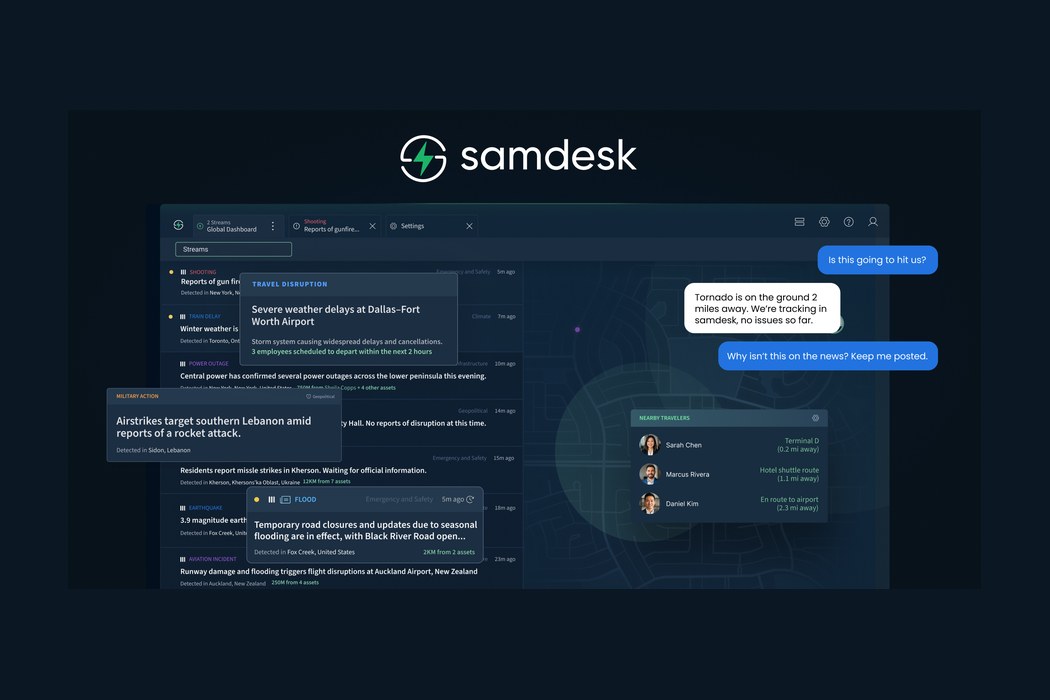
Samdesk Built a Crisis Radar. The Real Product Is 30 Minutes to Think.
Security teams do not need another blinking alert. They need to know whether the fire, flood, shooting, or shutdown will touch their people - and samdesk is betting that AI plus human verification can buy them the most valuable commodity in a crisis: time.
How to Leave Cisco or Avaya Without Dropping a Call
A contact center migration does not need a heart-stopping cutover. This four-phase playbook moves queues, channels and business units in controlled waves while service stays live.

TeamLogic IT
TeamLogic IT is a North American managed IT services provider that operates as a franchise network of locally owned, nationally backed offices. It delivers managed IT, cybersecurity, cloud, business continuity and IT consulting to small and mid-sized businesses, pairing on-the-ground local owners with enterprise-grade tools, 24/7 monitoring and a virtual-CIO advisory model. Founded in 2004 and owned by Franchise Services, Inc., the brand has grown to roughly 300+ locations and is consistently ranked among the world's top MSPs.

Safehub
Safehub turns any building into an IoT device for earthquake risk. Its proprietary sensors and cloud analytics deliver building-specific damage information within minutes of a seismic event, helping owners, insurers and emergency teams make faster, better decisions. The same sensor network powers a new generation of sensor-triggered parametric earthquake insurance designed to slash basis risk and speed up payouts.

Soni Lampert
Soni Lampert is the CEO of KLH Consulting, a full-service managed IT and cybersecurity firm based in Santa Rosa, California that has served businesses across Sonoma County and beyond for over 38 years. She co-acquired the firm alongside her husband Hub Lampert in 2005 and has since led it to become a regional IT powerhouse specializing in managed services, cybersecurity, cloud computing, and ERP implementation - including the wine-industry-specific Vintegrate platform built on Microsoft Dynamics 365 Business Central. A published contributor to the Press Democrat and the North Bay Business Journal, Lampert bridges the gap between technology and industry, most notably in the intersection of IT and winemaking operations.

Walter Edmondson
Walter Edmondson is the President and CEO of TeamLogic IT's Campbell, California franchise, which he founded in 2010 to deliver enterprise-grade managed IT services to small and mid-sized businesses across the Bay Area and beyond. A Santa Clara University electrical engineering alumnus, he spent over 25 years in the semiconductor industry at companies including National Semiconductor, Plus Logic, Seeq (acquired by LSI Logic for $106M), and Xilinx, where he served as Senior Director and helped build the operational and production engineering models that drove the company's high-volume FPGA success. Today he leads a practice that covers cybersecurity, cloud computing, backup and disaster recovery, and IT consulting for clients ranging from nonprofits to healthcare and financial services firms.