The first product Altia Smart City had to sell was faith. The site was unfinished. Honduras was not yet an automatic choice on the global BPO map. The workers who would fill its towers were largely new to business-process and information-technology outsourcing. And prospective clients were being asked to trust an operating environment that did not have an operating history. In commercial real estate, a polished rendering can sell a future lobby. It is less convincing when the buyer needs thousands of people, reliable fiber and a power supply that cannot blink.
Altia's response was practical: make the bet smaller. Developed by Grupo Karim's, the company built roads, utilities, offices and redundancy, then surrounded them with the services an international operator usually has to assemble one vendor at a time. Recruitment. Legal setup. Import and export help. Security. Maintenance. Customer-experience support at all hours. Today, Altia markets a 60-90 day path to launch, says it serves more than 30 clients, and counts more than 8,000 people working across tenant operations. The story is not really about a futuristic city. It is about packaging friction.
An office lease wearing an operations uniform
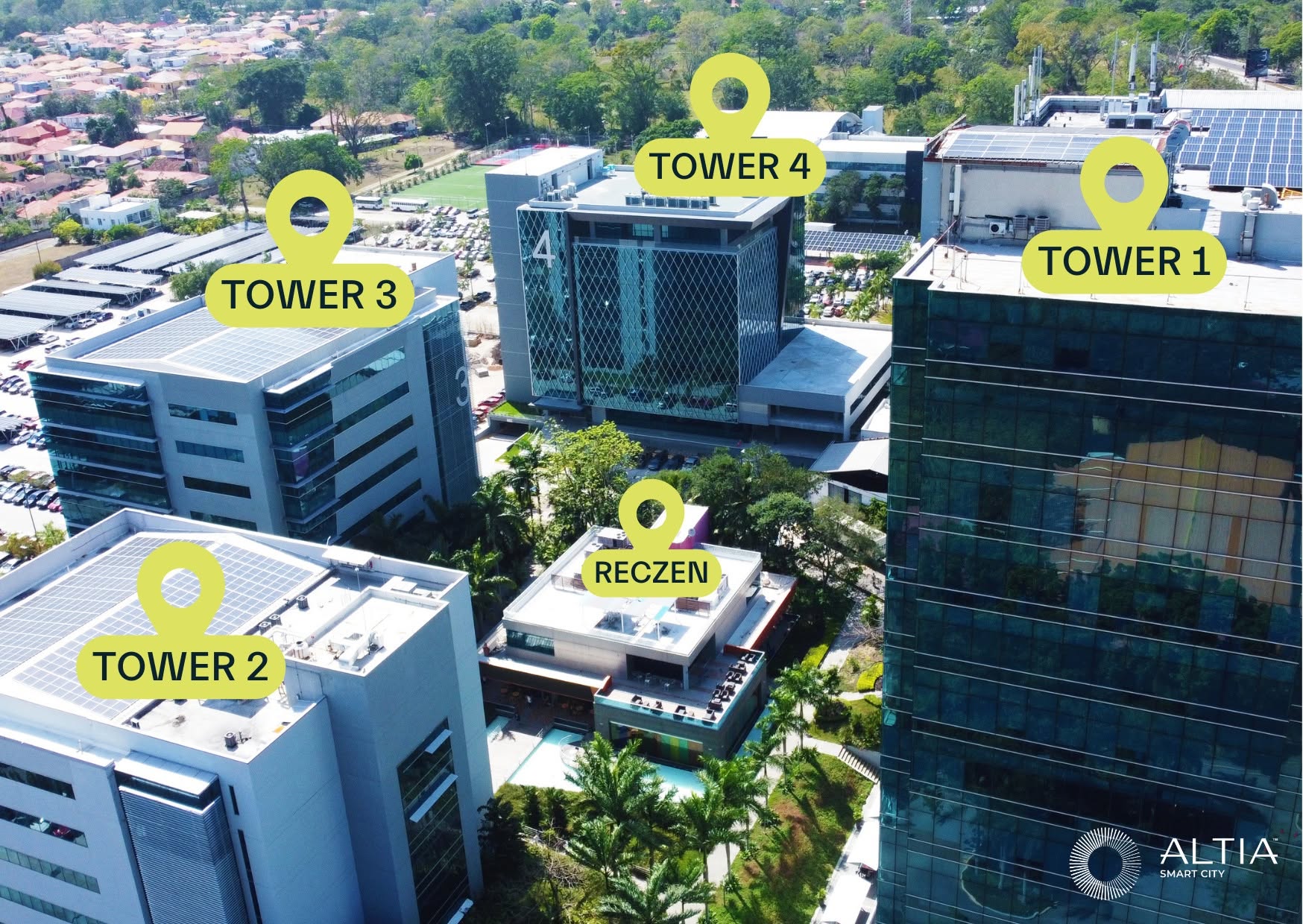
Altia is classified as a non-residential real-estate business, but that description misses the useful part. Its customers are BPOs, ITOs, customer-experience companies, logistics teams and corporate back offices entering Honduras or expanding there. A normal landlord gives them space. Altia offers a launch stack: move-in-ready or built-to-suit offices, redundant telecommunications, backup energy and water, controlled access, CCTV, fire systems, HVAC, recruitment through Altiajobs, legal assistance and a 24/7 support team.
That stack changes what the customer is buying. The tenant is not comparing only rent per square foot. It is comparing the cost and delay of coordinating a landlord, contractor, telecom carrier, generator vendor, recruiter, lawyer, security company and facilities team. Altia turns those handoffs into one commercial relationship. The business model is still grounded in leasing and associated services, but the economic pitch is fewer setup vendors and less idle time for the tenant. Its differentiator is orchestration.
What failed first was the easy assumption
The easy assumption was that good infrastructure would sell itself. Altia's own history says otherwise. The early team struggled to secure a location and funding, gain government support, build reliable internet and utility networks, and convince the first clients. The market did not yet know Honduras as a BPO or ITO destination. Nor did a large portion of the local labor pool know the industries it was being recruited to join. The first bottleneck was credibility.
That changed the offer. Instead of waiting for an ecosystem to appear around the buildings, Altia helped manufacture one. It formed relationships with universities and training programs. It added recruitment and legal services. It offered incentives available through its free-zone environment. It built green areas and employee amenities alongside systems designed to keep operations running. In other words, it treated the objections as a product roadmap.
“What Altia did for us was just phenomenal.”Miguel Schettini, VP of Operations, Startek Honduras, on pandemic support
The pandemic supplied a brutal demonstration. Facilities features that normally live in the final pages of a proposal - backup systems, maintenance, security and continuity planning - moved to the front. Startek and Alorica leaders publicly credited Altia's support during that period. The company did not need a new story. The crisis made the old one legible: uptime was not an amenity. It was the product.
Talent is a location problem before it is an HR problem
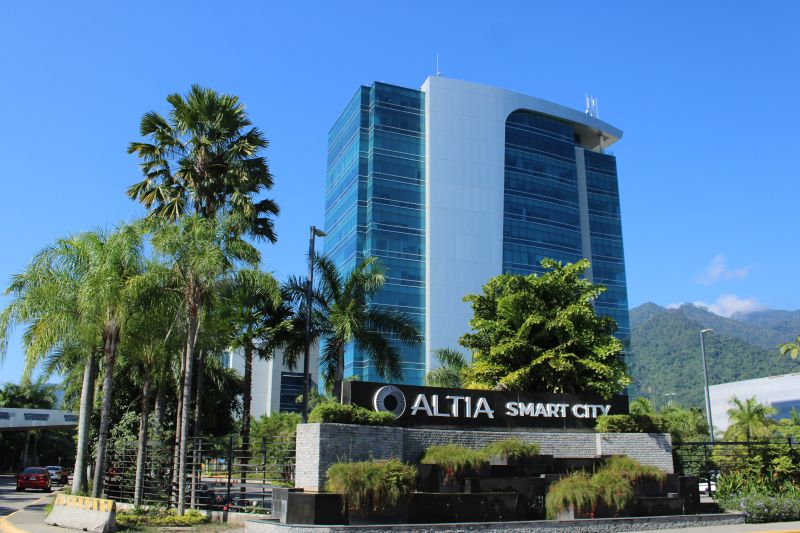
Altia's primary campus sits in San Pedro Sula near major residential areas, roads and universities. Its second location is in Tegucigalpa beside UNITEC. The company highlights access to six universities and a young, bilingual workforce. That proximity is not decorative. Large service operations need repeatable hiring, and repeatable hiring depends on commute time, language skills, training and whether a first job feels like a plausible career.

One revealing program is the Finishing School Program, run with the Inter-American Development Bank. Reporting in late 2025 said more than 350 young Hondurans had moved into call-center and BPO jobs, with more than 11 employers participating. Recent cohorts combined English preparation with practical interviews; Startek, Altiam CX, Alorica, Zero Variance, KM2 Solutions, Concentrix, XOOM BPO and ZVentus were among the hiring companies named.
The physical campus extends the same logic. There is RecZen, with food, training rooms, a creative studio, recreation and terraces. Altara adds retail, wellness and entertainment. UNITEC supplies education. A hotel and residences handle visitors and relocations. These are not all essential to answering a customer-support ticket. Together, though, they reduce the small daily frictions that make a large operation harder to retain.
04 / Proof, with caveatsThe tenants are the evidence
A campus can advertise resilience; a tenant renewal is a more interesting signal. The Honduran manufacturers' association lists operators including Alorica, IntouchCX, APL Logistics, Charger Logistics, GBM, itel, KM2 Solutions, Relay Human Cloud and Startek. Altia says itel, Alorica and ibex have launched or expanded on its platform. KM2 Solutions offers the longest arc: it began with one floor and, over 15 years in Honduras, grew into a multi-tower presence.
itel provides a more precise snapshot. Its San Pedro Sula center opened in November 2021 after development began that August. More than 250 bilingual team members had been hired by opening, and later materials described two production floors with capacity for 600 agents and room to expand. That does not prove every client will launch at the same speed. It does show how the pieces are meant to work together: prepared space, local hiring and an operator already familiar with the setup path.
Own the ugly handoffs
The transferable Altia lesson is not “build a city.” It is to map everything a customer must do between signing and succeeding. The most defensible opportunities often sit in the handoffs: where the lawyer waits for the lease, the recruiter waits for a headcount, the telecom provider waits for a floor plan, and everyone waits for the power test. Altia's bundle is valuable because those tasks are interdependent.
A smaller company can copy the pattern. Start with one expensive outcome. List the vendors, approvals and delays around it. Bring the most failure-prone dependencies inside the offer. Publish a credible time-to-value. Then keep support close enough to learn which objection becomes the next product. Altia began with buildings, but the commercial flywheel came from services that made the buildings useful sooner.
Bundle the bottlenecks around your customer's first successful day.
An all-in-one bundle becomes expensive baggage when customers only need one component.
A launchpad is useful only if you need to launch
Altia's model fits companies with large hiring plans, strict continuity needs, cross-border setup work and a reason to use Honduras's free-zone framework. It is less persuasive for remote-first software teams with a dozen employees, firms that need a specialized labor pool concentrated elsewhere, or operators whose customers require data, regulatory or time-zone conditions Honduras cannot satisfy. A company that already owns strong local recruiting and facilities capabilities may also prefer to unbundle the services and negotiate each component.
The tax pitch deserves similar discipline. Altia advertises 0 percent corporate tax, 0 percent sales tax and customs duty, and full repatriation of profits within its free-zone proposition. Those benefits depend on eligibility, structure and current law; they are not a universal coupon. The true calculation includes wages, training, attrition, travel, compliance, connectivity and management attention. Cheap rent cannot rescue the wrong labor market. A handsome campus cannot compensate for a client contract that prohibits the location.
Still, Altia has found a sharp place in the market. It sits between a conventional landlord and a full outsourced-services provider. The customer keeps control of the operation while Altia manages much of the environment around it. The result is a business park whose operational surface area is larger than its physical footprint. That is a narrow promise, but a useful one: bring the work, and the campus will help make Honduras ready for it.
The towers are visible. The product is everything a client no longer has to coordinate.Explore / Connect