A venture investor looking for the future might ask about artificial intelligence. TEL Venture Capital has also asked about moisture. Specifically, moisture inside a closed environment, alongside pressure, temperature, gas and plasma characteristics. Its March 2024 invitation to sensor startups reads like an engineer’s shopping list. That is precisely what makes it interesting. The investor knows the kind of machine in which an invention might have to earn its keep.
- Tokyo Electron’s venture arm backs technology connected to chipmaking and displays.
- An early collaboration drought prompted a rethink of how investments should work.
- For founders, the attraction is capital plus a possible route into industrial development.
01 / Five years, no working partnership
Tokyo Electron established TEL Venture Capital in 2006. The parent’s longer-term problem was familiar to large technology companies: promising ideas were being developed elsewhere. A California venture subsidiary could find them, evaluate them and help turn them into businesses. Launch-era reporting described plans to invest up to $10 million annually. Even the opening ambition had a practical scale.
Then came the uncomfortable result. In a 2021 interview, former president Keiichi Enjoji recalled that the first five years had produced no successful portfolio collaborations. Early investments had reached beyond the parent’s core into areas such as solar and biotechnology. But distance alone was not the problem. Investment objectives and plans for working together had been too vague, he explained; even semiconductor investments had failed to become collaborations.
The response was to concentrate on core semiconductor and display businesses and arrange collaboration before investing. The lesson is almost embarrassingly concrete: putting a startup on a corporate balance sheet does not give the two companies a job to do together.
A launch-era investment plan reported in 2006. A plan, rather than a measure of subsequent spending.
02 / Give the money a job
Today, TEL Venture Capital describes its purpose through technologies that fit Tokyo Electron’s business. Its offering combines investment, technical evaluation and business development. Portfolio companies may work with the parent through joint development or commercial collaboration, drawing on its technical resources and global business network. For a hardware founder, that possibility deserves close attention: an industrial partner can ask questions that a spreadsheet cannot.
“We consider portfolio companies as partners”
TEL Venture Capital
The business model has two objectives: investment returns and strategic benefit. Startups are the recipients of capital and support; Tokyo Electron is the corporate beneficiary of useful outside innovation. A partnership therefore needs an overlap of interests. A founder developing a relevant manufacturing technology has a clearer starting point than someone whose only connection to the parent is a large addressable market.
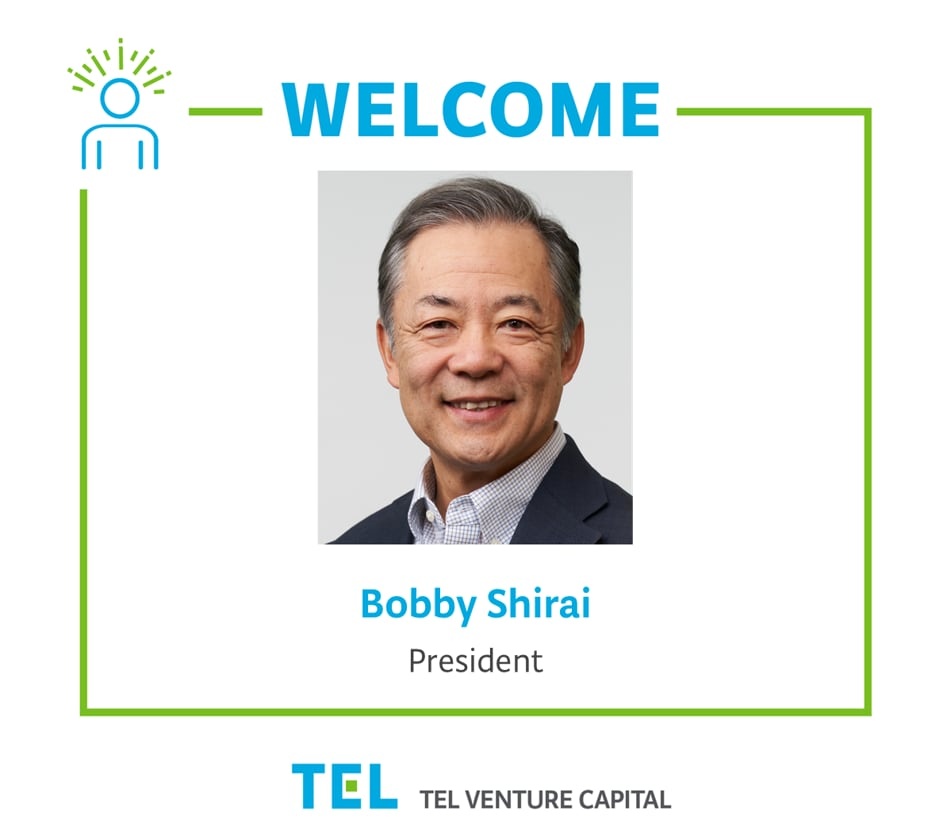
Its people help explain the emphasis. Vice president and general partner Hidenori Sato joined Tokyo Electron as an etch process engineer in 1992. Investment director Brent Elliot’s background includes semiconductor equipment companies and more than 100 U.S. and international patents. President Koki “Bobby” Shirai, whose appointment was announced in December 2024, brings decades at Tokyo Electron. These are careers spent close to equipment and customers.
03 / A chip factory, viewed through its problems
Consider ChEmpower. It develops polishing pads and chemical solutions for planarization, the work of making semiconductor surfaces flat. Conventional abrasive processes can leave scratches and particles. ChEmpower’s approach removes the abrasives, aiming to improve surfaces and simplify production. TEL Venture Capital participated in the company’s $18.7 million Series A announced in April 2025, alongside investors including Intel Capital and M Ventures.
The money was intended to help scale technology for advanced chip manufacturing and packaging. ChEmpower’s own development timeline moves from proof of concept to a minimum viable product, then pad manufacturing, customer sampling and sales. That sequence makes the industrial challenge visible. A promising material needs a repeatable way to be made and a customer prepared to use it.
Wooptix attacks a different problem: measuring the wafer. Its Phemet system measures the shape, nanotopography and roughness of a 300-millimeter silicon wafer from a single shot. The underlying wavefront phase imaging grew out of adaptive optics research in astronomy. TEL Venture Capital joined a Series C of more than €10 million announced in February 2025, led by Samsung Venture Investment Corporation and Spain’s SETT.
Distinct portfolio technologies, rather than a single production sequence.
Other investments sharpen the picture. TEL backed South Korean remote plasma source specialist EN2CORE in June 2025. It invested in Hinalea Imaging in September 2024, adding hyperspectral inspection technology used for manufacturing quality assurance. In each case, the problem sits near the production process: how to perform a step, or how to see whether that step worked.
04 / The useful question comes before the pitch
The portfolio also stretches toward adjacent technologies. A May 2026 investment backed Phosio’s advanced lens coatings. In August, TEL announced an investment in Japan’s Advance Composite, which develops and manufactures metal matrix composites. Materials, optics and manufacturing connect these businesses to an equipment company’s interests without making every portfolio company a miniature version of its parent.
For a founder considering TEL Venture Capital, the practical move is to turn that connection into a proposed task. Which equipment problem does the technology address? What experiment would demonstrate its value? Who on the corporate side would care about the result? Those are editorial lessons drawn from the company’s history, and they are questions worth copying before any strategic financing conversation.
The fit becomes weaker when the parent has little useful expertise to contribute, or when a startup’s priorities cannot accommodate industrial testing and collaboration. The same specificity that makes TEL relevant narrows its usefulness. Its sensor invitation offers a good final test: can you describe the problem with the precision of pressure, temperature and moisture? If so, the first conversation already has somewhere to go.