In 2007, a photograph could become a cartoon before its owner had time to feel intimidated. Upload, click, grin. BeFunky’s first products, the Cartoonizer and Uvatar, did not ask a casual user to think like a designer. They offered a small transformation with the timing of a good joke. Tekin Tatar, the company’s co-founder and CEO, had found a friendly entrance to a technical category.
The entrance mattered. Photo software of that period often arrived with the emotional warmth of an aircraft cockpit: panels, terms, tools inside tools. BeFunky began with a result anyone could understand. A snapshot went in. Something playful came out. The product launched at TechCrunch 40 in San Francisco, where it was selected among the event’s forty finalists. A place on Digg’s homepage added another gust of attention.
The trick would have been easy to dismiss as a novelty. Tatar and co-founder Kemal Ozisikcilar treated it as a wedge. Behind the cartoon effect sat a more durable observation: many people wanted to make images better, but very few wanted to become software experts on the way there.
The original product brief
Give the user a visible win before the interface has a chance to make them nervous.
A business education, then a different kind of brief
Tatar came to software through business and digital media rather than through the familiar mythology of a programmer in a garage. He earned a BA from Marmara University, followed by an MBA from Sabancı University in 2001. Before BeFunky, he worked in e-commerce, digital brand management, and interactive advertising. From 2004 to 2007, he served as Business Development Manager in Istanbul for McCann Relationship Marketing.
That route is useful context. Advertising teaches a person to compress a proposition until an audience can feel it quickly. BeFunky’s early pitch had that compression. It was visual, immediate, and easy to pass along. There was no long tour before the payoff. The product itself behaved like the advertisement.
The company was bootstrapped with help from friends and family. Public financing milestones followed: $250,000 in seed capital in January 2007, then a $550,000 round from Istanbul’s Golden Horn Ventures announced in June 2008. Funding gave the team room, but the memorable asset was still the plainness of the idea.
The product grows up without acquiring a scowl
BeFunky widened from effects into three recognizable jobs: edit a photo, assemble a collage, design a graphic. The suite moved across the browser, iOS, and Android. Each expansion could have dragged the product toward the professional software habit of displaying every possible choice at once. Instead, its public mission kept circling the same point: creative tools should work for people without special skills or technical expertise.
This is more difficult than it sounds. Simplicity is not achieved by hiding everything. A tool still has to be useful after the first click. The work is deciding which concepts a customer needs, what the software can decide on their behalf, and how advanced capability can arrive without turning the screen into a tax form.
“Our mission is to define the future of photo editing and bring easy-to-use professional photo editing to the masses.”Tekin Tatar, 2012
By 2012, the company reported more than five million monthly active users and 50 million photographs created each month. A later company account put its community above 25 million users worldwide. Numbers at that scale can make a product feel abstract. BeFunky’s actual use cases remained wonderfully domestic: fix a blemish, resize a picture, make a birthday collage, prepare a social post, turn an ordinary afternoon into something fit to share.
The progression offers a stealable product pattern. Begin with delight. Watch what adjacent task the delighted person attempts next. Add that task without changing who the product is for. BeFunky did not need its users to graduate into a different personality. It met the same person at the next item on the list.
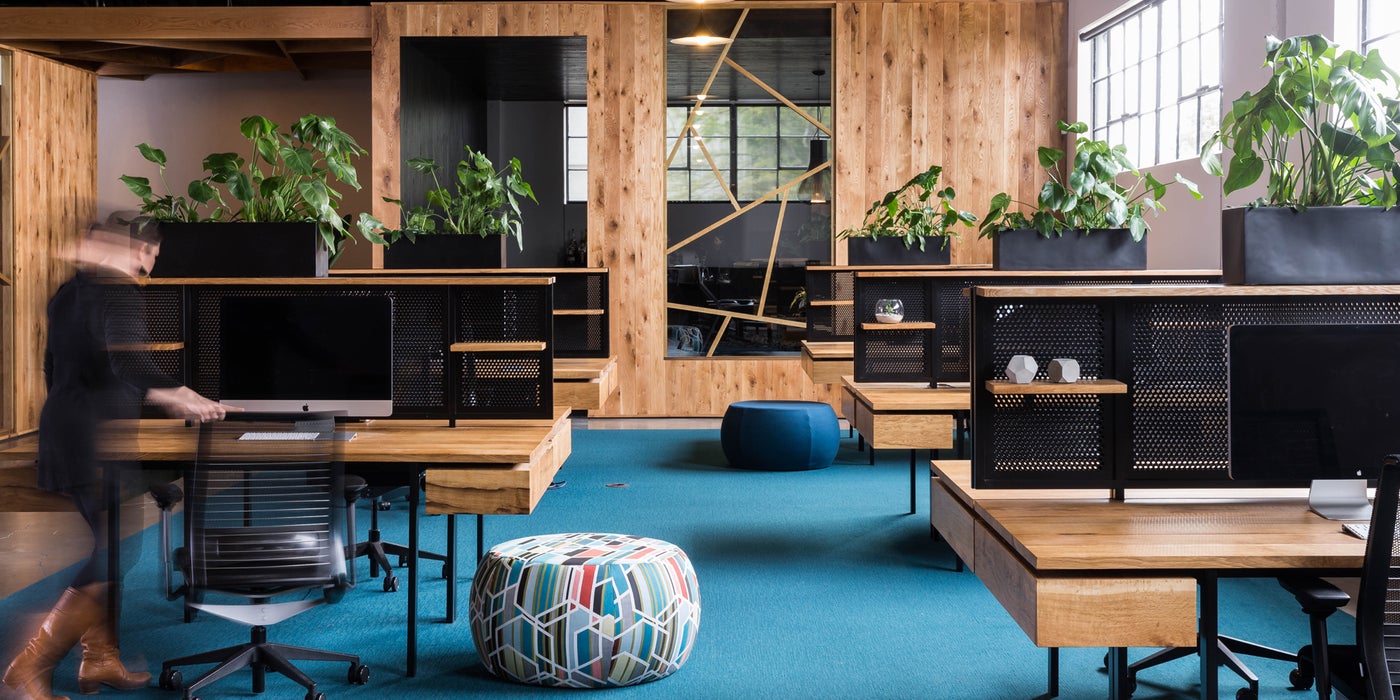
A company that crossed an ocean
BeFunky’s geography tells a second story. It was founded in Turkey, announced a move of its global headquarters from Istanbul to San Francisco in 2012, and relocated to Portland, Oregon, in 2014. Tatar described the San Francisco move as a way to reach creative talent, resources, and one of the company’s largest markets. The company crossed borders while its product erased smaller borders between professional-looking output and casual creators.
Moving a headquarters is the unglamorous side of aspiration: leases, hiring, paperwork, time zones, and an impressive number of boxes whose labels become vague by noon. Yet it also made the company’s global premise concrete. A tool built in Istanbul could serve someone editing a phone photo in Oregon, and the organization could move closer to the people and infrastructure supporting that work.
The Portland chapter also revealed something about how Tatar thought about teams. In 2015, as BeFunky grew from three men into a group with six women and four men, he argued that different experiences helped the company find new approaches to familiar questions. The point connected directly to the product: a diverse user base was better understood by a team able to learn from its own diversity.
“Our user base is diverse - we need diversity in our team, so we can learn from our own diversity how to meet the needs of our users.”Tekin Tatar, 2015
That comment supplies a useful counterweight to the lone-founder portrait common in startup stories. BeFunky’s public history includes friends and family, a co-founder, investors, designers, engineers, product people, and a team whose backgrounds became part of how it saw customers. Tatar’s achievement is inseparable from assembling and keeping that group pointed toward the same promise.
The acquisition that preserved the assignment
In 2021, Tiny acquired BeFunky as part of Tiny Fund I. Tiny’s description of the business is almost comically concise: “Photo editor for non-designers.” Four words carry fourteen years of product decisions. The acquirer said the original product team remained in place and the company continued operating from Portland.
Acquisitions are often narrated as finales, complete with a ceremonial photograph and suspiciously tidy lessons. This one reads more like a change in the capitalization table than a change in assignment. Tiny presented its role as patient capital and operational support for a multi-year product roadmap. BeFunky kept working on the same customer problem under new ownership.
The compounding advantage
A clear audience makes expansion easier to judge. Each feature either helps the non-designer finish or it does not earn its space.
Tatar remains listed by BeFunky as CEO and Founder. The contemporary product includes photo enhancement, background removal, object erasing, image upscaling, collage tools, and graphic design templates. Some features now use AI, a technical change large enough to inspire grand declarations elsewhere. At BeFunky, they are organized as verbs and outcomes. Remove this. Improve that. Restore the old photograph. The technology can be sophisticated while the customer’s sentence stays short.
The craft of letting people leave
There is a gentle paradox at the center of BeFunky. The better the product works, the sooner a customer can close it. Nobody opens a photo editor to admire the photo editor. They arrive with a crooked horizon, an awkward crop, six pictures that ought to become one, or a blank invitation waiting for a birthday. Success is the moment the software disappears and the thing gets sent.
Tatar built a company around that exit. The Cartoonizer’s little burst of surprise grew into a suite, but the emotional contract stayed intact. You are welcome here. You do not need a new vocabulary. You may make something good and return to the rest of your day.
What the interface refuses to demand
The practical lesson is not to make every product cheerful or to place a large yellow button in the middle of the screen. It is to decide what kind of labor belongs to the software. BeFunky’s customer brings the intention: make this brighter, remove that distraction, arrange these photographs, prepare this post. The tool takes on much of the translation from intention to technique. A person can ask for an outcome in ordinary language because the interface has already done the work of organizing the complicated choices behind it.
That division of labor becomes more valuable as the technology underneath grows more capable. A background remover can represent difficult engineering while appearing as one comprehensible action. The sophistication has not vanished; it has been placed on the correct side of the glass. Tatar’s long-running bet is that users notice this care even when they cannot name it. They feel it as momentum. One finished image becomes a reason to try a collage. A collage becomes a reason to attempt a design. Confidence, once earned, quietly expands the customer’s ambition.
In a software culture that often confuses seriousness with complication, that is a durable form of restraint. BeFunky has moved cities, platforms, product categories, and owners. Its central idea has remained still: creative confidence should arrive before the instruction manual.