A cordless drill comes with a second purchase hidden inside it. Bring home the tool, its battery and its charger, and the next saw becomes a slightly different decision. You already own part of what makes it run. A plastic battery pack has quietly acquired influence over the rest of your workshop.
- TTI puts Milwaukee’s trade tools and RYOBI’s DIY range under one roof.
- Compatible batteries make adding another tool easier.
- The strategy needs constant investment - and an occasional exit.
Techtronic Industries has built a business around that relationship. The Hong Kong company designs, manufactures and markets power tools, outdoor equipment, accessories, hand tools and cleaning products. Its customers range from electricians and maintenance crews to someone putting up shelves on Saturday. You may know its colors better than its corporate name: Milwaukee red and RYOBI green.
A battery is a small commitment
Consider RYOBI’s 18V ONE+ system. Its compatibility story begins in 1996, with a nickel-cadmium-powered drill. Lithium-ion arrived in 2007, but the platform remained compatible. Today TTI describes a range of more than 300 ONE+ products. The appealing part is wonderfully ordinary: a newer purchase need not make an older one useless.
That creates a bargain. Customers can add compatible tools without buying a fresh battery and charger every time. TTI gets an existing audience for each addition. The customer remains free to switch, but switching may mean duplicating equipment already on the shelf. Convenience becomes a commercial advantage, one purchase at a time.
ONE+ batteries work within the 18V ONE+ platform. RYOBI 40V and 80V use different systems.
There is a boundary to the promise. Milwaukee’s M12, M18 and MX FUEL systems have their own batteries. RYOBI’s 18V, 40V and 80V ranges are separate too. A shared parent does not make red and green battery packs interchangeable. The useful unit of comparison is the platform, rather than the corporate family.
The $627 million shortcut
TTI was founded in 1985 by Horst Julius Pudwill and Roy Chi Ping Chung. It began supplying cordless tools to a major American distributor in 1987 and listed in Hong Kong in 1990. Over time, acquisitions and licenses gave it names customers already recognized, together with products and routes to market.
The pivotal purchase closed in January 2005. TTI bought Atlas Copco’s electric power-tool and accessories businesses, including Milwaukee, AEG license rights and DreBo. Cash paid at closing was about $627 million, before final adjustments. That figure bought a package of businesses; treating it as Milwaukee’s individual price misses part of the transaction.
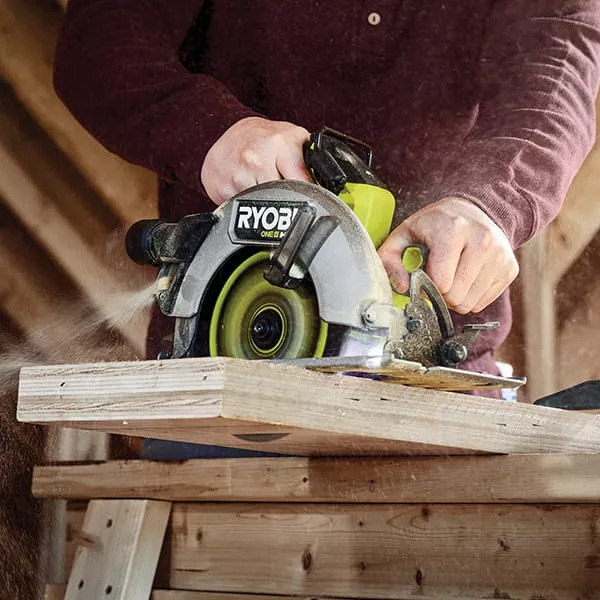
The brands occupy different positions. Milwaukee concentrates on professional trades and the productivity of a working day. RYOBI reaches the DIY buyer across home, workshop and garden. TTI operates the RYOBI tool businesses under license; it does not own Ryobi Limited. Against alternatives such as DeWalt, Makita and Bosch, TTI competes through these distinct identities.
The work before the work
Milwaukee describes its research as time spent beside tradespeople, observing the day from beginning to end. That distinction matters. A specification sheet records what happens while a tool runs. A worker also experiences carrying equipment, arranging power, changing accessories and packing everything away. Product development can attack that surrounding work.
“It all starts by earning the right to serve our users.”Milwaukee’s published approach
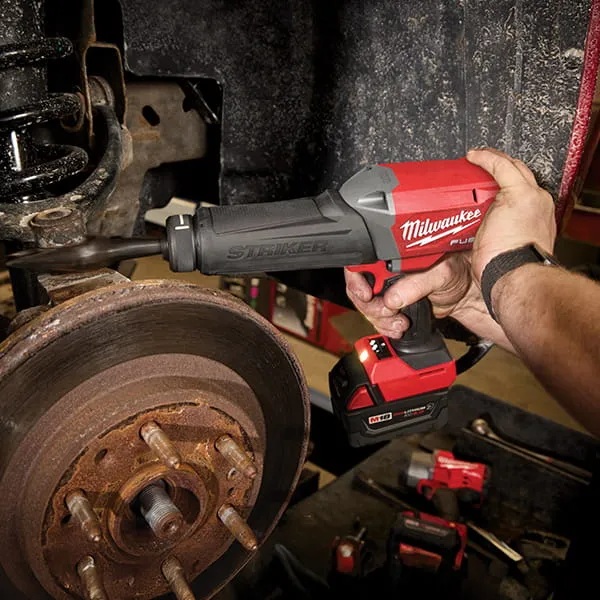
Its M18 FUEL STRIKER hammer chisel offers a concrete example: cordless striking for automotive service work that would otherwise involve a pneumatic tool, compressor and air hose. The proposition includes easier movement and setup. For a service technician, eliminating a hose can matter alongside the force delivered at the business end.
The engineering bill is substantial. TTI recorded about $757 million in research and development costs in 2025, plus $289 million in capital expenditure. Its business model is principally selling physical products through retailers and distributors. Home Depot and Bunnings provide important routes to RYOBI customers. Compatibility helps those channels sell the next addition.
Research and development costs.
Capital expenditure was another $289 million.
This is expertise in both the machine and the customer’s routine: motors, electronics and batteries on one side; application knowledge on the other. TTI’s stated culture links product innovation with operational improvement and leadership development. Its graduate sales roles put new employees near retail customers, where a product’s advantages have to survive an actual buying conversation.
The portfolio gets an edit
A broad collection of brands also creates decisions about what to stop. TTI voluntarily exited HART in 2025 while continuing to rationalize floorcare. Tariffs forced another adjustment: it suspended certain Milwaukee sales and promotions in the second half, then moved affected products to lower-tariff jurisdictions by year-end. Distribution and batteries could not solve that problem alone.
The annual numbers establish the scale: $15.26 billion in 2025 sales and $1.198 billion in profit attributable to owners. Yet revenue alone cannot tell you whether every brand deserves more investment. HART’s departure makes that question tangible. Owning a place in the aisle does not automatically justify keeping it indefinitely.
The August 2026 results show the distinction between strength and uniformity. First-half group revenue reached $8.292 billion, up 5.9%. Professional sales rose 9.7%; Consumer sales fell 2.5%. TTI had also changed its reporting segments to those two customer groups. The same corporate engine was pulling through different market conditions.
Reported sales change, H1 2026 versus H1 2025.
Bars show magnitude; signs show direction.
Buy the fifth tool first
For a buyer, the lesson is to imagine several jobs ahead. Check whether the platform contains the tools you will actually need. Compare battery capacity, charging arrangements and total cost. A compatible pack does little good when its runtime cannot cover your work, or the specialist tool you need lives elsewhere.
Compatibility deserves a little skepticism too. It protects the usefulness of equipment you own, while encouraging you to keep shopping within its system. Both can be true. The sensible response is to price the collection you expect to use, rather than admire the number of products in a catalog.
For an operator, TTI offers something equally practical: observe the whole task, preserve useful customer investments and give each brand a clear audience. Those choices require engineering money and dependable distribution. A battery can make the next purchase easier. The company still has to make that next tool worth buying.
Go into the workshop
Explore TTI, RYOBI ONE+ and Milwaukee M18. Follow TTI on LinkedIn, TTI Careers on X, Facebook or Milwaukee on Instagram.
Watch: M18 FUEL technology demoMilwaukee Tool · YouTubeFor more: company news, Milwaukee’s battery guide and the 2026 results webcast.