The tomatoes have company. Open Tapia Brothers’ product catalog and the produce shares space with beef, tortillas, bar supplies, freezer staples and janitorial goods. It is an unglamorous assortment with a very specific audience: the person responsible for making sure a restaurant can open tomorrow. Dinner needs ingredients. The business serving it also needs a clean floor, a stocked bar and something to put the leftovers in.
That is the appeal of a broadline distributor, the industry term for a supplier covering many of a kitchen’s purchasing needs. Tapia Brothers has built its version around a family business in the American West, combining wholesale delivery with processing and customer support. Its interesting achievement is the accumulation of useful jobs: finding the product, moving it, preparing some of it and helping the buyer decide what belongs on the next order.
A produce route, with the savings riding along
Before there was Tapia Brothers, there was Frank’s Produce. The company’s illustrated history dates that business to 1982 and identifies Pancho’s Mexican Restaurant in Long Beach as its first customer. Ramon joined Frank in 1983; Raul joined his brothers to form Tapia Brothers on January 1, 1985. Their first operation had two delivery trucks and three employees. The money was personal: the brothers pooled their savings to rent a 7,000-square-foot warehouse in Maywood.
The company records $960,000 in first-year sales. That number describes merchandise sold, not profit or the amount invested. Its next move, in 1986, was into a 40,000-square-foot facility on District Boulevard. Put those details together and the early pressure becomes clear: the operation needed more room. The pickup-truck arrangement had served its purpose; an expanding delivery business needed somewhere to hold the goods.
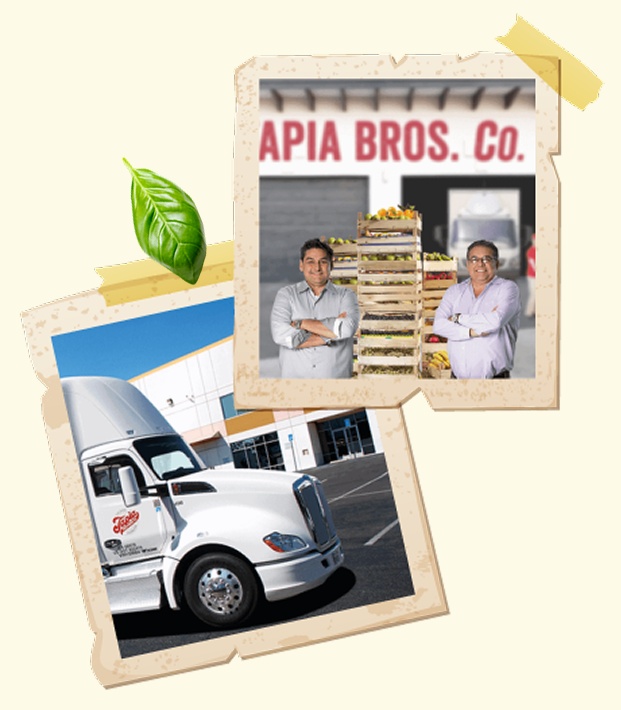
There was restaurant experience behind the sales pitch. A Thermo King account of the business traces the founders’ motivation to disappointing supply vendors. They had occupied the buyer’s side of the transaction and wanted better service. The lesson is refreshingly concrete: an unreliable supplier can reveal a business opportunity to the customer doing the waiting.
The West, one delivery territory at a time
The present network has four bases: Maywood, Fresno, Las Vegas and Phoenix. Each gives the company a regional operating center rather than one distant warehouse trying to serve every kitchen. The differences between them matter more to a prospective customer than a sweeping promise about coverage. A restaurant buys a delivery schedule for its address, not a colored patch on a map.
Maywood serves Southern California and operates around the clock six days a week. Fresno describes refrigerated trucks with multiple temperature zones running through Northern California six days weekly, with coverage extending from Bakersfield to Portland. Phoenix, which opened in 2006, lists Arizona, New Mexico and El Paso, Texas. Its customer base includes healthcare facilities and caterers alongside restaurants and government institutions.
Published territories describe reach; confirm service for the receiving address.
Las Vegas covers Nevada, Utah, Idaho and western Colorado. Taken together, these territories show why regional distribution is a physical business. Someone has to assemble the order, assign space on a vehicle and get different products to their destinations in suitable condition. Adding another city to the sales map adds work to that chain.
Temperature control was an explicit investment priority early on. In its fall/winter 2011-12 publication, Thermo King described Tapia’s installation of the first V-700 direct-drive truck refrigeration unit in North America. TK Services, Inland Kenworth and Morgan Bodies helped assemble the truck. The refrigeration system used power from the vehicle’s engine, giving Tapia another option for carrying fresh and frozen products.
“They understand how important accurate, reliable service is to the fast-paced restaurant industry.”
Raul Tapia Jr., discussing his father and uncles in 2011-12
The delivery can arrive with some of the work already done
Kitchen Cuts moved the business closer to the cutting board. The processing operation opened in 2014 after five years of development, according to its own account. It employs butchers and markets prepared proteins with an emphasis on consistency, labor and usable yield. Its brands include Tristar Angus beef, Nature First, Chloe’s chicken and Harvest Moon seafood.
The commercial idea is straightforward. A chef can buy a large piece of meat and do more work in the restaurant, or buy a product with additional preparation already performed. Neither choice automatically wins. The relevant comparison includes what survives trimming, the time needed to prepare it and whether the finished result meets the menu’s requirements. A cheaper pound can become a dearer portion.
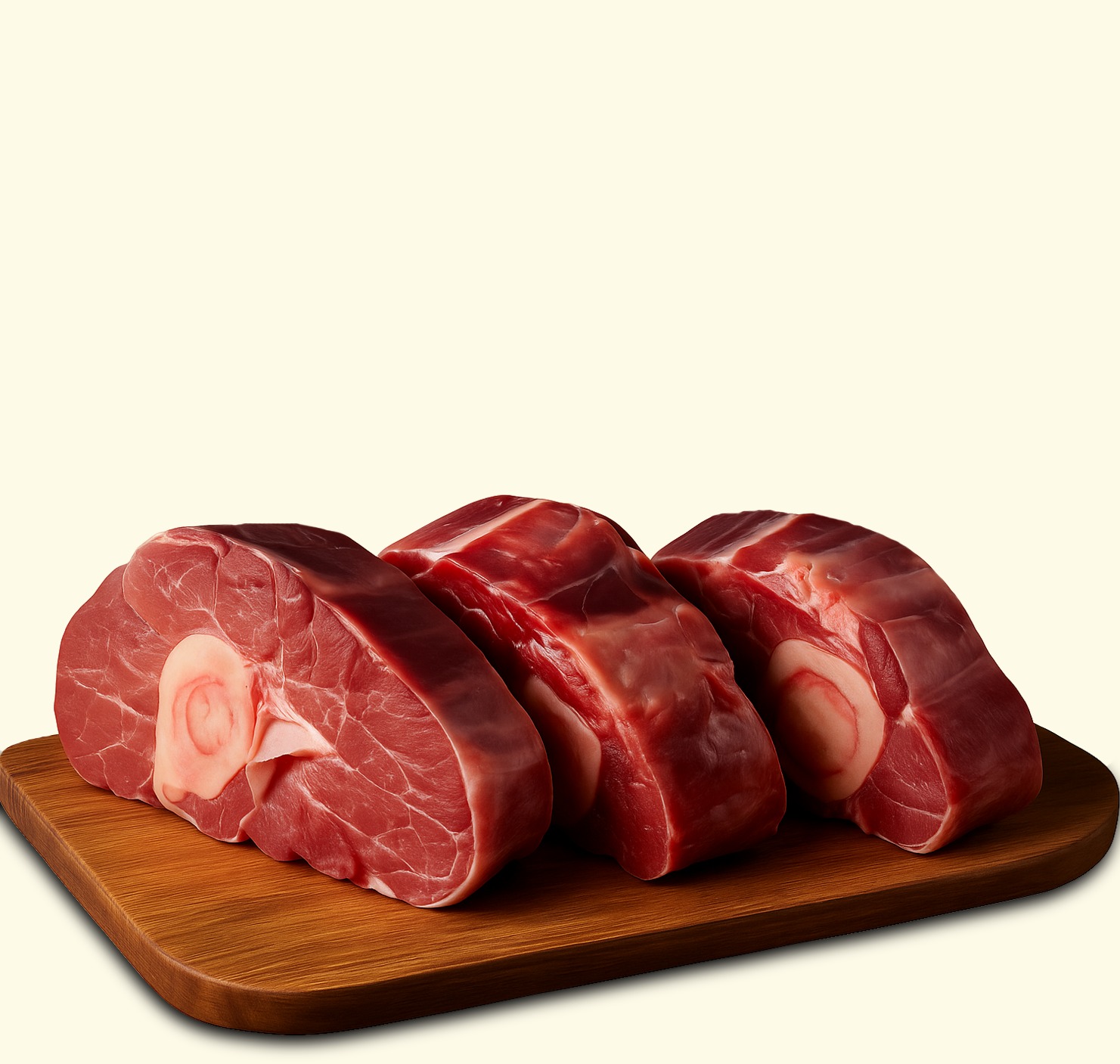
The operation extends beyond a steak photograph. In a public account of a plant visit, LK Packaging described seeing Kitchen Cuts shred cheese and package it in the supplier’s BOPP flow-wrap film. That small factory-floor detail is useful: value can be added through repeatable preparation and packaging as well as through selecting an ingredient.
Maywood also offers customers a test kitchen for training and product cuttings. For an operator, that creates an opportunity to compare products before committing a menu to them. A sensible trial would use the restaurant’s own recipe, portion size and preparation method. The real question is whether the delivery works on the plate and on the prep schedule.
Read the invoice in portions
Tapia’s business model is wholesale supply to commercial accounts. It sells food and operating supplies; its processing arm adds prepared products to that offering. An online customer application and credit application sit alongside the ordering links. The transaction therefore begins with establishing the business relationship, then specifying what the kitchen needs and how it will receive it.
A useful purchasing exercise is to compare the delivered cost of usable portions. Start with the case price, add preparation labor and divide by the servings actually produced. Then consider anything that the simple calculation leaves out, including storage, waste, consistency and delivery arrangements. The example below is deliberately editable. Its dollar figures are illustrative assumptions, not Tapia prices or promised savings.
What does a usable portion cost?
Try the numbers from your own kitchen. Example values only.
This calculation also explains when paying for more preparation may disappoint. A kitchen with skilled staff, spare capacity and a profitable use for trimmings can reach a different answer from a small operation struggling to finish prep. The buyer should test the actual product and workload. Convenience earns its premium only when it removes a cost or solves a problem the restaurant really has.
Family service has national competition
Tapia describes itself as an independent family distributor and emphasizes personal contact. Its LinkedIn description makes a modest, testable promise: “when you call, there will be a person that answers.” In a business full of product lists, the ability to get a problem in front of someone is part of what the company sells.
The alternatives include Sysco and US Foods, which also supply restaurants and institutions with broad assortments. US Foods offers digital ordering and business services, while Sysco’s distribution spans food and nonfood goods. Tapia therefore has to compete on the details of an account: product fit, service, territory and the working relationship. Having a wide catalog or an app does not, by itself, settle that contest.
Its public customer display includes Urth Caffé, Kalaveras, Tacos El Gordo and Sweetgreen. Those are company-presented relationships, rather than evidence that it supplies every location or every item those businesses purchase. Upstream, its partner roster includes Darigold, Unilever, Dart and La Fortaleza. A regional distributor brings those suppliers into a purchasing relationship a restaurant can actually use.
Dependability also runs in the opposite direction. Cargill publishes a testimonial from Tapia meat purchasing manager Miguel Arias describing continued shipments during disruption, when other providers had delayed or canceled deliveries. It is a reminder that the distributor promising reliability is itself a customer. The truck leaving its warehouse depends on goods arriving first.
An order guide in your pocket
Tapia Cart puts routine buying on a phone or tablet. Its App Store listing describes product search, order guides, nutritional information and specifications, along with tools to manage orders and schedule deliveries. That makes the app a practical companion to the commercial account: a place to identify and repeat the things the kitchen uses.
The release history records cart recommendations in October 2025 and a bug-fix update in November. These are small developments, but appropriate ones for repeat purchasing. The operator’s likely test is whether the correct items can be found and ordered without unnecessary effort. A familiar order placed accurately has value even when the screen produces no excitement.
The family still knows the other side of the table
In November 2021, Raul Tapia Jr. and Erik Tapia appeared on the podcast Amiga, Handle Your Shit to discuss their La Bodega Brewing Company venture. The conversation’s published outline covers choosing a location, a speakeasy concept and the pandemic’s effect on opening. It is a revealing detour for food-distribution executives: they were dealing with the demands of a hospitality business of their own.
That connection is the most persuasive way to read Tapia’s family story. Restaurant experience supplied a reason to enter distribution; delivery work built customer relationships; processing expanded what the supplier could do before the food reached the kitchen. An operator evaluating the company can follow the same practical sequence: check the route, compare the product, test the portion cost and speak to the people who will handle the account. The next delivery gives the verdict.
Follow the next delivery
Company website · Browse products · Open an account · Kitchen Cuts · Tapia Cart
LinkedIn · Twitter/X · Instagram · Facebook · Company blog
Listen: Raul Tapia on the family business
Listen: Raul Jr. and Erik on La Bodega