A strawberry is a difficult customer. It cannot sit through a planning meeting. It does not become more valuable in a queue. By the time it reaches a supermarket, the decisions that matter have already happened: when someone picked it, cooled it, booked the truck and found a place at the receiving dock. Allen Lund Company has spent half a century working in that narrow space between a harvest and a disappointment.
- A family-owned broker that arranges freight through contracted carriers.
- Produce expertise, alongside dry van, flatbed, LTL and international services.
- Its own software business, built around the messy details of shipping.
01 / Start beside the strawberries
In 1976, Allen and Kathie Lund opened a transportation brokerage beside the Los Angeles produce market. The company’s history puts Allen’s starting cash at $1,000. That is an origin detail, rather than a complete startup budget. But the location tells you something useful: the business began close to people whose inventory had an expiration date.
The company now serves growers, manufacturers and retailers. Transport Topics names Coca-Cola, Costco and Walmart among its key customers. Refrigerated freight remains a specialty, although ALC says dry vans carry the majority of its shipments. Its services also include flatbeds for awkward cargo, smaller LTL shipments, expedited transport and international forwarding. A strawberry opened the door. Plenty of less fragile things followed.
02 / The truck is only part of the deal
ALC is a non-asset-based broker. A shipper needs capacity; a carrier has equipment. ALC connects them, arranges the shipment and coordinates its progress. In the basic brokerage model, the difference between the shipper’s charge and purchased transportation supports the broker’s operations. The trucks belong to the carriers. Much of the broker’s value sits in knowing whom to call, what to check and what to do when the plan changes.
Consider the scale carefully. Transport Topics’ 2026 listing, using data through December 2025, reports $1.348 billion in gross revenue and $158 million in net revenue. The latter is not net profit. Brokerage revenue includes substantial transportation spending that passes through to other businesses. Reading only the billion-dollar headline misses the machinery underneath it.
For shippers, the price is a quote shaped by the lane, equipment, season, fuel and available capacity. For carriers, cash flow has its own clock: ALC’s FAQ lists payment 14 days after paperwork approval, or 30 days for factoring companies. Comchek/Quick Pay carries a fee of 2% or $25, whichever is greater. A delivery and an approved invoice are different milestones. For a grower, that distinction can become painfully concrete.
The administrative tools follow that logic. ALC’s carrier portal exposes load confirmations, load history and payment information. Its factoring portal lets users identify and upload missing paperwork. These are small interventions in an expensive chain of dependencies. The practical problem may be a document that nobody realized was missing.
03 / Software meets the loading dock
The more interesting extension of this business is ALC Logistics, its software division. AlchemyTMS is a modular transportation management system, with tools for shipment coordination, dock scheduling and LTL management. It connects with existing business systems. A shipper can buy software or choose a broader managed service involving operational staff. The commercial proposition stretches from booking freight to running more of the transportation process.
Why build software inside a brokerage? A 2018 account of the Alchemy branding describes customers asking ALC for additional services and the company writing tools around those requests. The pressure came from the work. A spreadsheet might record yesterday’s arrangement perfectly while telling the next driver something useless.
- 01BookLoad, equipment, carrier
- 02UpdateChanges and shipment status
- 03ReceiveAppointment and dock capacity
Naturipe Farms offers a concrete explanation. In a published testimonial, transportation executive Rick Burden describes berries being picked, packed, cooled and shipped on the same day. Naturipe needed a system that could adapt, and ALC developed berry-specific functionality. Mucci Farms’ Bryan Miller makes a related point: “it’s not a cookie-cutter solution.” The attraction is the ability to accommodate the business as it behaves.
“Claims never get better with time - it’s not wine.”
Kenny Lund, discussing refrigerated-freight claims
That observation explains the product better than a list of features. Claims need documents, temperature information and communication among several parties. Waiting makes the task harder. For anyone building operational software, there is a lesson to copy: find the moment when a changed instruction stops reaching the person who needs it. Start there.
The same reasoning applies at the dock. Booking transport solves one constraint; finding room to unload solves another. AlchemyTMS Dock Scheduling coordinates appointments and facility capacity. A business evaluating it should bring its awkward cases to the demo: multiple pickups, changed quantities, an arrival outside the planned window. A polished screen matters less than whether the next person receives usable instructions.
04 / Trust has paperwork
Relationships alone cannot establish who is behind a load booking. ALC’s published onboarding starts with Highway verification, followed by its carrier application. It requires at least a year of active carrier authority, $100,000 in cargo coverage and $1 million in auto coverage. Those conditions also set a limit: a newly authorized carrier cannot immediately qualify under the stated rule.
The operating idea extends to empty trucks. ALC says it has participated in EPA SmartWay since 2009 and uses backhaul matching to reduce empty miles. A return load can improve equipment utilization and lower transport costs. That benefit depends on compatible locations, timing and equipment; a dashboard cannot manufacture a suitable shipment.
Configuration also demands participation. Miller’s testimonial connects software value to how the customer uses it. That is a sensible boundary on the promise. Teams still have to enter reliable information, connect their systems and act on exceptions. Buying visibility does not, by itself, decide what to do about a late arrival. The people and the process remain part of the purchase.
05 / Fifty years, still taking changes
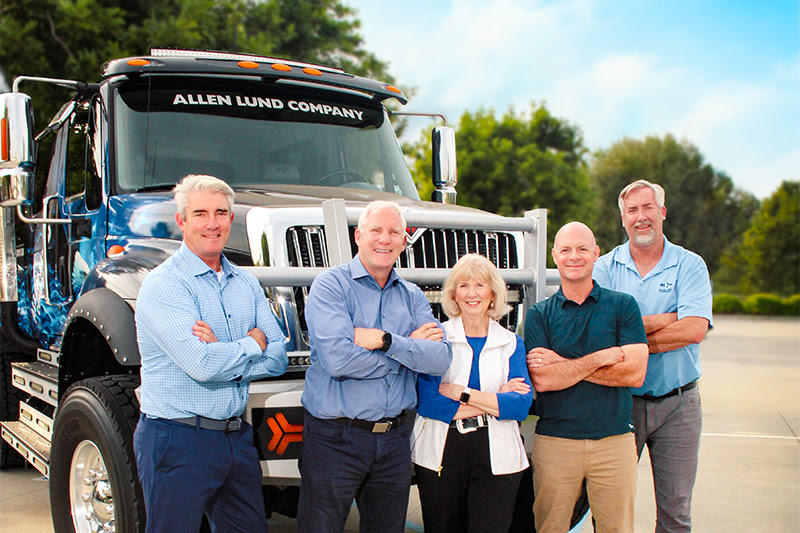
Family ownership has survived expansion. The founder’s sons worked brokerage desks before moving into leadership. In 2023, ALC acquired Canada’s United World Transportation, adding expertise in the same refrigerated produce niche. In January 2026, it celebrated 50 years with more than 40 branches and a community clothing-and-food initiative.
Shippers can compare ALC with C.H. Robinson, TQL or a direct carrier relationship. The useful question is how much coordination they need beyond the truck. ALC’s particular combination is produce experience, brokerage service and configurable software. Its value becomes easier to see when the shipment changes after booking. Somewhere, the berries are already on the clock.