A bottle of bourbon has an unusually glamorous public life. It sits under flattering light, wears a handsome label, and arrives at the table with a story. Before any of that, someone has to know how many cases are available, which account ordered them, and whether the invoice is right. In New Jersey, Allied Beverage Group makes a business out of those less photogenic questions.
- Wine and spirits distribution for New Jersey’s licensed trade.
- A family-owned business assembled through several mergers.
- Physical delivery, product knowledge and digital ordering under one roof.
Its customers are liquor stores, restaurants, hotels, taverns and clubs. Suppliers need a route into those establishments; buyers need stock and someone who understands the portfolio. Allied occupies the space between them. The business earns wholesale revenue by moving products through that relationship, with sales, marketing and logistics attached. A good bottle still needs an effective way to reach its buyer.
01 A bigger company, one order at a time
Allied’s roots reach back to the repeal of Prohibition in the early 1930s. Its present identity came through combinations involving the Baxter Group, F&A Distributing Company and the Jaydor Corporation. Then came the August 31, 2017 merger with Breakthru Beverage New Jersey. The combined operation kept the Allied name. Transaction counsel put annual revenues above $1 billion at the time.
Consider the phrase “combined operation.” It sounds wonderfully tidy. Yet the deal announcement said operations would largely run in parallel in the following months. Suppliers, employees and customers needed continuity while the businesses came together. Buying scale and making scale useful are separate assignments.
Annual sales reported by Allied in a submission published by New Jersey authorities. A measure of turnover, not profit.
That distinction matters when sizing up the company. Allied’s own 2018 sales submission reported about $1.09 billion. It also counted 6,262 customers receiving retail incentive payments that year. Those figures capture the weight of a state-focused operation; they do not measure today’s revenue or total customer base. The interesting scale here is concentrated in one market, with thousands of commercial relationships to maintain.
The portfolio stretches beyond the familiar spirits shelf. Allied’s published catalog includes prepared cocktails, non-alcoholic mixers, alcohol-free wines and spirits, and waters. That breadth gives a buyer more categories to explore through an existing relationship. It also makes product knowledge a working requirement: choosing a mixer and choosing a bourbon call for different conversations.
02 The warehouse has a wine room
The Elizabeth headquarters gives that concentration a physical form. Developed with Prologis and designed by KSS Architects, it brought office work, product education and distribution together on a former brownfield site. New Jersey Business Magazine reported a project cost of nearly $57 million, with completion in December 2018. Allied’s recruitment material dates the facility’s opening to 2019.
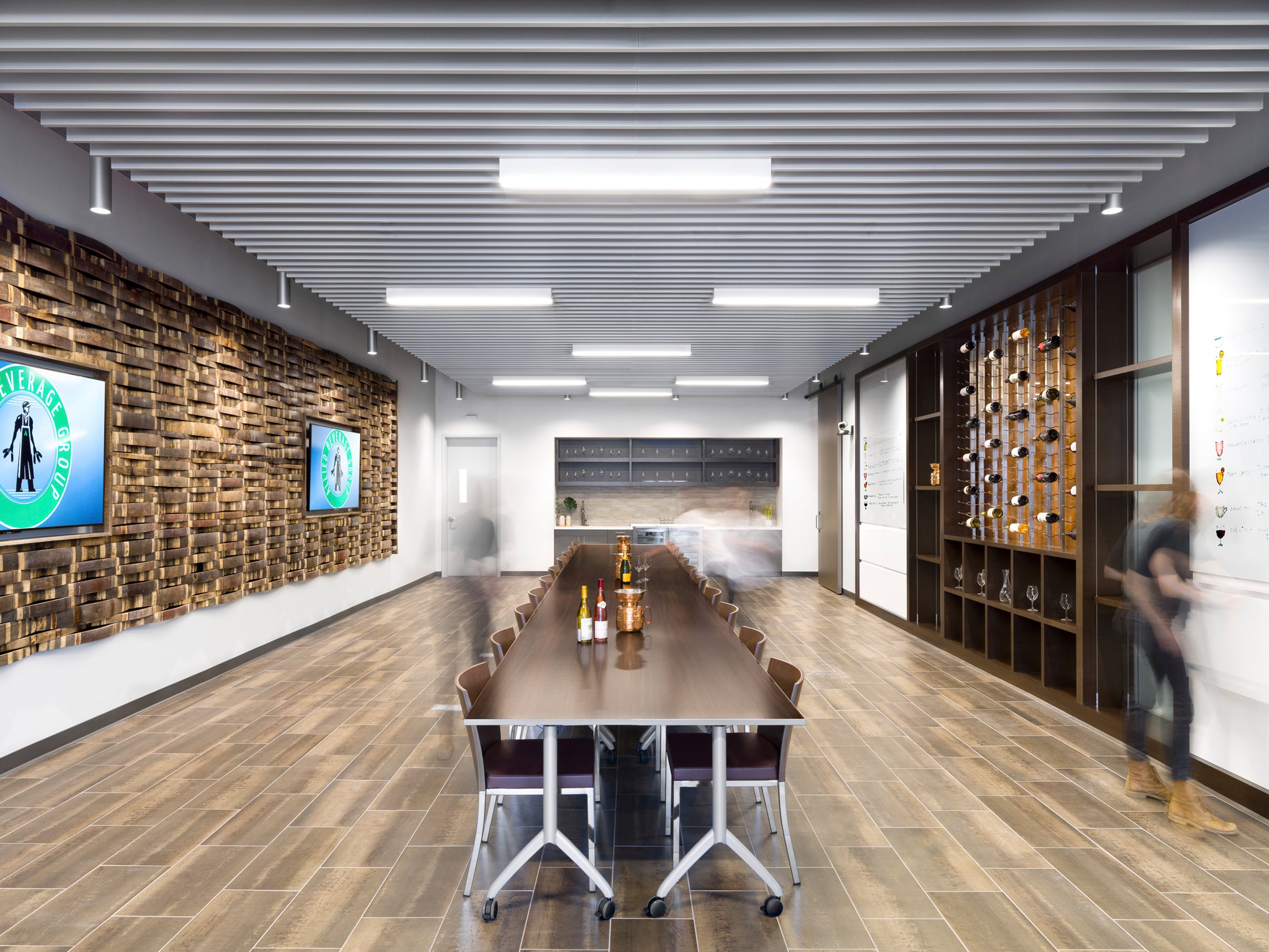
There is a useful little surprise inside: dedicated alchemy and wine rooms. A distribution company needs people who can explain products as well as move them. Education spaces put those jobs close together. KSS also describes daylight over the loading dock, an automated storage and retrieval system, and a rooftop solar array. The design treats the workplace and the warehouse as parts of the same operation.
Education continues outside the building. Allied promoted a trade-only wine show for September 23, 2026, with more than 40 suppliers. Such events let licensed accounts compare products and meet the people representing them.
The location does practical work of its own. Airport, seaport, rail and highway connections sit within reach. Allied also maintains offices and cross-dock facilities in Swedesboro. For a supplier, that infrastructure offers access to the New Jersey trade. For a buyer, its value becomes tangible when the order arrives.
trade
Bottles travel toward the shelf.
Orders and sales information travel back.
03 Three days hiding in the paperwork
The smaller efficiency story is just as revealing. In a historical Dimensional Insight case study, Allied described expanding its Diver analytics system beyond sales. One accounting workflow automated supplier invoices for retail incentives. The vendor reported three days saved each month and approximately $20,000 in annual savings. That is a narrow, intelligible result: less time entering invoices.
“The speed and accuracy of Diver are its biggest value.”Karl Mende, business analyst
Dimensional Insight case study
The implication for another operator is straightforward. Find a recurring task, give the people doing it consistent information, then measure the time returned. The case study also describes regular user training. Software needs people who can use it. An invoice workflow is a sensible place to begin because its outcome can be counted without pretending it explains the return on an entire technology investment.
04 Ordering on the buyer’s clock
Allied’s ALL/IN platform brings the same attention to the customer’s desk. Buyers can search products, prepare multiple draft orders, share them with sales representatives, and handle invoices and payments. The company advertises AI-driven search and recommendations, alongside dedicated shopping pages for retail incentive programs. Availability is 24/7/365. The practical appeal is doing account work when the buyer has time.
There are boundaries. Registration requires an Allied account number, an ABC license number and business names. This is a trade workspace. A consumer looking for a bottle needs a retailer; a licensed buyer needs the right account and available products. Fedway is a New Jersey distribution alternative, but Allied’s catalog flags certain brands as exclusive. The required bottle can determine the distributor.
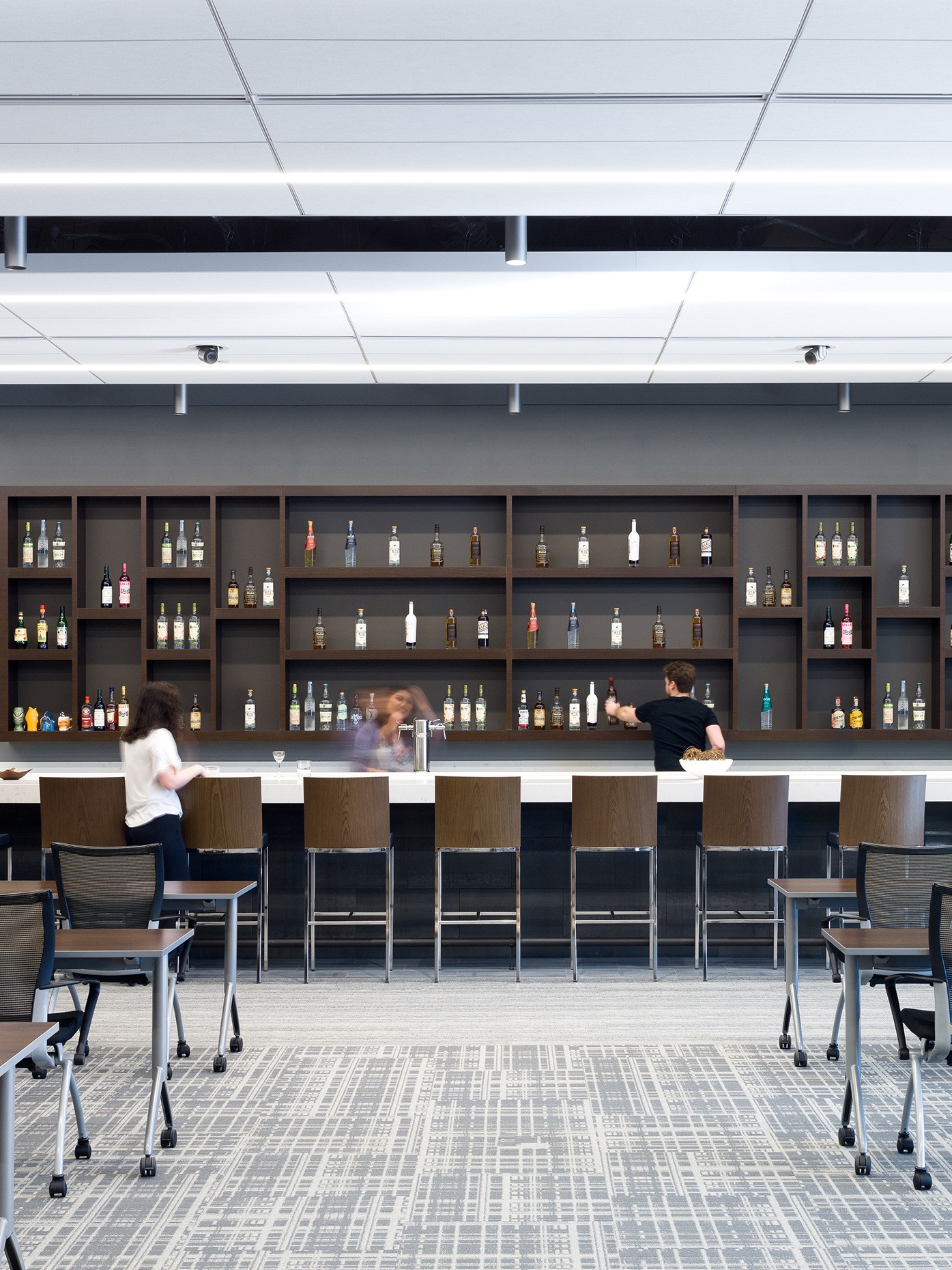
For an emerging brand, the relationship can mark a change in how it reaches stores. Tribini announced Allied as its first official distributor in October 2023 after building a self-distributed presence. For a supplier with wider account programs, coordination remains a challenge after placement. In March 2025, PINATA announced a National Accounts Command Center developed with Allied to track execution, activation and compliance.
These are different versions of the same problem: a commercial promise must survive contact with individual locations. More warehouse capacity helps when volume supports it. Better software helps when data and habits support it. Neither makes every product sell. Allied’s useful lesson is to follow the bottle all the way through the business, including the quiet tasks that let somebody else make the pour.