Before a used car had a webpage, it had a windshield. That was valuable advertising space, but the presentation could be decidedly homemade. In a 2011 account of Dealer Specialties’ origins, brothers Mike and Jack Nenni saw an opportunity: give used vehicles professional window stickers, much like the ones attached to new cars. A small improvement in presentation would become a much larger business in moving information.
- Dealerships buy photography, video, inventory software, and listing distribution.
- The company combines people on the lot with tools that publish their work.
- The repeatable lesson: collect vehicle information once, then put it to work everywhere.
Founded in 1989, Dealer Specialties began with window-label services. Its own history describes storing used-vehicle information for buyer’s guides as the foundation for later marketing. The important asset was becoming the record behind the sticker: equipment, specifications, and the details needed to describe a particular car. Once stored, those details could travel.
That helps explain a company whose catalog now includes AI descriptions and virtual walkarounds alongside printed labels. The product changed shape as shopping moved online. The underlying job remained recognizable: help a dealer show what is actually sitting on the lot.
Somebody still has to photograph the car
Consider the handoffs involved in a listing. Someone needs photographs. Someone needs to check the vehicle information, arrange the images, write a description, and publish the result. Then the price changes. Or the car sells. A polished listing is a maintenance job as much as a creative one.
Dealer Specialties sells a combination of fieldwork and software to handle that sequence. Its photographers visit dealerships, capture interior and exterior images, and use RapidLot software for image processing, sequencing, frames, and branding. VinMotion is the central inventory merchandising platform where dealers manage assets and distribute listings.
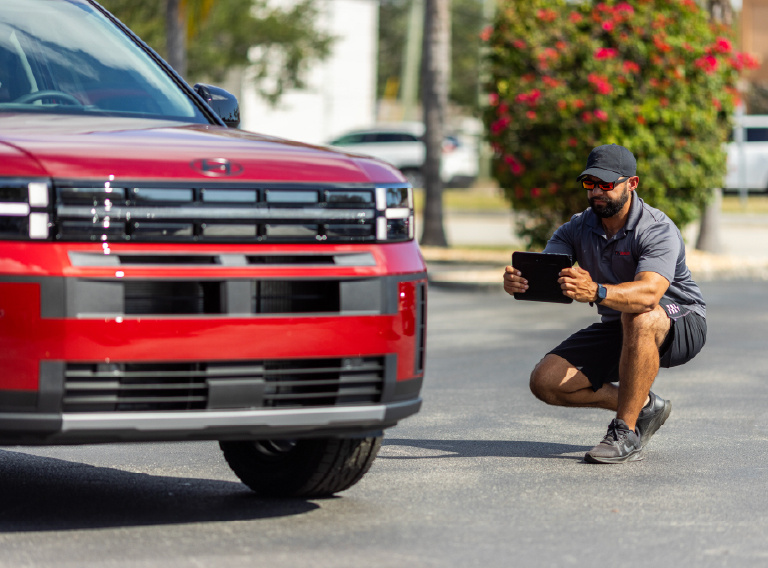
On its photography page, the company puts average shooting and processing time at around three minutes per vehicle. It says images become available almost immediately in VinMotion, while third-party availability depends on the receiving provider’s feed schedule. The distinction matters. Finishing a photograph and getting it in front of a shopper are separate events.
One record. Many shop windows.
The distribution service sends inventory to more than 200 internet partners, including Autotrader, Cars.com, CarGurus, Edmunds, and TrueCar. Dealers can manage listings centrally rather than rebuild each presentation in every destination. Marketplaces are distribution outlets here; Dealer Specialties supplies the information and merchandising behind the listings.
Its current company page says it serves more than 3,000 dealerships. These are business customers buying help with new and used inventory. The partner-feed business also supplies vehicle data to other companies, with delivery options organized by dealership, ZIP code, state, or nationally. The same collected record has more than one audience.
VinMotion’s mobile tools add another practical layer: staff can update information, photos, and prices while moving around the lot. Appraisal features include market comparisons and access to CARFAX and AutoCheck history reports. The software sits close to the inventory work rather than waiting for everyone to return to a desk.
The background becomes optional
The recent AI additions tackle specific production tasks. Dominion StoryBuilder uses VIN data to generate vehicle descriptions and can create them automatically when inventory enters VinMotion. Dealers supply a template; the system turns vehicle features into listing copy. It is a way to reduce repeated writing across a changing stock of cars.
Background removal addresses another unglamorous bottleneck: the surroundings. The current service replaces backgrounds and ground surfaces, adds a natural shadow, and offers more than 20 ready-made scenes, plus custom dealership branding. Dealer Specialties advertises standard delivery within 24 hours, compared with the 36 to 48 hours or longer it describes for the previous manual process.
“That data became the infrastructure to support the future of used vehicle marketing.”Dealer Specialties, on its window-label origins
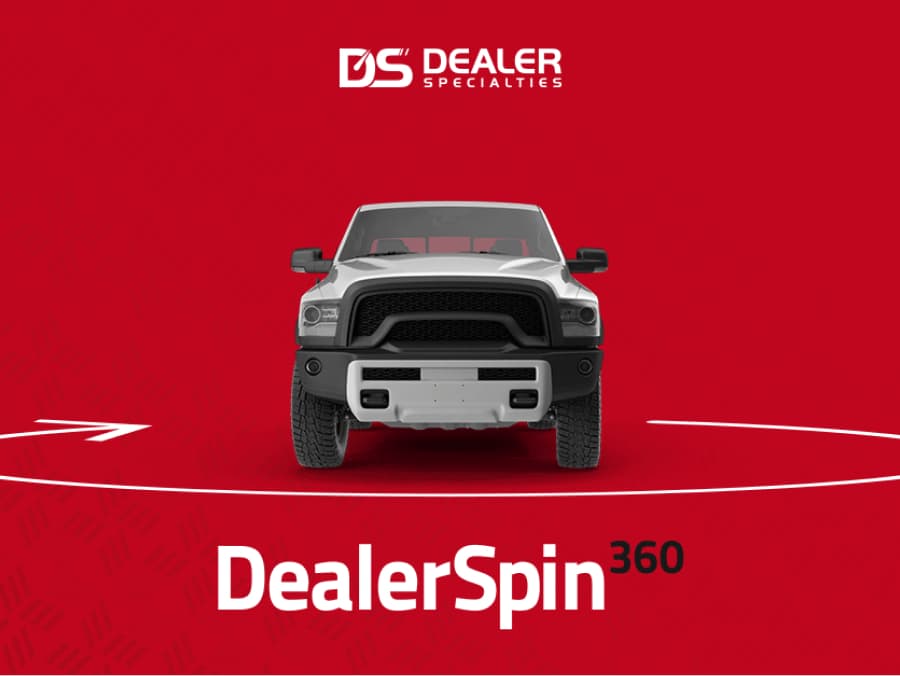
DealerSpin360 gives shoppers interior and exterior walkarounds with clickable feature hotspots and AI-enhanced backgrounds. LiveLot covers video, including stabilization, picture-in-picture messages, and graphic overlays. A dealer can choose different ways to answer a buyer’s questions before that buyer visits.
The purchase is a process
Dealer Specialties is part of Dominion Dealer Solutions. Its position in the market combines on-lot services, merchandising software, and distribution. HomeNet is an alternative for digital merchandising and syndication; vAuto overlaps in inventory pricing and management. For a dealership, the useful comparison is the work included in the package and the work its own employees must still perform.
Photography is sold on a subscription basis, with services tailored to the dealership. Background removal and StoryBuilder use custom quotes. Evaluating the cost therefore starts with inventory volume, service mix, and staff time. A useful trial would track arrival-to-publication time, missing photos, description accuracy, and whether updates reach the sites the dealership uses.
Manufacturer relationships add another layer. Dealer Specialties is an authorized partner for General Motors’ Dealer Vehicle Inventory Management program and Jaguar Land Rover’s certified pre-owned window-label program. Those arrangements connect its tools to specific dealer requirements, beyond making a listing look attractive.
The practical expertise sits in those repetitions: photographing different vehicle types, keeping image sequences consistent, matching records to the right inventory, and maintaining feeds. A dealership buying the service is also assigning responsibility for those details. That is why the field team matters to the software proposition. A template can standardize a description, but someone still has to capture the particular vehicle that the description promises.
The lesson other businesses can copy is modest and useful: make one dependable record serve several customer-facing jobs. But the dependencies remain. Source information needs checking. Vehicles need to be ready to photograph. Receiving platforms control their own update timing. Better images cannot repair a damaged car, and publishing everywhere cannot rescue an uncompetitive price. Dealer Specialties’ opportunity lives in the work between having inventory and making that inventory understandable.