The least glamorous object in artificial intelligence may be an unpaid invoice. It does not compose a sonnet, generate a film, or speculate about consciousness. It sits in a queue. Somewhere else, a supplier waits for money, a shipment waits for parts, and an executive wonders why the supply chain has developed a personality disorder. Tamas Hevizi likes this sort of problem.
Years ago, while working in automation, he told the story of an automotive supplier that could not understand why its vendors were failing to ship. The cause was buried several steps back: the company was not matching invoices correctly, payments were late, and the suppliers could not make the products on time. Automating the matching process addressed the failure. The lesson was larger than the software. An initiative that looked like back-office efficiency turned out to be customer service, working capital and production reliability wearing the same raincoat.
That habit of following a problem until it reaches the business result has become the organizing idea of Hevizi's career. Now Chief Strategy and Marketing Officer at Tungsten Automation, he has spent more than 30 years moving among consulting, enterprise software, value engineering, private equity and automation. The titles changed. The question stayed put: where, exactly, does the value appear?
The useful art of being boring
Artificial intelligence is not short of theatre. Models arrive with trailers. Agents acquire job descriptions before they acquire dependable judgment. Pilots proliferate because a pilot is easier to applaud than a changed operating process. Hevizi's response is a phrase with the cheerful rudeness of a good editorial note: “boring AI.”
By boring, he means AI applied to work a company already needs to do: making invoices accurate, speeding customer onboarding, improving straight-through processing, reducing fraud, tightening compliance. The task is not to make the technology sound smaller. It is to make the claim specific enough to test. In a 2026 post, he proposed the blunt scorecard: did the process get faster, did cost go down, did revenue improve, did risk decrease, and did the customer or employee experience materially improve?
These are questions a chief financial officer can recognize without a glossary. They also expose the distinction between technology working and a business working better. A demonstration can prove that a model extracts a field. It cannot, by itself, prove that a loan closes sooner or an exception reaches the right person before the customer calls.
Hevizi's approach begins with the bottleneck, not the catalog. Copying an AI use case from a webinar is tempting because it arrives already wrapped in confidence. Yet another company's use case was designed around another company's constraint. Install it in the wrong part of your own workflow and you may automate a step that was not causing the delay. The software succeeds. The business remains politely unimpressed.
A career spent translating
Hevizi studied at Corvinus University of Budapest and later completed Wharton's General Management Program. His professional route crossed Deloitte and Ernst & Young, including senior consulting work, before broadening into enterprise software. At SAP he held global leadership positions in value engineering and private equity. In 2011, when SAP launched a private equity advisory council in India, he described the company's aim in the language that would follow him: help firms use industry, process and technology expertise in their value-creation work.
Private equity sharpened the arithmetic. Portfolio companies cannot live indefinitely on the promise that a transformation will become valuable in some more understanding future. Operators need a line from expense to outcome. At Automation Anywhere, where Hevizi led the global private equity practice and later held a senior vice president role, he worked with investment firms and portfolio companies on exactly that line.
His public writing during those years treated digital transformation less as a purchase than a management discipline. One article asked why some companies are better at it. Another drew lessons from the private equity playbook. A 2019 essay carried the deliciously severe title “There is no ROI on planning.” Planning, he argued, reduces risk; value requires commercial action. Even his provocations come with a calculator nearby.
Tungsten Automation recruited Hevizi in October 2024, during the company's evolution from its Kofax identity and four-decade history in document capture toward a broader AI-enabled workflow portfolio. His first remit covered long-term strategy, organic and inorganic growth, partnerships and anticipation of customer needs. His current role adds global marketing, joining the decision about where a company will go with the story it tells on the way there.
The brother in the other chair
There is another strand to Hevizi's work, less formal and more revealing. Since 2020, he and his brother Arpad have hosted Digital Value Creation, a compact podcast and YouTube channel about technology, leadership and value. They have discussed robotic automation, generative AI, career planning, AI fatigue, hybrid systems and agents. The format is usually short. The mood is two informed people trying to decide what survives first contact with reality.
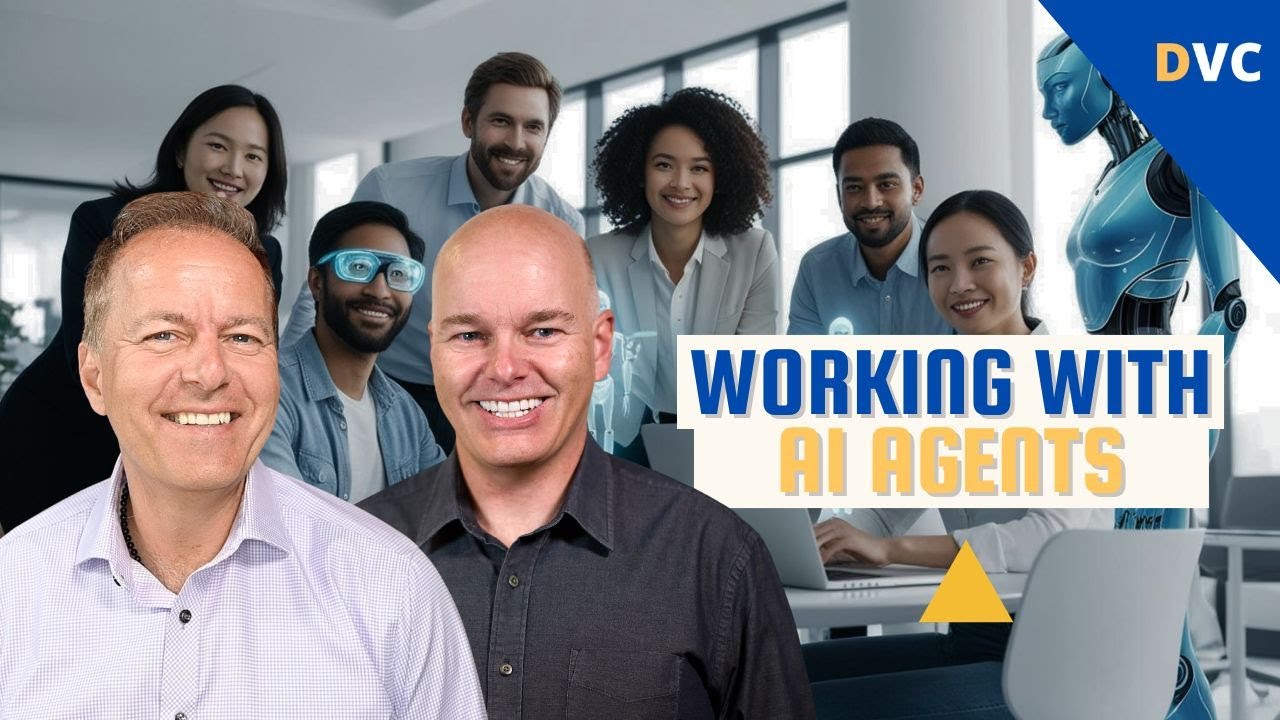
The brotherly setup allows for a useful kind of skepticism. In an episode on agents, they worried at the definition itself. How autonomous does software need to be before “agent” is the honest word? What happens when information technology teams begin managing digital workers with something resembling the guardrails, development and relations work associated with human resources? Why do users expect AI to make fewer mistakes than the humans working beside it?
Those questions put culture beside architecture. An agent can be technically capable and still fail if nobody trusts its decisions, knows who owns an exception, or understands how to intervene. Hevizi's practical streak does not exclude curiosity. It gives curiosity a place to land.
He and Arpad have also returned to a revealing asymmetry: people sometimes expect a digital worker to be flawless while accepting ordinary variation from a human colleague. The comparison is not an excuse for careless software. It is a design problem. A company has to decide what level of confidence a task requires, which actions an agent may take, when a person reviews the work, and how a mistake is corrected. Those decisions are less thrilling than a launch video, but they determine whether autonomy becomes useful or merely expensive.
The podcast's episode on AI fatigue approached the same issue from the buyer's side. An abundance of vendors, claims and fast-changing models can make action feel compulsory while making judgment harder. Hevizi's answer is AI literacy paired with use-case discipline. Leaders need enough understanding to distinguish a new capability from a new label. Teams need enough context to connect the tool to the work. Without both, urgency becomes a shopping habit.
Trust travels differently
Hevizi's recent dispatches from Tungsten customer summits have also noticed geography. Speaking from Paris in 2026, he contrasted the American appetite to deploy quickly with a more deliberate European conversation centered on data protection, data residency and regulation. The observation was not presented as a contest with a winner. It was a reminder that enterprise AI enters institutions with histories, laws and varying tolerances for uncertainty.
In Singapore, the questions he heard were plainer still: how can a bank process loans faster, a company reduce fraud, a supply chain move more reliably, or an accounts-payable team comply with new electronic invoicing mandates? He described a shift from extracting information from documents toward making documents ready for AI and orchestrating that intelligence across the full process.
This is where his present role makes sense. Strategy decides which problems deserve resources. Marketing must describe the choice without floating away from it. In Hevizi's vocabulary, the bridge between the two is measurable value. A story becomes credible when a customer can point to the changed metric.
His own stated ambition is broader than a quarterly dashboard. On his personal site, he writes that good digital transformation can positively affect the economy, the future workforce and society. Yet the route toward that large aspiration remains deliberately local. Fix the matching. Improve the handoff. Put the right guardrail around the agent. Pay the supplier. Then count.
There is a quiet confidence in refusing to make every new tool a revolution. The enterprise already contains enough drama: unread documents, tangled approvals, unexplained exceptions, nervous regulators and customers who would simply like an answer. Hevizi's bet is that AI earns its place by reducing that drama. Boring, in other words, is not a lack of imagination. It is what innovation looks like after it has reported for work.
Continue the conversation