Shooting is a troublesome word. You can shoot a basketball, shoot a movie, or discuss something an advertiser would rather avoid. A machine looking only for the word can give all three conversations the same unwelcome verdict. Tamara Zubatiy uses this example to explain a problem with a very real price: a podcast can lose advertising opportunities because software has heard the vocabulary and missed the meaning.
It is a peculiar place for a cognitive scientist to find herself. The question sounds like a language exercise. The consequences arrive in a media budget. Zubatiy, co-founder and CEO of Barometer, works in the space between them, trying to make the judgment more precise. Her preferred tool for describing the approach is modestly surgical: “Use the scalpel rather than the axe.”
An axe is efficient, of course. It is also a poor instrument for distinguishing a film set from a basketball court. The attraction of Barometer’s approach lies in its willingness to consider the rest of the conversation. For Zubatiy, who grew up in Kharkiv and has spoken about the importance of free expression, that extra attention carries a purpose beyond getting an ad into the right slot.
Kharkiv, and a suspicion of easy verdicts
Zubatiy was born and raised in Kharkiv, Ukraine. She has described a Russian-speaking upbringing and a family divided between Ukraine and Russia. Growing up around state-sponsored news informed her view of censorship and the need for critical thinking. These are part of the personal history she brings to a business that evaluates media.
Her interest in podcasting follows from that history. She values the room a long conversation gives people to develop an argument, and the decentralized nature of the medium. Advertising helps keep those conversations available to listeners without a direct payment. The commercial arrangement therefore matters to the kind of speech that can sustain itself.
There is a difficult bargain here. Advertisers have their own standards and preferences. Creators have subjects they want to discuss. Listeners have reasons for showing up. A useful system has to help the buyer make a decision without treating every mention of an uncomfortable subject as evidence against the person discussing it. The difference is easy to describe and much harder to preserve in software.
A newspaper can report on a disturbing event without endorsing it. A podcast can do the same. To make that distinction, an advertising tool has to consider what is being said, how it is being said, and the purpose of the discussion. Zubatiy’s argument begins with the cost of leaving those questions unanswered.
“Use the scalpel rather than the axe.”
Tamara Zubatiy, on evaluating podcast content
A scientist follows the money
Her training took her through cognitive science at the University of California San Diego, with a specialization in machine learning and neural computation. She graduated with distinction from the honors program. Earlier work at the Salk Institute involved computational neurobiology under Tatyana Sharpee. The starting point was a curiosity about cognition; the later work asks what machines can make of human expression.
Georgia Tech added another discipline to that question. Zubatiy earned her PhD in Human-Centered Computing in 2024. The name of the field supplies a useful description of the challenge she now works on: software has to operate in a world of people with different intentions, needs, and interpretations. A technically tidy answer can still be unhelpful to the person receiving it.
Her public work on media predates Barometer’s current podcast integrations. In November 2020, she gave a talk about detecting bias in sensational headlines, appearing as the CEO and co-founder of VeriCrypt. The discussion covered validating algorithms and navigating human biases. Even the idea of measuring objectivity raises a further question: who checks the measurement?
Her writing has returned to that territory. Posts published in 2020 explored confirmation bias and systemic biases. In 2021 she introduced Barometer’s scores, using the comparison of a nutrition label for text. A label offers information that someone can inspect before deciding what to consume. It also makes the method of description part of the product.
At Barometer, she works with co-founder and CTO Grant Nelson. Their collaboration turns that concern with interpreting content into a service for advertisers and publishers. The buyer needs enough detail to apply its preferences. The publisher needs a fair account of what its programs contain. Their interests meet in a classification that both sides can examine.
Give the episode a hearing
One useful problem, five years of trust
The early practical task was smaller than the mission: help teams replace hours of manual podcast review with automated insights. A published account of Barometer’s product development describes a five-year contract secured two years into the company’s journey. The useful thing was specific enough for a customer to commit to using it.
Zubatiy’s product approach gives particular weight to long-term customers. Their experience helps the team understand which requests reveal a persistent problem. Her compact explanation is, “We ask why they’re asking.” A feature request is the beginning of an inquiry. The underlying reason can tell a team more than the requested button.
That approach also asks a founder to make choices about whose problems to address first. Existing customers have already brought the software into their work. Their frustrations reveal where its promise and its daily use diverge. Improving that experience gives the company something firmer to build on than a growing collection of possible features.
The work of becoming a CEO appears in her account of advice from investor Promise Phelon. Zubatiy has credited Phelon with helping her make the transition toward a CEO mindset as Barometer prepared for a Series A. The distinction points to a familiar demand on a technical founder: the company needs decisions about people, customers, and priorities alongside decisions about the model.
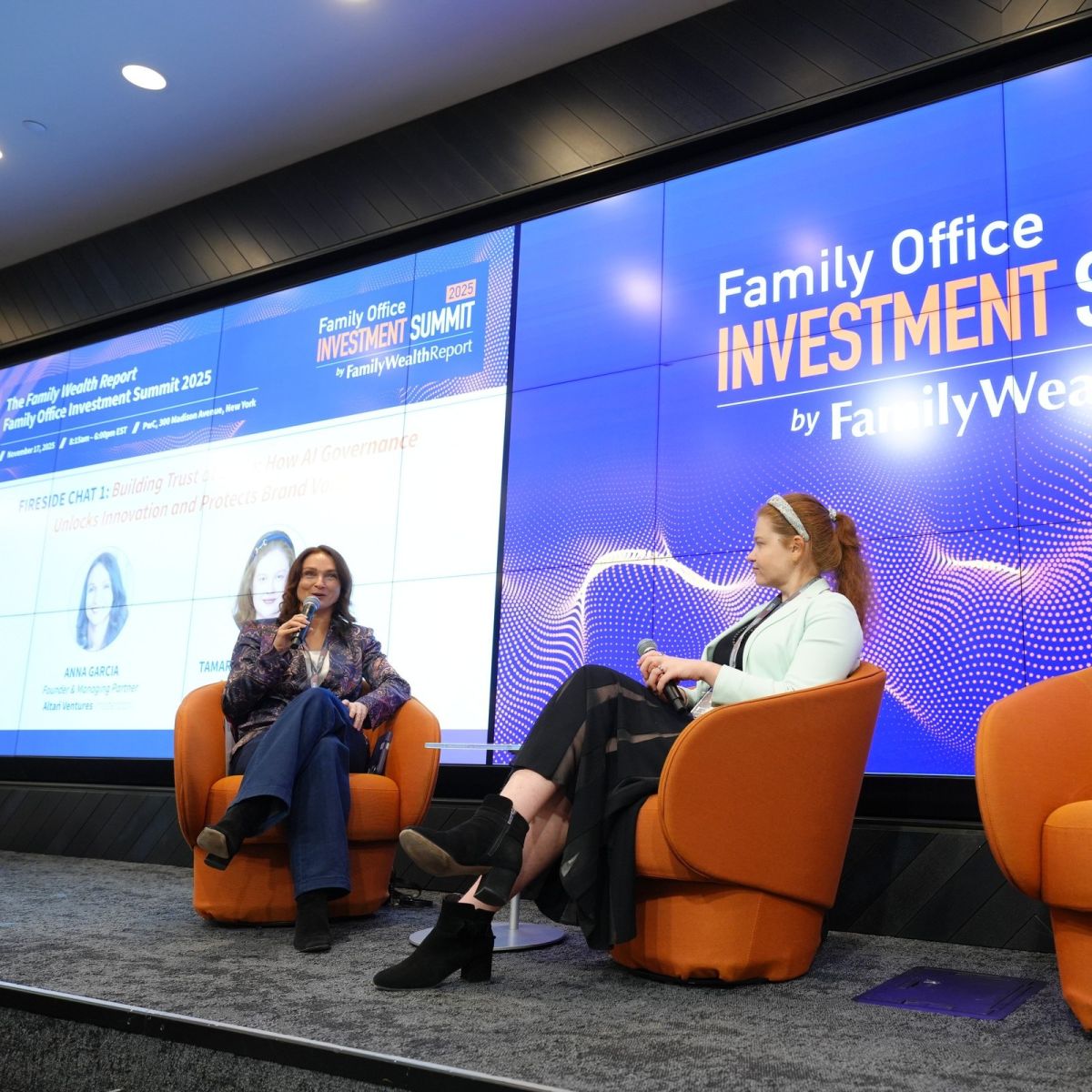
In November 2025, Zubatiy sat with Altari Ventures founder Anna Garcia at the Family Office Investment Summit in New York. The conversation concerned AI governance and brand trust. By then, the questions around her work had expanded from interpreting a piece of content to fitting that interpretation into the operations of a business.
The decision moves upstream
The recent milestones put her argument inside the machinery of buying ads. On January 21, 2026, Acast announced an integration with Barometer that enabled pre-bid targeting at the episode level across its inventory. Newly uploaded episodes could be analyzed before release, and the integration also covered the back catalog.
The phrase pre-bid sounds comfortably technical. Its practical meaning is straightforward: the advertiser’s preferences can affect the buying decision before the placement is purchased. That makes the analysis useful at the moment when the buyer can still act on it. An episode that fits a campaign can remain available even when a broad judgment would have excluded its show.
Timing matters in another way. Zubatiy joined AdsWizz and National Public Media’s Scott Davis in a 2026 discussion of context and advertiser confidence. Their discussion emphasized evaluation before release. Podcasts attract listening soon after publication; an assessment that arrives late can miss the period when the inventory has immediate value.
News programming makes the stakes especially clear. Its subjects change with events, and difficult subjects are often the point of the reporting. A buyer trying to avoid one kind of adjacency may still welcome other episodes from the same program. More specific information lets that buyer make a narrower choice while keeping the rest of the inventory in consideration.
On August 13, 2026, Basis announced its own Barometer integration for episode-level controls before bidding. Advertisers could set their preferences inside the same platform used for other digital channels. The point of the integration was to make the contextual judgment part of an existing buying workflow, where a media team could apply it in practice.
Acast announces episode-level pre-bid targeting.
AdsWizz discussion focuses on evaluation before release.
Basis brings Barometer controls into its buying platform.
An ear for the unfinished conversation
Zubatiy’s work earned recognition in the Forbes 30 Under 30 class of 2025, in Marketing and Advertising. By January of that year, she reported that Barometer had worked with more than 40 clients and routed over $100 million in advertising spend. Those figures describe a business with customers and transactions behind its argument about context.
There is a more ordinary person alongside the technical biography. Her interests include cooking vegan food, reading, running, and practicing and teaching yoga. Her personal portfolio describes her as a registered yoga instructor and a co-founder of the yoga web app HapiFlo. Software has appeared in more than one corner of her working life.
The research has continued too: Northeastern lists her as a postdoctoral research associate. Her career keeps one foot in academic inquiry while the other is planted in the daily work of running Barometer. That combination is visible in the questions she brings to a commercial decision, even when the answer has to arrive fast enough for an advertising system to use it.
In an October 2026 podcast conversation, she returned to the prospects for smaller creators and the problem of indiscriminate keyword blocking. The ambition reaches beyond making an established buyer more comfortable. Better information can help a less familiar show enter consideration, provided its content fits what the advertiser is seeking.
A podcast audience has chosen to spend time with a voice. Zubatiy’s business asks the buyer to give the surrounding conversation enough attention to understand it. The work comes down to a recurring decision about an episode, a campaign, and the terms on which they can meet. Somewhere inside that decision, a word gets the rest of its sentence back.