In 2018, Anton Katz and Ethan Feldman had an idea for a crypto hedge fund. Then they inspected the machinery required to run it. Liquidity was scattered. Connections lacked common standards. Much of the available tooling had been built for retail traders. These were men who had spent years building systems for financial institutions. They could see the missing pieces rather too clearly.
The fund ceased to be the point. Katz and Feldman founded Talos to supply the infrastructure they had wanted to buy. It is a pleasing business origin: go shopping, discover an empty shelf, reconsider your career. The first trade passed through their platform in 2019. By August 2026, Talos reported $1 trillion in cumulative notional trading volume.
- Institutional software connecting trading venues, portfolios, risk and settlement.
- A business selling tools to funds, banks, brokers and other financial firms.
- Four acquisitions widened its reach from execution into the surrounding investment workflow.
The cheapest price may be unusable
Consider a desk buying an asset across several venues. One exchange displays an attractive price. Another holds the desk’s available funds. An OTC dealer offers a quote on credit. The apparent bargain changes once fees, balances and trading constraints enter the calculation. A screen full of prices is only the beginning of the job.
Talos’s order and execution management system brings those connections into one interface. Its smart router accounts for fees and funding constraints; algorithms can work orders across exchange and dealer liquidity. The customer can also connect through FIX, REST or WebSocket APIs. Talos maintains the venue integrations, sparing each customer the task of maintaining every connection itself.
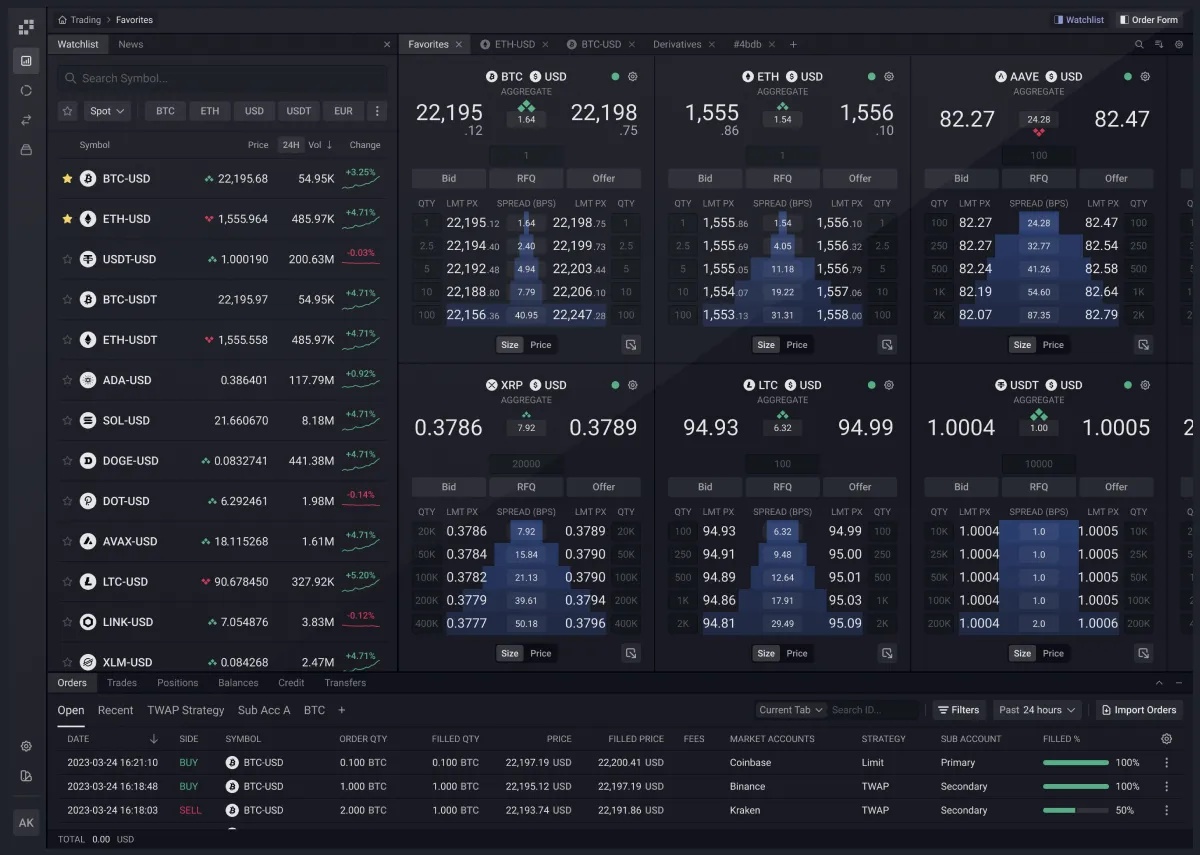
The customers include asset managers, hedge funds, banks, brokers and trading firms. Public references include Abra, OSL and Caleb & Brown. In July 2025, Talos said it served clients across 32 countries. Those institutions arrive with different strategies, but share an operational irritation: coordinating the trade can demand almost as much attention as deciding on it.
The founders knew the machinery
Katz had been head of trading technology at AQR Capital Management and director of software at Broadway Technology. Feldman spent ten years at Broadway, where the two worked together. Both began their technology careers at Microsoft. Their expertise came from building systems for banks and asset managers, where a clever feature must survive contact with a working desk.
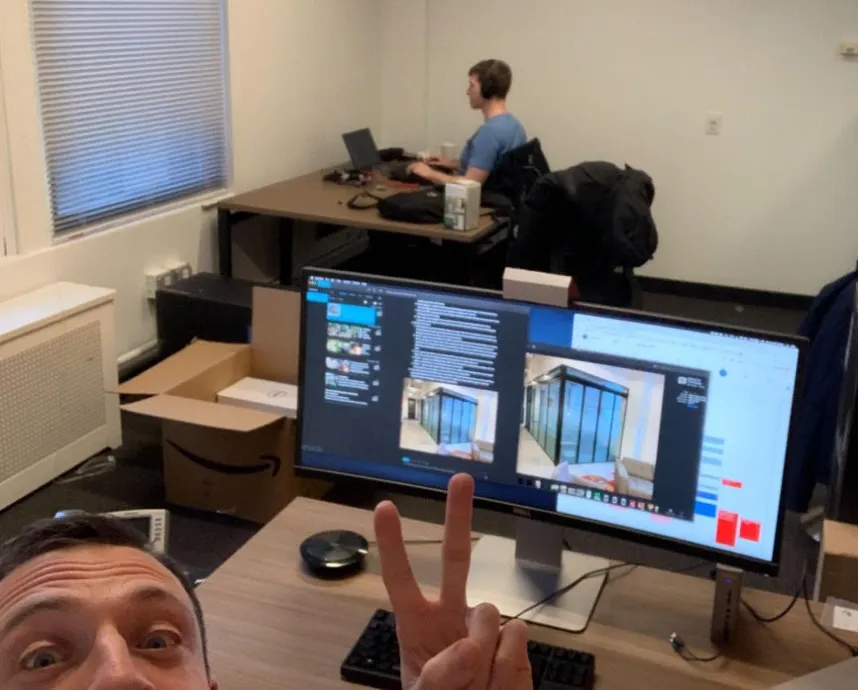
The company describes a flat organization in which engineers participate in research, product design and release. Its careers materials emphasize autonomy, debate and flexible work. These are promises an employer makes about itself, but they fit the product’s demands: somebody has to understand what the trader means before writing what the system does.
Buying the missing rooms
An executed order leaves plenty of unfinished business. A manager still needs to know how the portfolio behaves, whether an allocation should change, what is owed and how well the trade performed. Talos expanded into those adjacent tasks, partly by acquisition.
D3X Systems, acquired in 2023, brought portfolio engineering: backtesting, optimization, rebalancing and attribution. Cloudwall followed in April 2024 with digital-asset risk technology. Skolem added institutional DeFi infrastructure that May. Coin Metrics joined in 2025, adding market data, blockchain intelligence and indexes. The sequence resembles an investment workflow being assembled piece by piece.
- 01 Research
& construct - 02 Route
& execute - 03 Monitor
portfolio risk - 04 Coordinate
settlement
Portfolio construction → trading → risk → treasury. Coin Metrics data feeds the wider workflow.
The distinction matters when comparing alternatives. CoinRoutes supplies institutional algorithms and smart routing; Wyden offers bank and brokerage workflows with execution, risk and settlement tools. Talos’s case rests on its particular combination of products, acquired expertise and data. A long feature list alone cannot establish better execution for a particular desk.
The bill behind the plumbing
Building this business required capital. Talos raised $40 million in a 2021 Series A led by Andreessen Horowitz, then $105 million in a 2022 Series B led by General Atlantic. A January 2026 extension added $45 million, taking Series B financing to $150 million at an announced post-money valuation of approximately $1.5 billion.
Acquisitions carry another bill. The Block reported that Coin Metrics cost more than $100 million, citing a source familiar with the deal. That is a reported transaction figure, separate from Talos’s funding announcements. Customers face a different calculation: SaaS costs, implementation and their own venue relationships. Public product pages direct buyers to request a demo.
The trillion-dollar figure measures cumulative notional trading activity. It tells us that the platform has been used at scale. Assessing the commercial business requires other evidence: customer retention, contracts, margins and how much work the software removes.
A brokerage can borrow the machinery
Talos White Label lets firms use customizable interfaces and APIs, customer pricing, hedging and ledger tools. That gives a broker a way to offer digital-asset trading without designing every component. Talos explicitly says the software does not supply registrations or satisfy the broker’s KYC, AML and other compliance obligations.
The ambition now reaches beyond crypto. In March 2026, Nasdaq and Talos announced a partnership connecting Talos infrastructure with Nasdaq’s Calypso and Trade Surveillance platforms for tokenized collateral management. It addresses a familiar problem in a new setting: institutions need their trading, risk and collateral processes to agree with one another.
Copy the diagnosis
The useful lesson is to inspect the obstacle that keeps a customer from completing the job. Talos’s founders had the experience to recognize an infrastructure problem and the skills to build an answer. A reader can copy that investigation: trace the workflow, find the repeated handoffs, and ask which ones customers would pay to simplify.
The approach needs enough complexity to justify integration. A small trader using one venue may need much less. Institutions still negotiate their own liquidity relationships, and eligibility varies by product and jurisdiction. Talos can coordinate those relationships; the software cannot create credit or make a counterparty safe.
“That infrastructure did not exist, so we decided to build it.”Anton Katz · August 2026
The original hedge fund idea stopped at the missing machinery. Talos made the machinery its business. For anyone hunting a useful product idea, that is a good reason to pay attention when the shopping becomes difficult.