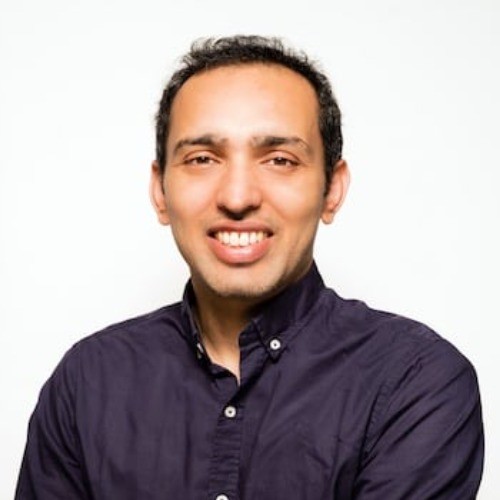
From Petabyte-Scale Search to Trustworthy AI
Tallat Shafaat spent the better part of a decade making machines answer questions at a scale most engineers never touch. At Google, he was a core member of the team that indexed the Knowledge Graph - the vast web of facts that sits behind the answers people see when they search for a person, a place, or a date. The systems he helped design processed petabytes of data and served up to 200,000 queries per second. That work does not make headlines. It makes everything else possible.
Today he is the founder and CEO of Vectara, a Palo Alto company betting that the next wave of enterprise software will run on retrieval-augmented generation, or RAG. The idea is simple to state and hard to build: pair a large language model with a strong retrieval engine so the model answers from real documents instead of guessing. Get it right and generative AI stops making things up. Get it wrong and you ship a chatbot that sounds confident and is often incorrect.
Shafaat has spent his career on the retrieval side of that equation, and it shows in how he talks about the problem.
In order to realize the full growth potential of AI, enterprises can no longer settle for frustrating end-user experiences created by chat systems that produce inaccurate, inconsistent or incomplete answers.
Three countries, one throughline
His path to Silicon Valley did not start there. He earned a bachelor's degree in computer systems engineering at the Ghulam Ishaq Khan Institute of Engineering Sciences and Technology in Pakistan, then moved to Sweden for a master's and a PhD in distributed systems at KTH Royal Institute of Technology in Stockholm. His doctoral research focused on fault-tolerant design, and his broader interests ran through large-scale distributed systems, distributed algorithms, cloud computing, and peer-to-peer networks.
It is worth pausing on that. The field he now leads - generative AI - is not the field he trained in. Shafaat came up through the plumbing of the internet: how to keep systems correct when machines fail, how to move enormous amounts of data without losing your place. That grounding in reliability, rather than in deep learning fashion, is part of what shapes Vectara's pitch. The company sells accuracy and governance, not novelty.
The Google years
Before founding Vectara, Shafaat worked at Google from 2013 to 2020. Alongside the Knowledge Graph work, he touched ads backend infrastructure and large-scale data storage. He had earlier interned at Microsoft Research in Redmond and spent years as a researcher at the Swedish Institute of Computer Science. By the time he left Google, he had seen how the largest retrieval systems in the world are actually built and kept running in real time.
That experience connected him to two other Googlers who would become his co-founders: Amr Awadallah, previously a founder of the data company Cloudera, and Amin Ahmad. In 2020 the three launched Vectara with a developer-first idea - give teams a simple API for cutting-edge natural language understanding, so they would not have to assemble the retrieval stack themselves.
Building the anti-hallucination stack
When the generative AI boom arrived, Vectara was already positioned for it. The company describes itself as an early mover on RAG-as-a-service, stitching together document processing, embedding models, a retrieval engine, rerankers, and its own language models into one pipeline aimed at grounded, factual responses.
Shafaat led the engineering behind two pieces that became calling cards. One is Boomerang, Vectara's retrieval model. The other is HHEM, an open-source model for evaluating how often large language models hallucinate. HHEM turned into a widely referenced yardstick in the industry - a small, practical tool that lets anyone measure a problem everyone complains about. Open-sourcing it was a characteristically engineer's move: publish the measurement, then compete on the fix.
Illustrative view of Vectara's product emphasis, drawn from its public positioning.
Taking the wheel
In 2026, Vectara's founding CEO Amr Awadallah announced a leadership transition, writing that after four years it was the right moment to hand off as the company entered its next growth chapter. The board did not go looking outside. It turned to Shafaat, who had been part of the company from day one and had quietly built much of what customers actually rely on. He moved from chief architect to chief executive.
It is a familiar pattern in engineering-led startups: the founder who kept his head down on the product ends up running the company. For Shafaat the shift is less about ambition than continuity. The mission he keeps returning to - trusted, grounded, governed AI - is the same one he has been building toward since the Knowledge Graph days.
The bet
Vectara has raised roughly $53.5 million in total, including a $25 million round in 2024, and now competes in one of the most crowded corners of software. Shafaat's wager is that enterprises will not tolerate AI that sounds right and is wrong, and that the companies who win will be the ones who can prove their answers come from real sources. Whether that bet pays off is still being written. But it is a coherent bet from someone who has spent twenty years making retrieval work at scale, and who would rather ship a measurement of the problem than a marketing slogan about it.
For a founder who came up through fault-tolerant systems, that is a fitting place to plant a flag: build the thing that fails gracefully, tells you when it is unsure, and can show its work.