hallucination-detection
(7)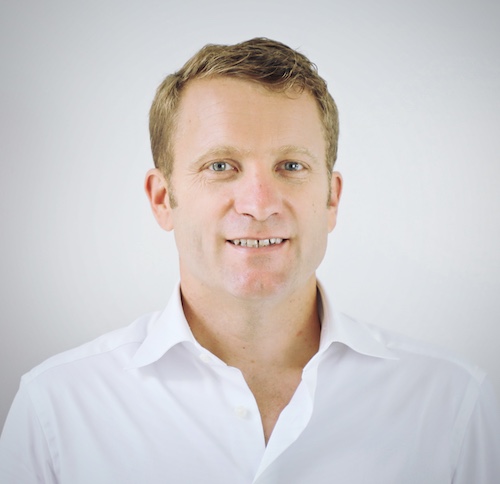
Adam Wenchel
He was studying how AI fails before most people believed it worked. Now he builds the guardrails that keep everyone else's models honest.
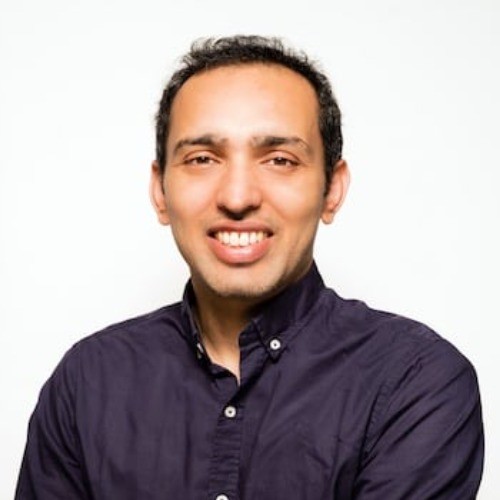
Tallat Shafaat
Tallat Shafaat is the founder and CEO of Vectara, a Palo Alto based enterprise AI company that pioneered retrieval-augmented generation (RAG) as a service. A former core engineer on Google's Knowledge Graph indexing team, he holds a PhD in distributed systems from KTH Royal Institute of Technology in Stockholm. He co-founded Vectara in 2020 with Amr Awadallah and Amin Ahmad, led the engineering behind the company's Boomerang retrieval model and the open-source HHEM hallucination detection model, and stepped up from chief architect to CEO as the company entered its next growth phase.

Arthur
Arthur is a New York-based AI governance and observability company that gives enterprises a single control plane to discover, monitor, evaluate, and govern the AI models and autonomous agents running across their organization. Founded in 2018 by a team out of Capital One and academia, Arthur started with machine-learning monitoring - catching model drift, bias, and performance decay in production - and has since expanded into real-time guardrails, LLM evaluation, and agentic AI governance. Its open-source Arthur Engine and its Agent Discovery & Governance platform help security, compliance, and ML teams ship AI they can trust in regulated industries like finance, insurance, healthcare, and government.

Bespoke Labs
Bespoke Labs is a Mountain View AI research lab that builds tools and datasets for training more reliable AI models and agents, starting with synthetic data curation and hallucination detection and expanding into realistic reinforcement-learning environments for long-horizon agentic AI. Its open-source projects, including Bespoke Curator, Bespoke-MiniCheck, OpenThoughts, Terminal-Bench, and GEPA, are widely used across the AI research community, and the company raised $40M in seed and Series A funding by mid-2026 from investors including Wing Venture Capital, 8VC, and Mayfield.
Vectara
Vectara is a Palo Alto-based enterprise AI company building a trusted, end-to-end platform for retrieval-augmented generation (RAG) and AI agents. Founded in 2022 by former Google AI researchers, it lets companies embed grounded, citation-backed GenAI - conversational assistants, semantic search, and agents - into their products while actively detecting and correcting hallucinations at runtime. Its stack includes the Boomerang embedding model, the RAG-tuned Mockingbird LLM, the open-source Hughes Hallucination Evaluation Model (HHEM), and a Guardian Agent layer, positioning Vectara as a leader in factual, secure, compliance-ready enterprise AI.
Dynamo AI
Dynamo AI is a San Francisco-based enterprise AI security and governance company that helps regulated organizations deploy generative and agentic AI safely. Born out of MIT CSAIL research, its platform - spanning DynamoEval, DynamoGuard, and AgentWarden - tests AI systems for vulnerabilities, applies real-time, customizable guardrails against threats like prompt injection, data leakage, and hallucinations, and produces the compliance documentation enterprises need to meet regulations such as the EU AI Act.
Gabriel Kalejaiye
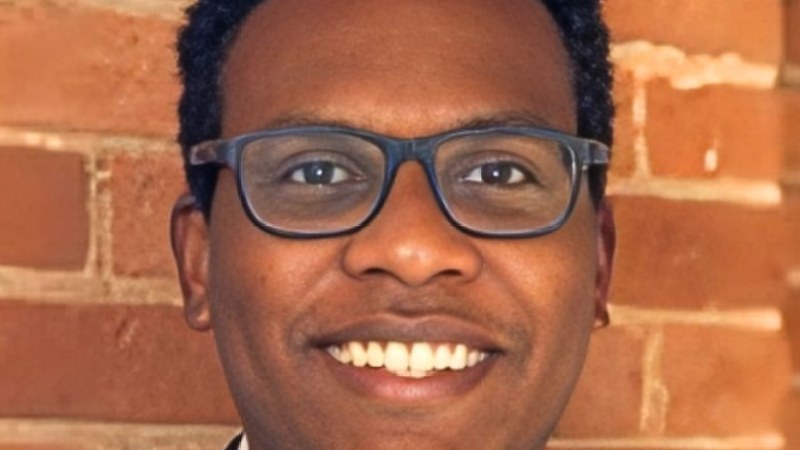
Gabriel Bayomi Tinoco Kalejaiye is a Brazilian-born engineer and entrepreneur who co-founded Openlayer, a San Francisco-based AI governance and observability platform. After earning his MS in Computer Science from Carnegie Mellon and working as a Machine Learning Engineer at Apple - where he contributed to both Siri and the secretive Vision Pro project - he left with two colleagues to solve the problem that haunted every AI team: models that look great in testing but fail in the real world. Openlayer provides enterprises with evaluation, monitoring, and compliance tooling across the full AI lifecycle, from prototype to production. The company raised a $14.5M Series A in May 2025, grew nearly 5x in 2024, and is now a recognized vendor in Gartner's 2026 Market Guide for AI Evaluation and Observability Platforms.