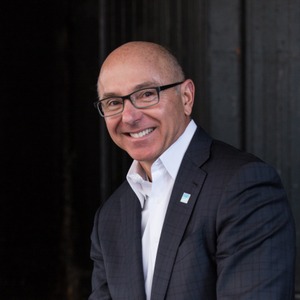
A recruiter walks into a meeting with two pieces of paper. On one is a job description, polished until it sounds like every other job description. On the other is a résumé, polished until it sounds like every other résumé. Rick Devine spent years asking a less elegant question: What did this person actually do? That question, he says, helped him introduce Tim Cook to Steve Jobs. It also became the premise of Talentsky, the San Francisco company he founded to make a person's work visible before a recruiter comes calling.
- Individuals post achievements, compare skills with mentors and join or host live workshops.
- Employers use employee-led workshops for internal learning and to meet people curious about their work.
- The network is free to join; Talentsky sells premium tools, paid workshop places and team plans.
The idea is simple enough to be irritating. A job title says where someone worked and the label on the door. It says little about the messy project they rescued, the colleague they taught or the tool they mastered last Tuesday. Devine's recruiting practice began with those details. In a 2023 account of the company's origin, he described talking with employers about the tasks a role required and with candidates about the tasks they had completed. The résumé was an opening bid. The conversation was the evidence. In Devine's telling, the first failure was matching titles to titles; Jobs's attention to Cook's skills reinforced his belief that the method could serve more than executive searches.
A career written in verbs
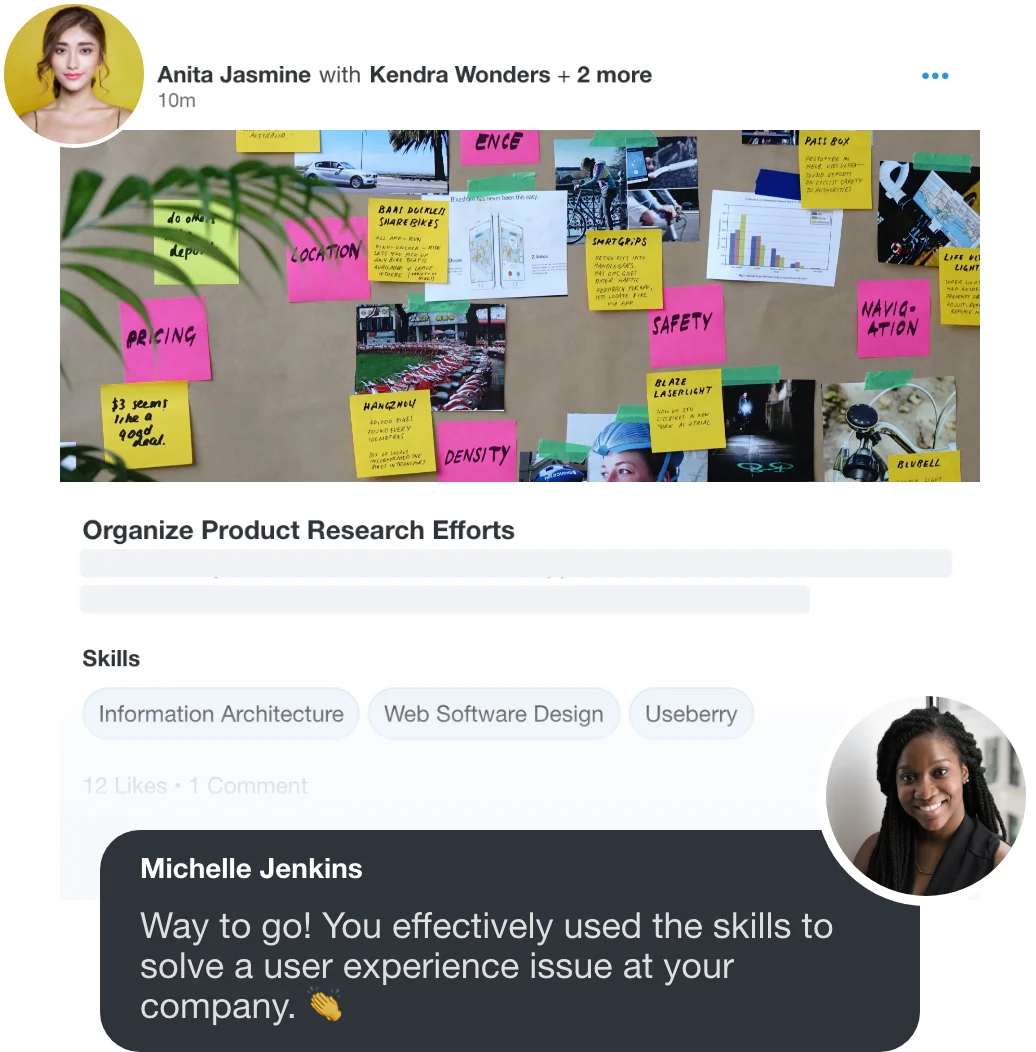
Talentsky's free professional profile invites users to post achievements and the skills used to produce them. Its home page now says AI can help turn that work into a post. A user can follow other professionals, compare skills with mentors, find areas to improve and join a workshop. Those are familiar social-network motions, but the object being circulated is unusually specific: evidence of work.
Devine has been explicit about the ownership principle. In a 2022 essay, he argued that skill data should travel with the person, connected to an employer while they work there and able to move when they leave. That is a meaningful difference from the employee skills ledger buried inside a company's HR system. It is also a point of competition with LinkedIn, where job histories and networks dominate the profile. Talentsky's wager is that an achievement tied to a skill can be more useful than another endorsement from someone who never saw the work.
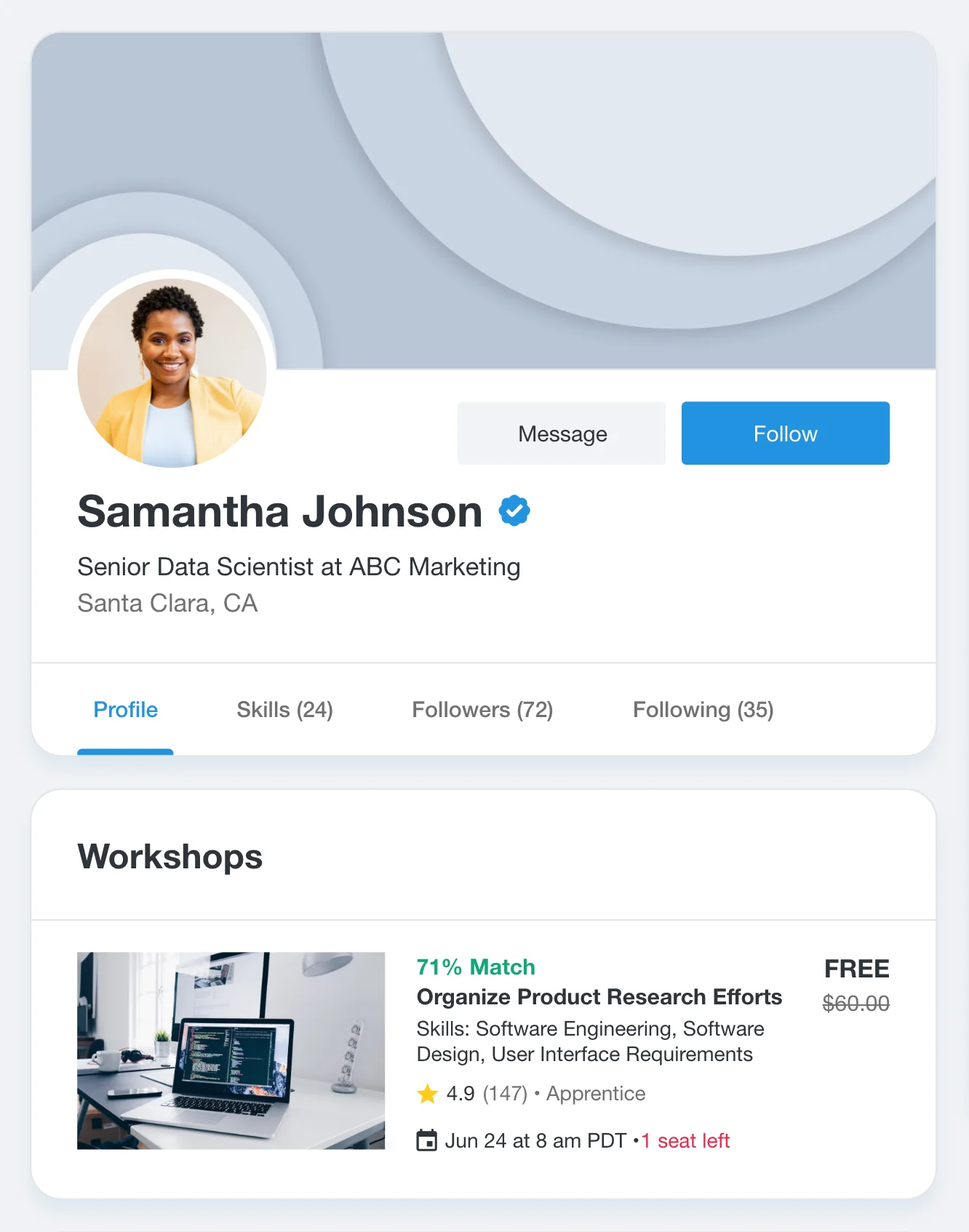
The next move is to turn a profile into a meeting. Talentsky's mentors host live, roughly one-hour workshops. Some are free; others are paid. A mentor can explain how they do the work, while participants can ask questions, compare their skills and meet someone beyond their existing circle. The company's workshop rules describe eligibility, payment and assignments in detail. This is more structured than an open video call and more social than a course watched alone.
“We believe that live, small group, virtual professional skill learning is the next education frontier.”Rick Devine, 2023
Devine's case for live learning grew from watching recorded courses become abundant and remote meetings become ordinary. The change in his thinking was less about video technology than about the missing relationship. A recorded lesson scales neatly; the teacher cannot meet the learner who has a good question. Talentsky's small-group format gives up some of that scale in exchange for conversation. That trade only works when a credible mentor has something concrete to teach and people are willing to show up at the same time.
The workshop has a second audience
For a company, the same session can do two jobs. An employee can show colleagues how a task is done, making internal know-how easier to pass along. Or they can host a free public workshop under the organization's brand. An outsider who signs up learns something useful and gets a look at the people behind the employer's name. Talentsky calls this talent sourcing: the employer can see mentor follows, workshop learners and signs of career interest in its analytics.
That distinction is the company's sharpest argument against cold recruiting emails. A message about a vacancy asks a stranger to care about the sender's immediate need. A workshop offers help first. Devine, a former executive recruiter, has written that job pitching replaced a more patient relationship-building practice. Talentsky is an attempt to put the relationship back into a digital process. It does not make every attendee a candidate. It gives a recruiter a reason to begin a better conversation.
The company pitches internal learning in similar terms. Employees create free workshops to share practice, while suggestions point learners toward skills they might strengthen. Its employer pages advertise analytics on instructors, learners and popular sessions. A testimonial from DXC executive Keith Costello speaks to the appeal of workers teaching each other; it is a testimonial, not a published measure of results. Talentsky's public material describes what the system enables, but does not provide a verified conversion rate for recruiting or a controlled comparison with ordinary training.
The price of a better introduction
For an individual, entry is free. Talentsky's pricing page lists Mentor Premium at $49.95 a year for follower insights and skill matching. A workshop seat can cost money, with the price shown at reservation; the platform's terms say mentors receive a percentage of the receipts. Small Teams and Enterprise plans require a quote. The team plan adds internal-only workshops and group analytics, while enterprise promises a dedicated success team. The home page also advertises a limited enterprise free-usage offer with specified usage allowances.
Those prices reveal the business model's balancing act. The consumer network needs useful people and useful teaching. Employers pay for a way to organize that activity and read the signals it creates. Paid workshops add another transaction, but a network built entirely around selling seats would have less room for the free exchange that makes the employer proposition interesting.
Devine has said he committed himself to a long build and, by April 2023, had raised more than $40 million from over 200 individual backers without a venture-capital firm. That is his account, not an audited financial statement. It explains his appetite for a broad idea: a portable record of work that connects learning, careers and hiring. The product has since added workshops as a more tangible unit of value. One hour is easier to understand than a promise to rebuild the labor market.
What another team can borrow
A company need not copy the network to test the central habit. Ask a respected employee to teach one real task in a small session. Invite both colleagues and people who might one day join the team. Let participants ask questions. Record what they wanted to learn and whether they returned. That would test the useful part of Talentsky's thesis: whether teaching creates a better introduction than pitching.
There are limits. Someone must have time and permission to teach. The skill must be demonstrable in an hour. Learners have to trust the instructor enough to attend, and an employer must resist treating attendance as proof of hiring intent. Talentsky's analytics can show interest; they cannot turn curiosity into competence on their own. That caution is part of the story's charm. In a market full of software claiming to know people from their data, Talentsky keeps returning to an old-fashioned event: one person showing another how the work is done.