The Orientation Beat
The startup that treats "what should I study?" as a design problem - and ships a fix for 17-year-olds.
The two engineers who decided that the scariest moment in a young person's life - choosing what to become - deserved better tooling. They built it in Milan, incorporated it in Delaware, and named it after the thing everyone else keeps deferring.
The Story
Here is a thing that is true and slightly absurd: most of the important decisions in life come with a manual, a trial period, or at least a return policy. You can test-drive a car. You can expense a bad SaaS subscription and cancel it next quarter. But the decision that arguably shapes a person's entire economic life - what to study, and therefore roughly who to become - gets made at seventeen, on a deadline, mostly on vibes.
Futurely, a Milan-based edtech startup founded in 2019, looked at that arrangement and decided it was not a fact of nature but a product gap. The company builds what it calls a digital orientation pathway: a personalized, gamified journey that walks a middle- or high-school student from "I have no idea what I like" to a structured, defensible plan for university. The mechanism is deliberately backwards from how most guidance works. It does not start with a list of degrees. It starts with the student.
The founders, Elisa Piscitelli and Mariapaola Testa, are both Management Engineering graduates from Politecnico di Milano who then did the thing ambitious Italian engineers do - they left. Piscitelli went to MIT for a master's; Testa went to Harvard for an MBA. Both did stints in the strategy-consulting world. The natural next move for two people with that résumé is to keep climbing a very well-lit corporate ladder. Instead they came back to build software for teenagers who are scared of a form.
The origin story is unglamorous in the good way. Piscitelli has described watching "17-year-olds stuck in fear of making the wrong college choice, alone, unaware of the many educational opportunities, and driven by stereotypes." That is not a market-sizing slide. It is a specific, uncomfortable observation, and it happens to describe an enormous number of people. Every year, in every country, a fresh cohort arrives at the same cliff with the same lack of tooling. The total addressable market of adolescent uncertainty is, unfortunately, evergreen.
"A digital orientation path that guides young people in choosing their university and realizing their future."
- Futurely, describing itselfWhat makes this more than a nice mission is that Futurely attached numbers to it. In Italy, roughly one in five university students switches faculty, and a similar share drops out early. Those are not just personal tragedies; they are a systemic inefficiency, a giant pool of misallocated human capital and tuition. Futurely's stated goal is to push faculty-switching from about 20% toward 10% - to treat the dropout rate the way a growth team treats churn. Which, when you think about it, is exactly what a dropout is: churn, but for a life plan.
The Product
The order is the whole trick. Most career guidance hands a teenager a catalog of options and asks them to reverse-engineer a self that fits one. Futurely runs the sequence the other way. The journey begins with a period of self-discovery - passions, interests, competencies - and only then introduces the academic world in a structured, complete way, ending with the student producing a presentation of the field they have chosen. You do not pick a door and then decide who you are. You figure out who you are, and the doors get less scary.
Map passions, interests and skills through interactive, gamified self-assessment.
Meet the academic world - fields, paths and admissions - via video tutorials and expert sessions.
One-on-one mentorship and content made "by kids, for kids," adapted to each answer.
Produce a structured, complete presentation of the chosen field - a real, defensible plan.
The "made by kids, for kids" detail is worth pausing on, because it is a genuine design choice rather than a slogan. Guidance content written by well-meaning adults tends to sound like guidance content written by well-meaning adults, which is to say teenagers ignore it. By sourcing material from young people close to the experience, Futurely is essentially admitting that the credibility problem in career advice is a distribution problem, and solving it at the source.
The core personalized, gamified journey from self-knowledge to a concrete academic plan.
Interactive exercises, video tutorials, expert sessions and one-on-one mentoring that adapt to each student.
Orientation pathways for Italian middle and high schools, co-designed with teachers and guidance coordinators.
A B2B offer letting companies give employees orientation tools for themselves and their children.
The Business
The consumer-startup problem with anything aimed at teenagers is that teenagers do not have budgets. Futurely's answer is to not really be a teenager company at all, at the point of sale. It reaches the same student through three different payers.
Door one is schools. Futurely partners with middle and high schools across Italy, slotting its pathway into the existing guidance and work-study framework that Italian schools already run. The school is the customer; the student is the user.
Door two is the employer. This is the cleverest reframe. Corporate welfare budgets usually buy gym memberships and meal vouchers. Futurely repositions orientation as a benefit: give your employees a tool to help their own kids choose a future. A benefits line item quietly becomes a guidance channel, and a company gets to book it as social impact.
Door three is the family directly - straightforward B2C for parents willing to pay for their child to feel less lost.
It is a B2B2C structure that lets Futurely charge institutions and companies while serving a demographic that cannot pay. That is not a growth hack; it is the only sane way to build a durable business around a problem this important and this broke.
The People
Co-founder & CEO
Management Engineering at Politecnico di Milano, then a master's at MIT and a stint in strategy consulting. Started Futurely after watching too many teenagers freeze at the college-choice cliff. Named to Forbes Italia Under 30, 2021.
Co-founder
Also Management Engineering at Politecnico di Milano, then an MBA at Harvard. Shares with Piscitelli what the company calls "a boundless passion for STEM and education." Co-honored on Forbes Italia's Under 30 list, 2021.
There is a tidy irony in the founding team. Two people who navigated the elite-education machine about as successfully as it can be navigated - Politecnico, then MIT and Harvard - turned around and built a company for the kids who find that machine opaque and terrifying. They are, in effect, writing the manual they had to figure out by instinct.
The Money
Led by members of Italian Angels for Growth (IAG), together with Angels4Women and a set of well-known tech angels. Notably, the round drew people who have seen scale up close.
The investor list is the interesting part. Diego Piacentini spent years as a senior executive at Amazon; Riccardo Zacconi co-founded King, the studio behind Candy Crush. These are people who understand consumer scale and habit-forming products, and they wrote checks into a company about teenagers choosing majors. The signal is that Futurely is being read not as a charity but as a consumer-product bet - one where the unsexiness of the problem is a moat, because it is exactly the kind of thing bigger players keep declining to build.
The Record
Piscitelli and Testa start Futurely, born "from young people, for young people," while completing studies abroad.
The digital orientation pathway takes shape and begins reaching middle and high schools across Italy.
IAG and Angels4Women lead, with angels Piacentini, Zacconi and Mondini joining.
Both co-founders named to Forbes Italia's Under 30 list.
In Their Words & Ours
"Content made by kids, for kids."
"Futurely starts with a journey of self-knowledge - passions, interests, skills - and ends with a structured presentation of the academic world."
The Bottom Line
The honest thing to say about Futurely is that its core metric is nearly impossible to observe in real time. You cannot A/B test a life. The company will not know for years whether a given student who used the platform ended up in a field they love or one they tolerate. Its real product is fewer regrets, and regret is famously slow to report.
But that difficulty is also the point. Anything easy to measure gets built by everyone; the durable companies tend to be the ones willing to work on problems where the feedback loop is long and the mission is inconveniently sincere. Futurely picked the moment before the decision - the part of the funnel almost nobody serves well - and built tooling for it, and got serious operators to fund it. Whether it hits its 10% dropout target is unknown. That it is aiming at the right number is not.
Connect
In the Press
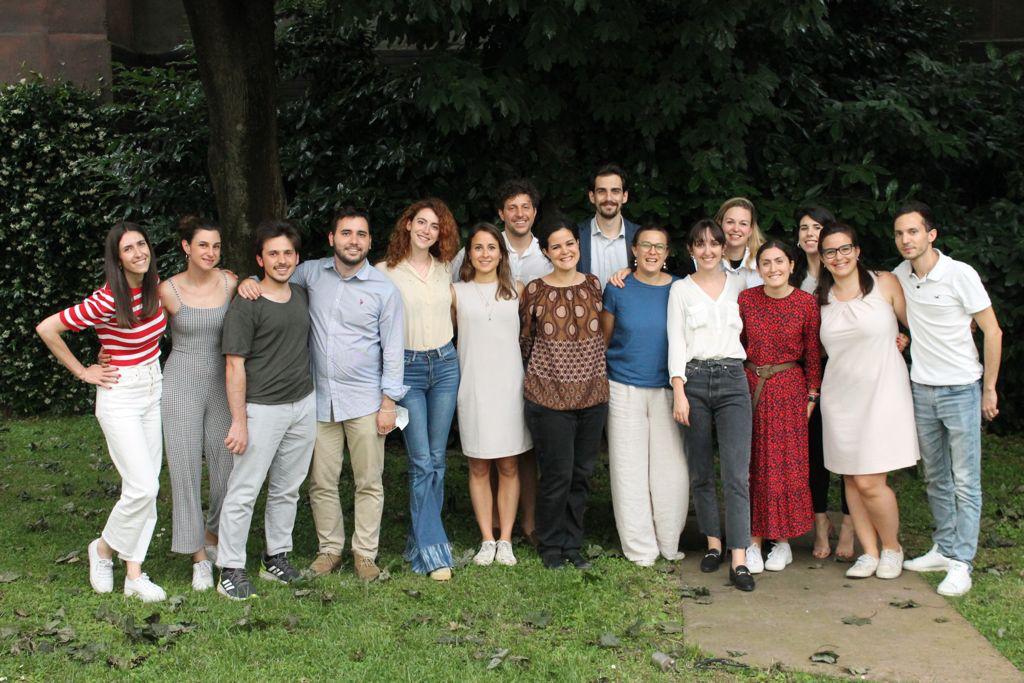
Profile compiled from public sources. Figures are approximate where noted. Founders photo via press coverage of Futurely's 2021 funding round.