siemens
(8)
Supplyframe and the trouble with a perfect part
A component can be perfect on paper and impossible to buy. Supplyframe built a business around closing that gap - before it becomes a factory’s problem.

Enlighted and the building that knew too much
Enlighted turned the humble light fixture into a source of building intelligence. Its customers reported substantial savings, but in 2025 Siemens chose to wind down the lighting business and keep the workplace software.

Polarion and the Case of the Missing Requirement
A product can pass its tests and still fail to keep its promises. Polarion built a business around the awkward space between what engineers were asked to make and what they can prove they delivered.

The Office App That Started With the Thermostat
A request for warmer air became a way to book desks, find colleagues and measure the office. Its latest lesson is that a building only becomes smart when people have a reason to use it.

The $100 Box That Turns 400,000 Homes Into a Power Plant
A former commodities trader noticed homeowners were flying blind on their own electricity. So he sold them a $100 box - and started wiring 400,000 basements into a grid-scale power plant.
Siemens
The company Werner von Siemens started with a telegraph in 1847 now wants to be the operating system for the physical world - one factory, train, and power grid at a time.
Simr (formerly UberCloud)
Simr, formerly UberCloud, is a Los Altos, California company that automates engineering simulation in the cloud. Its SimOps (Simulation Operations Automation) platform lets design engineers run compute-heavy simulations - CFD, FEA and multi-physics workloads - on any cloud or on-premise hardware with leading tools like Ansys, Siemens and Dassault, without wrestling with the underlying HPC infrastructure. Founded in 2014 by Burak Yenier and Wolfgang Gentzsch, the company raised a $20M Series A in 2024 and counts major manufacturers and tech giants among its users.
RIIICO
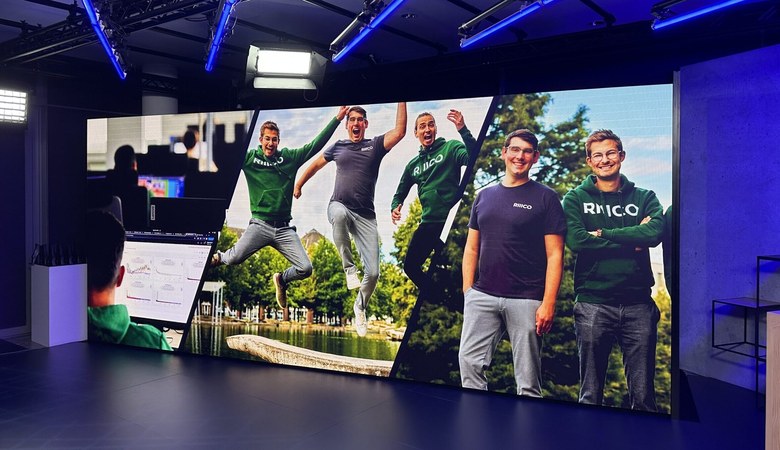
RIIICO is a Düsseldorf-based deeptech startup turning LiDAR scans of real factories into intelligent, editable 3D models. Its AI segments and classifies every object on the shop floor, exports it as OpenUSD, and plugs into NVIDIA Omniverse and Siemens Tecnomatix so planners can redesign brownfield plants in a fraction of the usual time.