There was a time when the boldest thing a person could do in an office was touch the thermostat. The temperature belonged to facilities. The discomfort belonged to everyone else. In 2013, two Berkeley researchers, Andrew Krioukov and Stephen Dawson-Haggerty, founded Building Robotics around an unusually modest proposition: let people tell the building when they were cold.
Their app, Comfy, connected a worker's phone to the building's heating and cooling system. Ask for warm air or cool air, and the system could respond in the worker's zone. The idea sounded almost comically small beside the language of smart cities. That was its advantage. A person had an immediate reason to open the app, and the building gained feedback that a fixed schedule could never supply.
- Comfy began with employee control of office temperature.
- It expanded into desk and room booking, wayfinding and workplace analytics.
- Siemens acquired its maker, Building Robotics, in 2018.
- Renamed Enlighted Connect in 2024, it remains supported by Siemens.
The first button was a vote
The founders had worked on software infrastructure for buildings at the University of California, Berkeley. They understood the technical machinery, but their first commercial move was to make it legible to an occupant. Instead of selling an invisible optimization algorithm as the entire story, Comfy put a choice in someone's hand. Employees could request a temperature adjustment; operators could see patterns of demand across a building.
That double audience still defines Connect. For an employee, the question is ordinary: where can I work today, where are my colleagues, and what can this office offer me? For a workplace or real estate team, it is more expensive: which spaces should we keep, change or stop paying for? The app sits between those questions. Booking, check-in and wayfinding make a day in the office easier. The activity they produce gives managers something better than a floor plan and a guess.
A calendar is not a room
The difficulty with hybrid offices is that an appointment with a desk is not proof of a person sitting there. A meeting room may be reserved and empty. Another may be full without a reservation. Connect's expansion into Flexible Spaces addressed the visible part of the problem: desks and rooms could be searched, booked, found on a map and checked into. Its 2021 update added team “neighborhoods,” tags describing space traits and a way to release reservations when people did not show up.
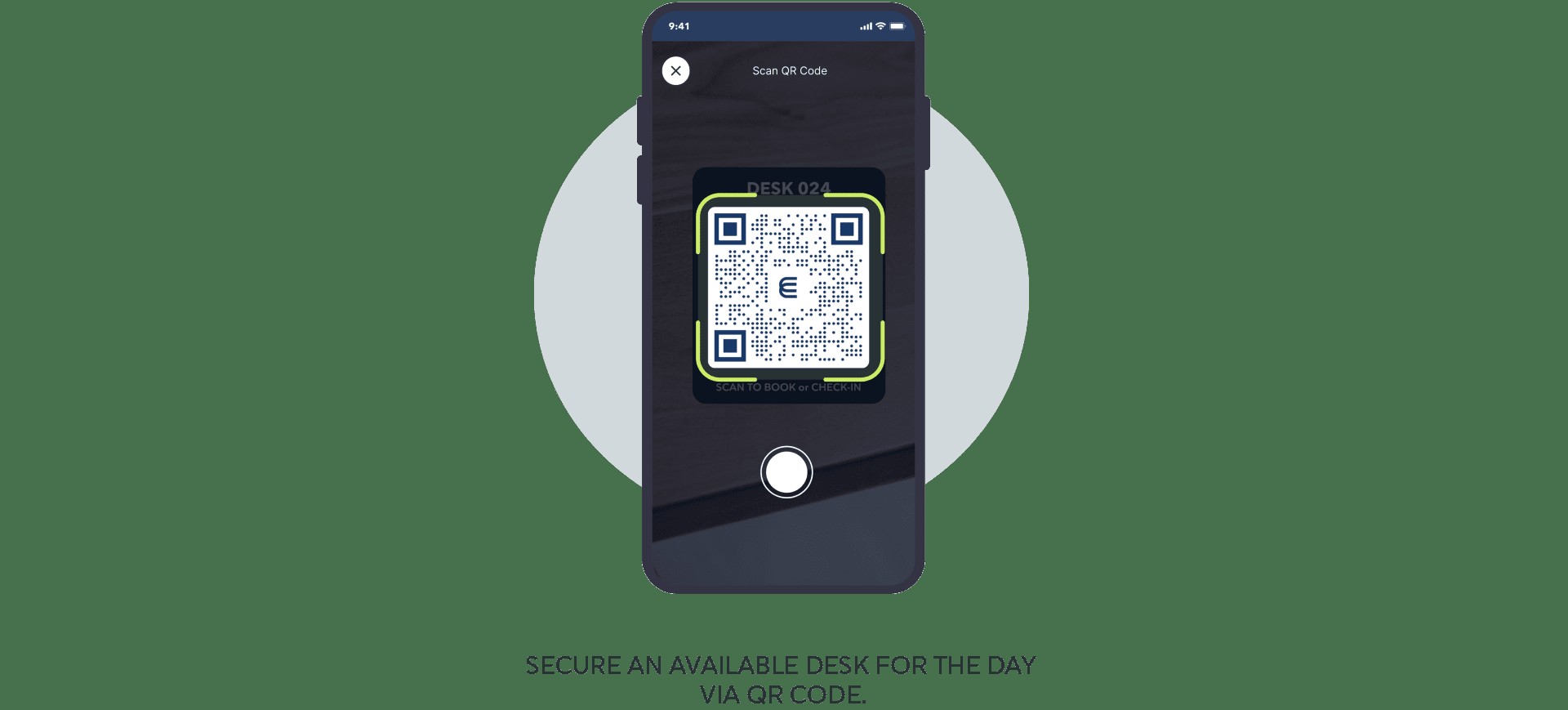
The 2024 rebrand from Comfy to Enlighted Connect made that spontaneity explicit. The company said its analysis of more than four million data points showed that over half of employees preferred selecting a desk on arrival rather than reserving ahead. The app added QR-code booking for the desk in front of them, along with easier repeat bookings and updates when chosen colleagues planned to be in the office. These are product choices built around an unglamorous fact: people rarely behave exactly as an office policy imagines.
The available signals depend on what a customer has deployed and configured.
This is where Connect differs from a plain booking calendar. Siemens' wider building business can combine reservation information with sensor or Wi-Fi occupancy signals. The comparison matters. A booked desk describes intention; a sensor reading can describe use. Put them together, and a facilities team can ask why popular rooms are hard to find, why some reservations go unused, or whether a floor needs a different mix of meeting space. Connect's own engagement dashboards even measure whether employees are opening the app. A beautifully designed report is of little use if the data-producing tool is ignored.
The price of getting comfortable
This was enterprise software from the start, sold as a service to organizations, not as a consumer app anyone could activate for their local office. A verified company email and a participating workplace are required. Installation and useful data may depend on a building's management system, available sensors and integrations. Public per-seat pricing is not published, so the clearest cost markers in its history are the investments behind the business: a reported $1.14 million seed round in 2013 and a $12 million Series B in 2016 led by Emergence Capital, with CBRE and Microsoft Ventures among the investors.
The first figure bought the company time to develop. The other two show why a real estate company such as CBRE was interested: Comfy could travel beyond one eccentric office. AppNexus was an early named customer. Siemens later used the workplace tools in its own headquarters, with room and desk booking, amenities and occupancy information described in a customer account. None of those historic numbers should be mistaken for a live count of Connect customers today.
The large building around the small app
Siemens acquired Building Robotics in 2018 and placed Comfy beside its smart building technology. The deal had a practical logic. Building systems usually know plenty about equipment and less about what people intend to do. Comfy's employee-facing interface supplied that missing conversation. It also gave Siemens a way to sell workplace software alongside its existing building relationships.
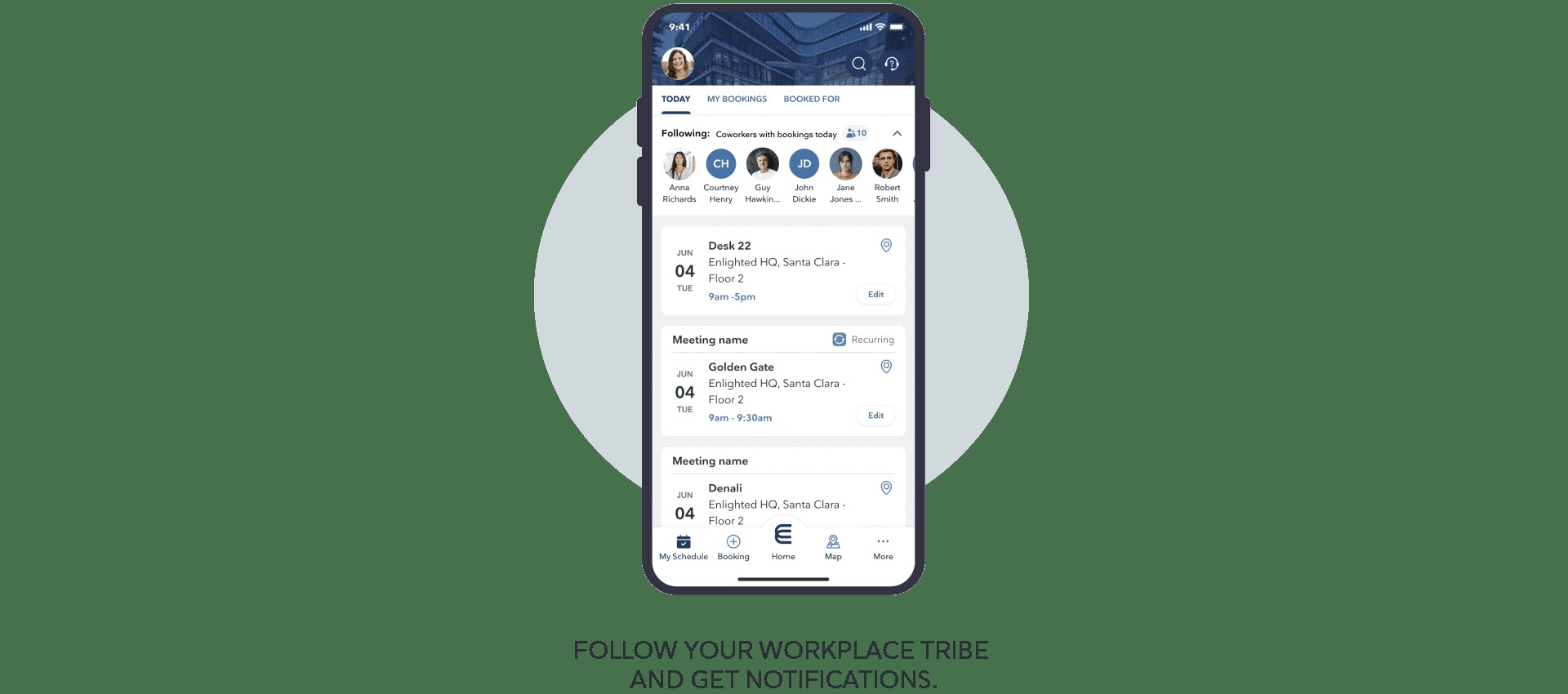
For a worker, Connect now means a mobile workplace app and, where the employer enables it, a Microsoft Teams experience. The Teams version offers desk and meeting-room booking, an integrated schedule, check-in and a view of coworkers' office plans. The broader product can expose amenities, maps and environmental controls. For managers, Connect Insights and data access tools turn those interactions into reports on booking, engagement and utilization. This is a more ambitious package than a desk reservation tool, though its value rises or falls with the quality of each installation and how regularly people use it.
The 2025 corporate turn makes the distinction especially important. Enlighted announced that it would wind down its core lighting and other IoT operations. In the same notice, it said Connect would continue to be available and supported through Siemens Smart Infrastructure's Buildings business. Siemens' Building X pages now present space and workplace management as part of a broader set of building applications. Connect's history therefore runs from startup app to a product in a much larger industrial portfolio, with the continuity explicitly stated by its owner.
A lesson worth taking into your own office
The useful idea to copy is not the app's color scheme or its list of features. Start with a daily inconvenience that workers can name. Give them a reason to contribute a signal, then compare what they planned with what happened. If desks are reserved but unused, add check-in and release. If people choose seats only when they arrive, make that action easy. If colleagues are the reason for a commute, help them coordinate. Ask the people running the building which decisions each signal will change.
The method has limits. A tiny office with fixed seating may not need booking software. Sensor readings can be incomplete, and a poorly adopted app can produce a persuasive but misleading dashboard. Connect is most plausible in larger, changeable workplaces where space costs are material, employees move among desks and rooms, and someone can act on the patterns. The original Comfy insight survives every rebrand: the quickest way to make a building intelligent is to begin with something its occupants actually care about.