On March 12, 2025, Enlighted had something new to sell. Eazy, its lighting control system for smaller businesses, allowed an installer to point a laser at a ceiling sensor and select it for configuration. There was a pleasing literalness to the trick. In a room full of identical lights, the installer could finally say: that one.
Thirty-seven days later, the company announced that it was winding down operations. The decision, made with its owner Siemens, covered core lighting and related IoT offerings. The workplace application, Enlighted Connect, would continue within Siemens. A business built to notice what happened inside buildings had reached a moment that required customers to notice what happened inside their supplier.
- Enlighted used light fixtures as homes for sensors and local computing.
- Its pitch combined energy savings with information about occupancy and space.
- Customer savings did not resolve its difficulty achieving profitable growth.
- Siemens retained Connect, now presented as Building X space and workplace management.
The ceiling was the distribution strategy
The origin story begins with an unusually useful complaint. In 2009, Tushar Dave, Tanuj Mohan and Premal Ashar were walking through Manhattan, looking at mostly empty buildings that were still brightly illuminated. A skyline can be beautiful and have terrible operating habits.
Mohan had encountered the same absurdity while programming alone at night in fully lit, air-conditioned offices. The founders came from software and networking. Cheap processors, wireless communication and the arrival of LEDs suggested that a building could respond more precisely to the people using it. Dave became the founding chairman and chief executive; Mohan was CTO; Ashar worked on software engineering.
The useful insight was where to put the intelligence. Lighting is distributed through a building and already has power. Enlighted put sensing and processing at the fixture, turning the ceiling into a network with a practical first assignment: stop spending electricity where it was unnecessary.
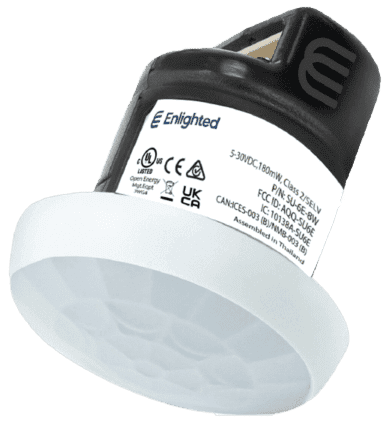
Its sensors collected occupancy, ambient light and temperature information, with power data available through associated control hardware. Local processors stored lighting profiles and schedules. The company’s technical material says normal programmed operation could continue through a network interruption. That is an attractive arrangement for a classroom: the lights should not need a successful conversation with a remote server to remember their job.
Light
Temperature
Dimming
Daylight adjustment
Energy patterns
Location applications
Conceptual flow. Application capabilities depend on the hardware, software and integrations installed.
The customer paid with the waste
AT&T offers a concrete example. Its energy team investigated advanced controls as part of a 2013 efficiency initiative. Enlighted’s proposal combined new LED fixtures with its lighting control system. The initial retrofit covered 240 properties and 20 million square feet. AT&T estimated about $8 million in annual lighting energy savings from that initial project.
AT&T’s initial 20m sq. ft. retrofit
The purchasing mechanism mattered. Enlighted’s GEO service let AT&T pay for installation through energy savings over time while receiving immediate savings. For a facilities manager, a technology proposal that changes the payment schedule can be more persuasive than one that adds another dashboard. The project moved a familiar expense into a different arrangement.
The arithmetic needs its boundaries. Those savings came from a retrofit that included LED replacement and controls. They cannot all be assigned to the sensor. The case also projected larger benefits from a future portfolio-wide rollout; a projection belongs in a different column from an achieved result. Combining both into one heroic number would make the story shorter and the procurement decision worse.
Financing also does not remove the work. Someone must specify fixtures, install equipment, commission controls and decide what a satisfactory light level looks like. Enlighted’s partner IoEnergy supplied precisely that expertise. In one example described by the partners, a workplace floor-plan change required less than an hour of lighting reprogramming rather than rewiring. Flexibility was something a technician could deliver before lunch.
A building is a portfolio of problems
Enlighted occupied a productive but crowded intersection: lighting hardware, building automation and enterprise software. Conventional controls could already switch or dim lights. Connected platforms such as Signify Interact also offered lighting control and analytics. Enlighted’s distinction lay in the combination of fixture-level sensing, local computation and applications that gave the same installed network additional jobs.
Its software ambitions reached beyond the electricity bill. Space analyzed utilization. Location Intelligence supported indoor location and asset tracking. Building-management integration could use occupancy information to inform HVAC operation. The company even documented fixtureless sensors, which could add sensing density where the lighting layout alone did not provide enough coverage.
That detail is revealing. A convenient place to install a sensor is not automatically the ideal place for every measurement. Asset location and room occupancy impose their own requirements. The network has to be designed for the question the customer actually wants answered.
The customer base reflected those varied questions: corporate offices, healthcare organizations, schools, retail and industrial facilities. Historical company materials named Google, HP, LinkedIn, the NHS and Schiever alongside AT&T. In its 2023 customer ebook, Enlighted reported five million installed sensors, 410 million square feet under management and deployments in 60 countries. These describe its reported historical footprint, rather than a current sales pipeline.
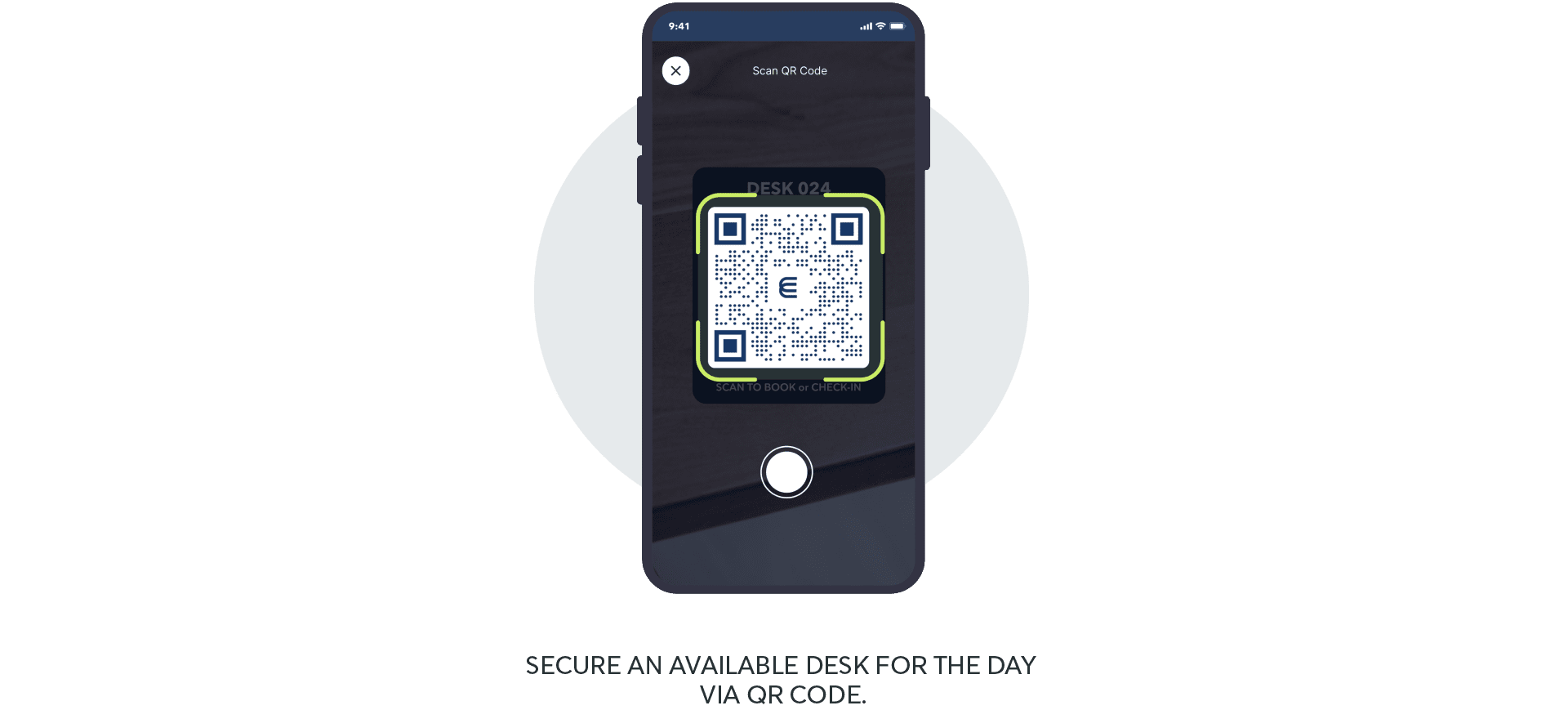
Workplace software addressed a different nuisance. A booking records somebody’s intention; occupancy records what happened. Connect offered desk booking, navigation and coordination with colleagues. In May 2024, Comfy became Enlighted Connect, with features including QR-code desk booking and favorites. By November, the company was describing notifications to help employees know when coworkers would be in the office. A commute becomes easier to justify when the person you need to meet is actually there.
The laser and the ledger
The company had attracted substantial backing. It announced a $14 million financing in 2011 and a $20 million Series C in 2013. In 2016, a $25 million Series D came with a separately announced $20 million revolving credit facility. Equity and borrowing supplied different kinds of capital; adding them together and calling the result venture funding would obscure that distinction.
Siemens announced its acquisition in May 2018 without disclosing the price. The attraction was understandable: sensors, distributed computing, a network and software applications could complement a large building-technology business. Enlighted’s then-chairman and CEO Joe Costello described Siemens as a route to faster innovation and international adoption.
By March 2025, Eazy was addressing another constraint: installation complexity for smaller customers. It offered app-based setup without a gateway, and the company claimed its laser commissioning could be up to 30 percent faster than traditional Bluetooth commissioning. The workflow was specific and sensible. Its claimed performance was a vendor claim, not a promise for every job.
The April partner letter supplied a blunt commercial explanation:
“Enlighted has struggled to achieve profitable growth”Company partner letter, April 2025
That tells us why the company said it was stopping. It does not establish a sequence of technical failures. Customer savings and supplier profitability measure different things. A system can reduce a client’s bills while the company selling it still faces an unsatisfactory business outcome.
The portfolio was split accordingly. Lighting and connected IoT offerings entered wind-down; Connect, described as separate from lighting and compatible with Siemens’ building software portfolio, remained. Enlighted’s public announcement said a dedicated team within Siemens would continue software, service and warranty commitments. The current website directs visitors to Building X space and workplace management.
What a facilities team can borrow
The repeatable lesson is the sequence: choose a wasteful process, measure a baseline, install controls, verify the result, then consider other uses for the data. Keep LED replacement savings separate from control savings. Price the installation and commissioning as carefully as the devices. If payment depends on future savings, define how those savings will be measured.
Conditions matter. A building with long hours of unnecessary illumination offers a different opportunity from one whose efficient LEDs already follow occupancy closely. Location applications may need extra sensor density. HVAC benefits require working integrations. Workplace analytics become useful when somebody has the authority to change the space or its operating rules.
Enlighted made a persuasive case for paying attention to the ceiling. Its later history adds a practical question to that case: when you buy intelligence for a building, how will you keep it useful over the building’s much longer life?