pcb-design
(10)
Teksun and the art of getting past the prototype
A working demo is a beginning with excellent publicity. Teksun builds the boards, code and manufacturing processes that give connected products a chance at a second act.

Diode Computers, Inc.
Diode Computers is a New York-based startup building an AI-powered, code-first platform for designing and manufacturing custom printed circuit boards. Its open-source toolchain - a Rust-based PCB compiler that treats schematics as Python-readable code - lets AI agents and engineers generate, validate, and manufacture boards in days rather than months, with human-in-the-loop verification. Founded in 2024 and backed by a $11.4M Series A led by Andreessen Horowitz, Diode serves hardware teams in aerospace, robotics, and defense.
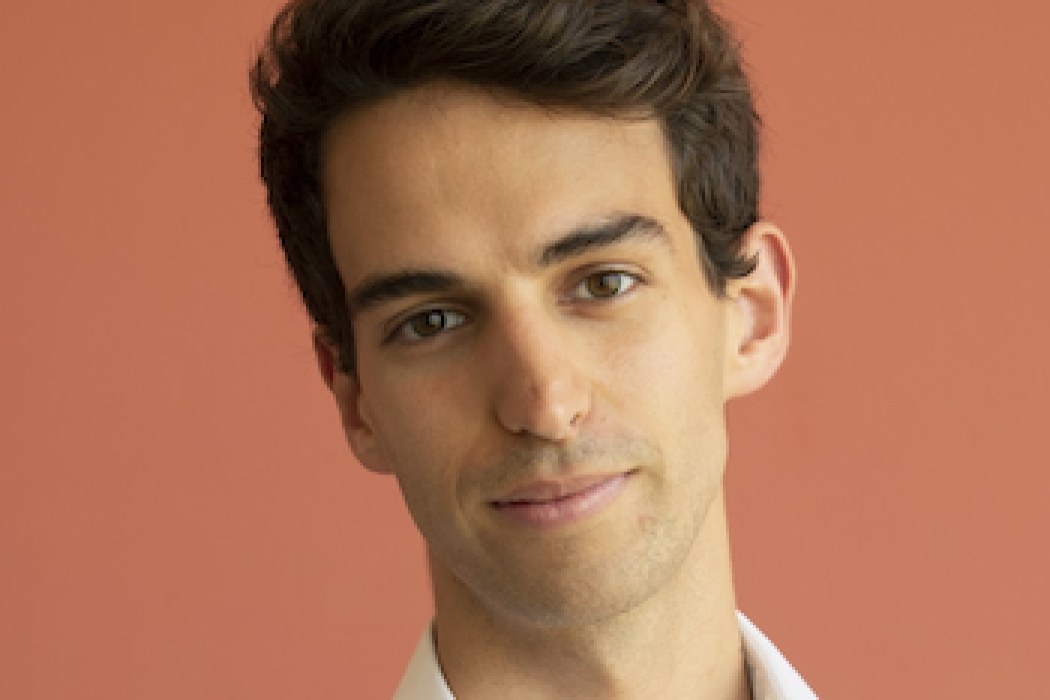
Davide Asnaghi
Davide Asnaghi is the co-founder and CEO of Diode Computers, a startup rebuilding how printed circuit boards are designed and manufactured. An Italian-born engineer trained at UC Berkeley, he spent years building hardware at Apple's Special Projects Group and medical-device companies before starting Diode to replace legacy EDA tools with open-source, AI-friendly software: a Python design language backed by a Rust compiler that turns requirements into manufacturable circuit boards in a fraction of the usual time. Diode raised an $11.4M Series A led by Andreessen Horowitz and partners with Anthropic to make Claude a more capable electrical engineer.

AllSpice.io
AllSpice.io is a Boston-based hardware development platform that brings software-style workflows - version control, automated design reviews, visual diffs, and CI/CD - to electronics and PCB engineering. Founded in 2019 by Valentina Ratner and Kyle Dumont, the company connects native ECAD tools so hardware teams can catch errors early, collaborate asynchronously, and ship reliable designs with full traceability. Its AI agent, DRCY, flags issues like misconfigured pins, swapped TX/RX lines, and missing capacitors before they reach production. Customers range from startups to Fortune 500s across aerospace, robotics, defense, autonomous vehicles, and medical devices.
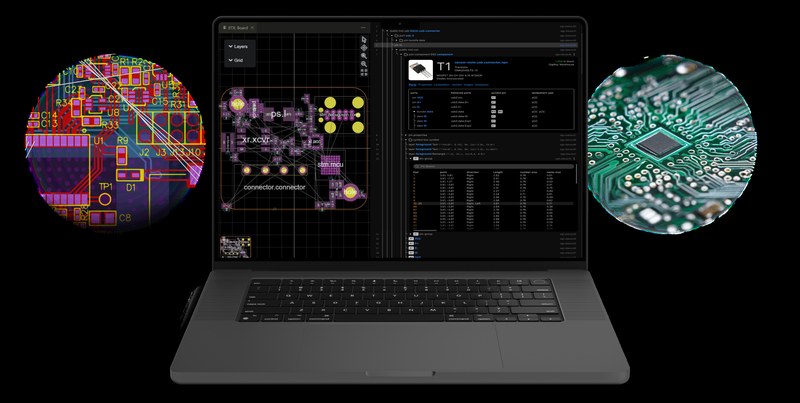
JITX
JITX is a Berkeley- and San Jose-based software company building a code-driven, AI-assisted platform for circuit board design. Instead of dragging parts around a canvas by hand, electrical engineers describe what a board must do in code, and JITX selects components, places parts, routes traces, and checks the design against electrical, mechanical, and manufacturing rules. Spun out of UC Berkeley and backed by Y Combinator and Sequoia Capital, the company is used by hardware teams at firms like Honeywell Aerospace, Lockheed Martin, Northrop Grumman, OpenAI, and HP, who report 5-20x productivity gains on complex multi-layer designs.
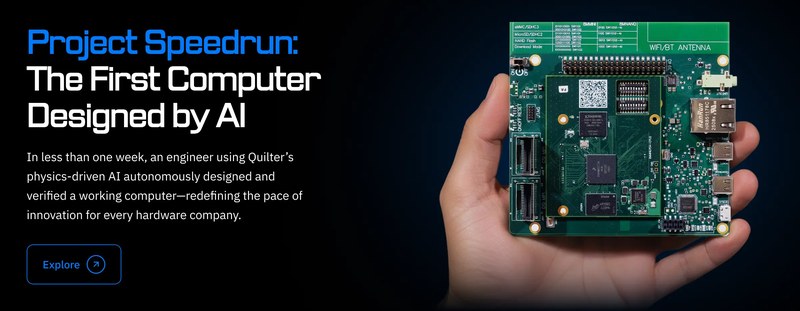
Quilter
Quilter is a Los Angeles-based company building the first fully autonomous, physics-driven AI for printed circuit board (PCB) layout. Founded in 2019 by former SpaceX avionics engineer Sergiy Nesterenko, Quilter trains reinforcement-learning agents on the laws of physics - not human design patterns - to place components, route traces, and physics-validate complete board designs in hours instead of weeks. The company positions itself as the 'compiler for hardware,' aiming to make manual PCB layout as obsolete as hand-compiling code.
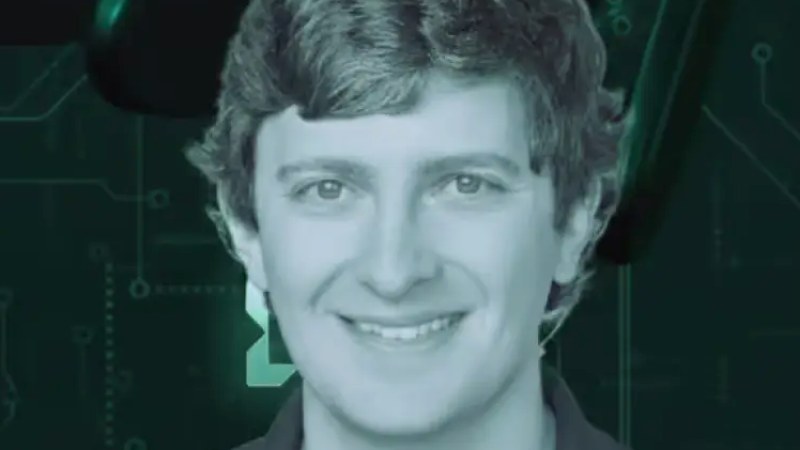
Sergiy Nesterenko
Sergiy Nesterenko is the founder and CEO of Quilter, a Los Angeles company building AI that designs printed circuit boards on its own. A former SpaceX avionics engineer who spent five years on Falcon 9 and Falcon Heavy electronics, he watched one of his first boards literally burn up in his hands and decided manual PCB layout was a problem worth a decade. Quilter trains its system on physics and constraints rather than copying human designers, and in 2025 it produced the world's first fully functional computer laid out by AI.
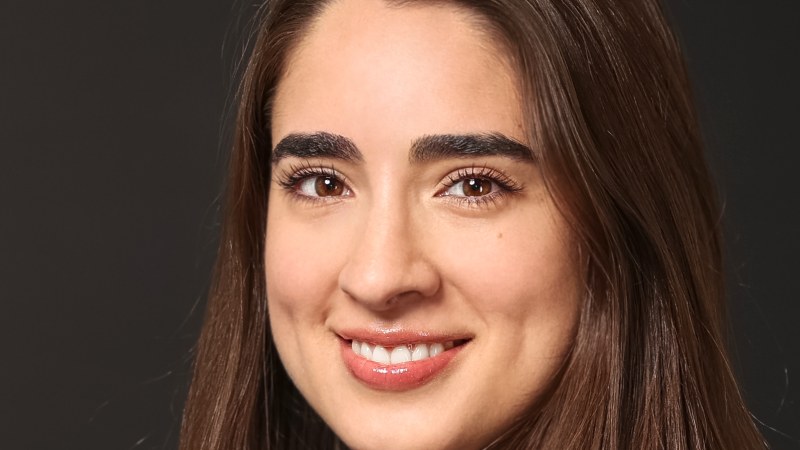
Valentina Ratner
Valentina Ratner is the co-founder and CEO of AllSpice.io, the 'GitHub for hardware' that brings version control, collaboration, and automated design review to the engineers who build PCBs, schematics, and bills of materials. An Argentina-born mechanical engineer turned Amazon PM turned Harvard MS/MBA, she launched AllSpice after watching brilliant teams build complex machines on archaic, file-shuffling workflows. In June 2025 she raised a $15M Series A to take the company's AI design-validation agent out of private beta, with customers spanning Blue Origin, Bose, and Tools for Humanity.
Kamran Maniar
Kamran Maniar is the Chief Executive Officer at Flux (flux.ai), the AI-powered PCB design platform headquartered in San Francisco. Flux - backed by 8VC and Bain Capital Ventures - has raised $39 million in total funding and serves over one million hardware builders across the globe, making professional circuit board design as accessible as writing a prompt. Operating at the intersection of AI, electronics, and manufacturing, Maniar leads from the crossroads of Silicon Valley ambition and Pakistan's deep engineering talent.

Matthias Wagner
Matthias Wagner is the German-born co-founder and CEO of Flux, the San Francisco-based AI hardware design platform that turns text prompts into production-ready circuit boards in a single browser tab. Before Flux, he produced the Crazy Frog 'Axel F' ringtone that accumulated nearly 3.8 billion YouTube views, led product teams at Facebook for Moments, AR ads, and Oculus VR, and built digital signage company 42 media group out of a friend's garage at age 24. He founded Flux in 2019 out of frustration that hardware tooling had not evolved in decades, and by 2026 had grown the platform to over 1 million sign-ups and raised $37 million in funding led by 8VC.