mobile-gaming
(15)
The App Factory That Traded Guitar Strings for Face Yoga
After a billion downloads, Gismart is tuning its consumer-app machine for wellness. The clever part is not any single app - it is the system underneath them.

The Startup That Put a Live TV Game Show Inside Your Bingo App
Most bingo apps are you, alone, tapping a screen. Live Play Mobile added a person on the other end - a real host, live, 24/7 - and turned a card game into appointment television you carry in your pocket.

Ohsnap Broke Its First Hit - Then Built the Hardware Playbook Founders Should Copy
A $466,820 Kickstarter win nearly became a global returns nightmare. Ohsnap paid for the lesson, rebuilt the grip and turned obsessive iteration into a phone-accessory business - and a second act in mobile gaming.

The Gaming Company That Turned a Three-Headed Snake Into a $2 Billion Cult
It started with one gaming mouse and a promise that felt slightly ridiculous - build only for gamers, nobody else. Twenty-plus years later that stubbornness is a hardware empire, a payments business, and a snake logo people tattoo on themselves.

Dream Sports Lost Its Cash Engine. Now It Wants the Rest of the Fan's Day
The company that taught millions of Indians to manage imaginary cricket teams is attempting a harder rebuild: turning one enormous audience into many smaller businesses without the paid contests that once funded the machine.

DraftKings Inc.
DraftKings began with a baseball contest built in a spare bedroom. Fourteen years later, it is a $6 billion test of how deeply a betting interface can be woven into the way America watches sports.

DoubleDown Interactive
The Seattle-born social casino pioneer has spent 16 years selling the feeling of a casino without a cash-out. Its next wager is less visible but more consequential: own more of the checkout, broaden into Europe and make an old hit travel further.

Audiomob
Audiomob is a London-founded adtech company that pioneered non-intrusive audio advertising inside mobile games. Its SDK lets game developers earn revenue by playing short audio ads without interrupting gameplay, while advertisers reach a large, hard-to-access mobile gaming audience. Founded in 2020 by ex-Google and ex-Facebook engineers Christian Facey and Wilfrid Obeng, the company reaches hundreds of millions of monthly players across 160 countries and has raised roughly $16 million, including a $14 million Series A at a $110 million valuation.

FunCraft
FunCraft is a remote-first mobile game studio founded in 2019 by former Electronic Arts and Zynga veterans. It builds friendly word and puzzle games - led by flagship title Wordgrams and Word Yatzy - designed to become daily rituals players return to for years. The studio backs a philosophy it calls 'casual forever,' pairing rigorous live operations and ad-spend experimentation with a small, senior team. By its fifth year it had crossed 7 million installs and more than $15 million in revenue.

Onlife
Onlife is a spatial-AI company that turns where people go into what they might do next. It began as the parent company behind Aglet, a location-based 'sneakerverse' game that had players walking real streets to collect virtual sneakers, then used the resulting movement data to build a Spatial Behavioral Engine and a consumer 'Smart Map' that fuses calendars, to-do lists and location into a self-organizing daily planner. Founded by former adidas trends director Ryan David Mullins, Onlife straddles the line between a playful consumer app and a serious geospatial-intelligence platform.
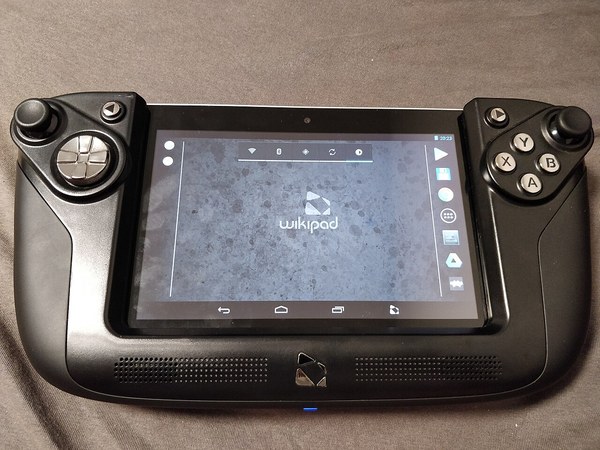
Gamevice
Gamevice is a Simi Valley, California hardware company that makes attachable gamepad controllers which clamp onto an iPhone, iPad, or Android phone and turn it into a handheld console. Born from the Wikipad gaming tablet project, the company shipped its controller through hundreds of Apple Retail stores, raised a $12.5M Series A in 2017, and built its newer Flex line as an official 'Designed for Xbox' accessory tuned for Xbox Cloud Gaming and other cloud services. It is also known for a long-running patent fight against Nintendo over the Switch's detachable Joy-Con design.

World Golf Tour
World Golf Tour (WGT) is a San Francisco-based video game company behind WGT Golf, one of the most realistic free-to-play online golf games. Using patented 3D photorealistic georeferencing built from helicopter-shot, high-definition imagery, WGT recreates real-world courses like Pebble Beach, St Andrews and Bethpage Black to within roughly an inch of vertical accuracy. Launched in open beta in 2008, it grew to tens of millions of players across browser, iOS and Android, ran virtual versions of the U.S. Open with the USGA, was acquired by Topgolf in 2016, and spun back out as an independent studio on January 1, 2025.

Triumph
Triumph (Triumph Labs) is a San Francisco company that turns ordinary mobile games into real-money skill tournaments. Its plug-and-play SDK lets developers add cash competitions with a single line of code, while Triumph handles the hard parts behind the scenes: payments, KYC identity checks, state-by-state legal compliance, geolocation, matchmaking, anti-cheat, and payouts. Founded in 2021 by Stanford dropouts Jake Brooks and Jared Geller, the company raised $14.1M (a $10.2M Series A led by General Catalyst plus a $3.9M seed) and also runs its own consumer apps - Triumph Arcade for skill games and Rips for card collectibles.

Avia (AviaGames)
Avia (formerly AviaGames) is a San Mateo-based mobile gaming company behind Pocket7Games, a skill-based tournament platform where players compete in puzzle, card, bingo, and arcade titles for cash prizes. Founded in 2017 by Vickie Chen and Ping Wang, the company uses algorithmic skill matchmaking and a single-wallet system across a portfolio that includes Solitaire Clash, Bingo Clash, and Bubble Buzz.

LILA Games
LILA Games is a Bengaluru-based mobile game studio founded in 2020 and building Project Black, an ambitious free-to-play extraction shooter for mobile. Backed by a $10M Series A from Rainfall, KRAFTON, Sequoia, BITKRAFT, and Galaxy Interactive, the team is led by former SEGA and FunPlus operators determined to prove India can ship a globally competitive shooter.