Pick up a phone today and you are holding a console. It has the chip, the screen, the store, and a library that streams from a server farm somewhere in Texas. What it does not have is a place to put your thumbs. Gamevice exists in that gap - the half-inch of frustration between a great game and a sheet of glass that pretends to be a controller.
The product is almost stubbornly simple. A Gamevice is a gamepad split down the middle, with each half clamping to one side of your iPhone, iPad, or Android phone. Plug it in, and the touchscreen stops being the controller and goes back to being the screen. Sticks on the sides. Buttons under your thumbs. Triggers where your fingers already rest. The phone you carry everywhere quietly becomes the handheld you never bought.
"Gamevice is the creator of an attachable gamepad controller that transforms smart devices into hyper-advanced mobile gaming consoles."
Gamevice, on the thing it makesA small company with a global shelf
Gamevice, Inc. operates out of Simi Valley, California, with a headcount you could seat at two restaurant tables - around eight people. That number is the first surprise. The second is where its products ended up: roughly 490 Apple Retail stores worldwide, plus Amazon and the company's own storefront. A team that size with that kind of distribution is either lucky or focused. Gamevice is mostly the second.
Phillip Hyun runs it. The catalog is narrow on purpose - controllers for iPhone, iPad, and Android, and a newer line called Flex. There is no software empire here, no subscription, no platform play. Just hardware that solves one annoyance very well, which in a market full of companies trying to do everything, is its own kind of strategy.
Touch controls are fine, right up until they aren't
Mobile games made everyone a gamer and quietly made nobody a good one. Tap-to-fire works for a puzzle. It falls apart the moment a game asks you to move and aim and jump at the same time. Your thumbs cover the action you are trying to see. There is no travel, no resistance, no sense that you pressed anything at all. The hardware in your hand is extraordinary; the input is from 2007.
Then cloud gaming arrived and raised the stakes. Services like Xbox Cloud Gaming began streaming full console titles to phones. Suddenly the device in your pocket could run a game built for a controller - but had nothing for you to hold. The problem Gamevice had been circling since 2008 became, abruptly, everybody's problem.
"The phone was always powerful enough. The question was never the silicon. It was whether your thumbs could keep up."
The Gamevice thesis, paraphrasedFrom a tablet nobody remembers to a controller people kept
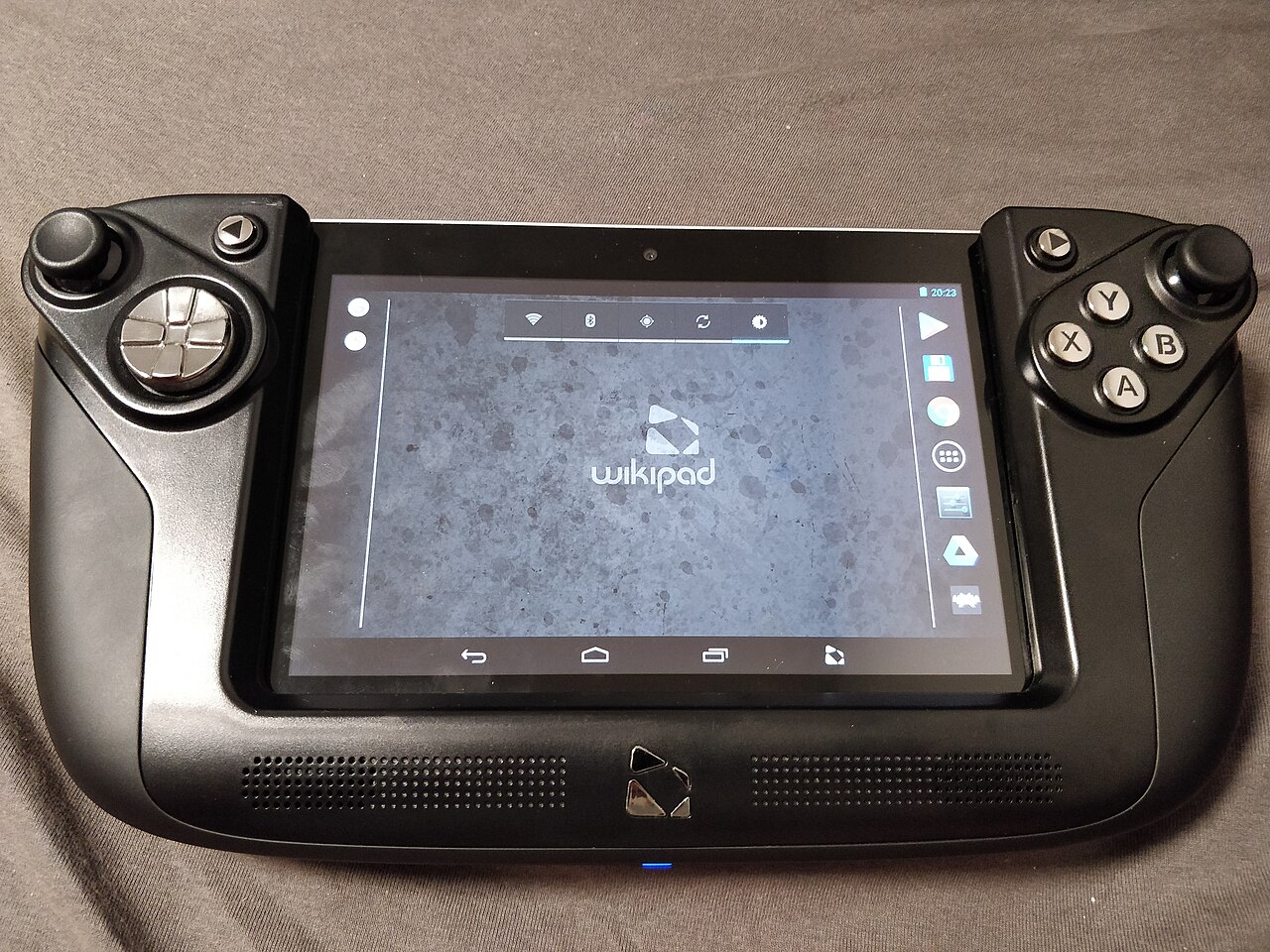
Gamevice did not start as Gamevice. It started in 2008 as Wikipad, Inc., founded by Matthew Joynes, James Bower, and a young Brendan Iribe - who would later co-found Oculus VR and sell it to Facebook for around $2 billion. Their first swing was the Wikipad: an Android gaming tablet with a detachable controller, shown off at CES in 2012. It was ambitious, a little awkward, and ahead of its market.
The Wikipad did not conquer anything. But it taught its makers something useful: people did not want a whole new tablet. They wanted the controller part, attached to the device they already owned. So the company kept the detachable grip, threw away the tablet, renamed itself after the survivor, and shipped the Gamevice. The bet was that the accessory was the actual product all along.
The Gamevice Timeline
What you actually hold
The current line splits into two families. The original Gamevice wraps tightly around a specific device for a rigid, no-wobble fit. The newer Gamevice Flex telescopes, so it stretches to fit different phones - and, in its best trick, fits them while they are still wearing a case. Anyone who has ever wrestled an Otterbox off a phone to use an accessory will understand why reviewers fixated on this.
Gamevice Flex
Telescoping controller, official "Designed for Xbox" product. A Flex Adapter Kit lets it fit phones inside thick cases from UAG, Otterbox, Speck, and Spigen. About $109.95 (iPhone) / $99.95 (Android).
Gamevice for iPhone & Android
The original wrap-around design. Dual sticks, D-pad, face buttons, and shoulder triggers in a single rigid frame that hugs the phone.
Gamevice for iPad
A larger detachable controller for iPad Mini, Air, and Pro - the closest thing to a console you can fold into a bag.
Wikipad
The original Android gaming tablet with a detachable controller. Discontinued, but its DNA is in everything Gamevice ships.
"The Gamevice Flex enhances a familiar formula with one simple feature - the ability to keep your iPhone case on during use."
The detail reviewers couldn't stop mentioningThe receipts: money, shelves, and a partner named Xbox
In May 2017, Gamevice closed a $12.5 million Series A, co-led by TransLink Capital and California Technology Ventures, with BAM Ventures, TYLT Ventures, and Kevin Chou - the former CEO of mobile-games giant Kabam - joining in. The money was earmarked for new products, more production, and wider distribution. For a hardware company of its size, the round bought credibility as much as runway.
The bigger validation was a logo. Gamevice Flex carries Microsoft's official "Designed for Xbox" badge and ships with an Xbox Game Pass Ultimate trial, positioning it squarely in the cloud-gaming wave it had been waiting for. Add the ASUS ROG Phone collaboration and that long Apple Retail presence, and the picture is of a niche company that keeps landing partnerships well above its weight class.
Gamevice, by the numbers
Make the device you own do more
Strip away the marketing and Gamevice's mission is refreshingly small: take the smart device already in your hand and give it real, tactile controls. No new platform to adopt. No ecosystem to buy into. Just a better way to play what you can already play. In an industry addicted to selling you the next box, there is something almost contrarian about a company whose entire pitch is "you already have the box."
There is, of course, the other thing. Starting in 2017, Gamevice spent the better part of a decade in court arguing that Nintendo's Switch - with its slide-on, detachable Joy-Con - borrowed from Gamevice's patents. The company lost at the U.S. International Trade Commission twice, and in January 2026 the Federal Circuit affirmed that the Switch does not infringe. By April 2026 Gamevice was weighing a trip to the Supreme Court. Whether you read that as conviction or as a small company refusing to let go, it is a real part of the story.
"You already own the console. We just hand you the controller."
The Gamevice promise, distilledThe grip is the whole game
Cloud gaming keeps getting better, and every improvement makes Gamevice's bet look smarter. As more console-grade games stream to phones, the phone's weakest link is no longer the screen, the chip, or the connection. It is the input. A streamed blockbuster running on a flat pane of glass is a sports car with no steering wheel. Gamevice sells the steering wheel.
It still has to fend off a crowded field - Backbone, Razer's Kishi, GameSir, and others all want the same slot on your phone. But the company that has been refining detachable controllers since before the App Store had its tenth birthday starts with an unusually long head start.
So we return to that half-inch of frustration - the gap between a great game and a sheet of unresponsive glass. Gamevice's whole existence is an argument that it should not be there. Snap on the grip and the gap closes: the phone in your pocket stops apologizing for not being a console and simply becomes one. The screen goes back to being a screen. Your thumbs find the sticks. And the most powerful gaming device most people own finally feels like one.