life-sciences-software
(14)
Suresh Balasubramanian Is Rebuilding the CMO’s Playbook at AI Speed
After three decades across code, cybersecurity, fintech and SaaS, Qualio’s marketing chief is testing a sharper idea: in an AI-first company, the CMO must redesign the work itself.

Christian Rockwell Has a Framework for the Messy Middle
After two decades marketing complicated software, Christian Rockwell’s sharpest idea is also his simplest: know where you are before deciding where to go.

For Life-Science Factories, Blue Mountain Turned Maintenance Paperwork Into a $2 Million Lever
A 35-year-old Pennsylvania software company found a valuable niche in the least glamorous corner of drug manufacturing: proving that every critical machine was maintained, calibrated and ready when the auditor arrived.
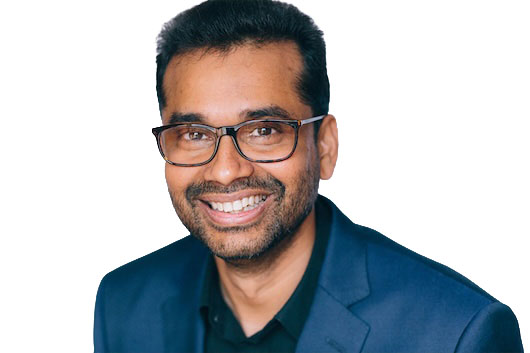
Raj Indupuri Spent 30 Years Making Clinical Trial Data Behave
He began when trial records traveled on paper and sometimes by courier. Three technology shifts later, the eClinical Solutions co-founder is still chasing the same stubborn prize: cleaner data, faster decisions, and software people can trust.
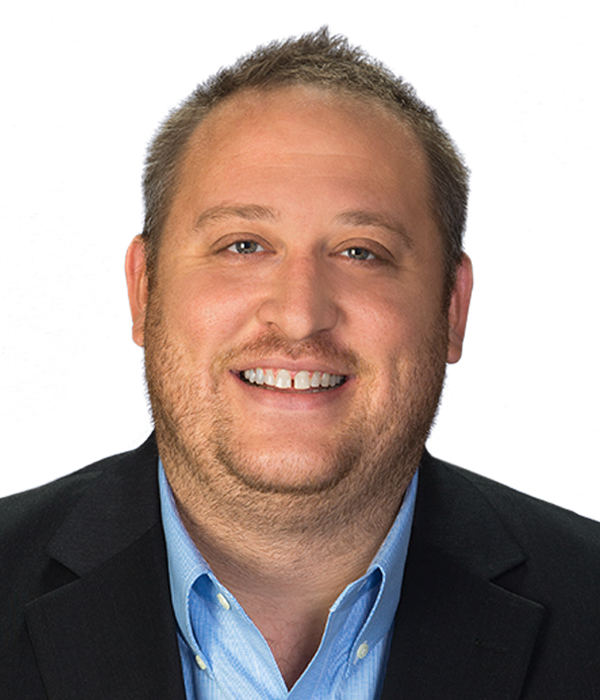
Scott Marshall Is Making Clinical Trial Data Behave
The QuartzBio CEO built his career around an unglamorous but expensive problem: a clinical sample can travel farther than the data that explains it. His answer is a connected system designed to catch the gaps before researchers have to play another round of spreadsheet detective.

Chuck Donnelly Put Space-Age Software to Work in the Preclinical Lab
Before Chuck Donnelly built software for preclinical research, he worked on orbiting instruments, Space Shuttle ground control, and radio astronomy. RockStep Solutions turned that systems instinct toward a quieter frontier: making laboratory data usable.

The Most Expensive Vial in a Clinical Trial Is the One Nobody Can Find
QuartzBio built a business around a stubborn problem in drug development: the sample is physical, the evidence is digital, and the two have a habit of losing track of each other. Its software tries to reconnect the chain before a missing vial or mismatched record becomes a costly trial delay.
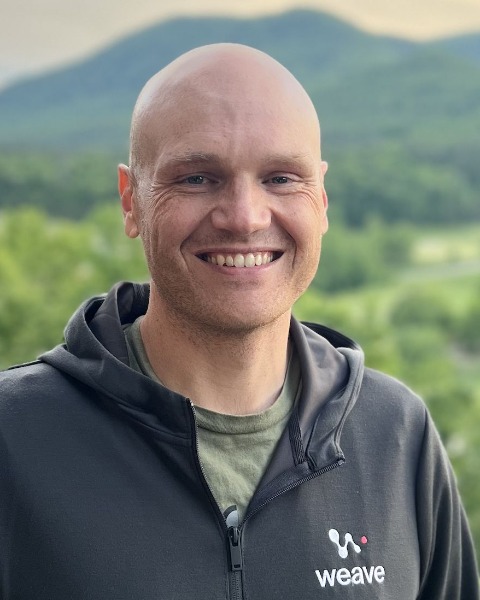
Brandon Rice Is Turning Drug Development’s Paper Trail Into Working Memory
The Weave Bio CEO began with Neanderthal genomes and ended up rebuilding one of drug development’s least glamorous systems. His wager is simple: let software carry the paperwork so experts can carry the judgment.

Aktana
Aktana spent years turning pharma’s scattered customer data into a daily recommendation engine. Now, under PharmaForceIQ, its field intelligence is being stitched to digital orchestration in a bid to close one of life sciences’ most expensive gaps.
Form Bio
Form Bio is an Austin-based computational life sciences company that builds AI-driven software to speed up the design, characterization, and manufacturing of genetic medicines, especially adeno-associated virus (AAV) cell and gene therapies. Spun out of Colossal Biosciences in 2022 with a $30M Series A, its platform lets scientists model billions of therapeutic vector designs in silico to improve efficacy, safety, and manufacturability before ever entering the lab, targeting the manufacturing bottleneck that drives the majority of FDA rejections in the field.

Plex Research
Plex Research is a Cambridge, Massachusetts company building an AI-powered scientific intelligence platform for drug discovery. Its proprietary focal graph technology stitches billions of minimally processed experimental data points from genomics, proteomics, chemical biology and clinical sources into a queryable biomedical knowledge graph, then pairs it with large language models so scientists get evidence-backed answers in seconds - every result traceable to the underlying experiments. Trusted by 40+ pharma and biotech teams, Plex helps researchers identify and evaluate drug targets, uncover hidden pharmacology, and, through its AutoPlex agent, run autonomous multi-step research campaigns.

Model N
Model N is a Redwood City-based enterprise software company that builds cloud revenue-management systems for pharmaceutical, medtech, semiconductor, and high-tech manufacturers. Its Revenue Cloud automates pricing, quoting, contracting, rebates, incentives, and regulatory compliance - the commercial machinery that governs how life sciences and high-tech companies book and protect their top line. Founded in 1999 and taken public in 2013, Model N was acquired by Vista Equity Partners in 2024 for $1.25 billion and now serves 150+ leading brands across more than 120 countries.

ValGenesis
ValGenesis is the pioneer of digital validation for the life sciences industry. Founded in 2005 in Santa Clara, California, the company invented the Validation Lifecycle Management System (VLMS) - the first proven, 100% paperless, end-to-end validation platform - and now builds Smart GxP, an AI-enabled platform that unifies risk-based validation and process lifecycle management. Trusted by 30 of the world's top 50 life sciences companies, ValGenesis helps pharma, biotech, and medical device makers replace paper-based validation with governed, auditable, AI-assisted digital workflows.

Sajith Wickramasekara
Sajith (Saji) Wickramasekara is the co-founder and CEO of Benchling, the R&D cloud platform used by more than 200,000 scientists across pharma, biotech, and academia. He took leave from MIT in 2012 to rebuild the software scientists use at the bench, and has stayed in the CEO seat as the company grew to a roughly $6 billion valuation.