environmental-services
(19)
VILOR builds the way back
From a flood-wrecked station in Paiporta to the tunnels beneath Seville, the Valencia contractor has made public infrastructure its business. Its next challenge reaches from recycled asphalt to the security of construction data.

The Water Roll-Up That Lets Local Names Stay Local
H2O Care Partners is buying the plumbing behind better tap water - then leaving the trusted name on the truck. Its wager is that national resources and local reputations can occupy the same house.
The 5 Million-Stop Machine Turning Trash Into Infrastructure
Republic Services makes roughly 5 million pickups a day. Behind each stop is a carefully linked business of routes, landfills, laboratories, recycling plants and energy projects - an unglamorous network becoming a platform for circular materials.
Aprisium
Aprisium is a Singapore deeptech startup that builds on-site, real-time contaminant detection systems for water and other fluids. Using patented electrochemical sensors paired with AI analytics, it lets water utilities, industrial manufacturers, data-center operators and shipping firms detect pollutants - including heavy metals and PFAS - at the source in minutes rather than shipping samples to a lab and waiting days. The company raised an oversubscribed US$7M Series A in 2024 and deploys across Singapore, the Philippines and Australia.
Mawaad Environmental Services
Mawaad Environmental Services (MES) is a Dubai-based materials processing and resource-recovery company founded in 2018 by Ismail Fahmy. It turns industrial by-products - chiefly the slag left over from steelmaking - into marketable construction materials such as steel slag aggregates and ladle furnace slag. Operating on a cradle-to-cradle circular-economy model across the GCC and Egypt, MES holds long-term processing agreements with steel producers including Emirates Steel and Ezz Steel, and reported processing and selling 300,000 tons of steel slag in the first half of 2021.
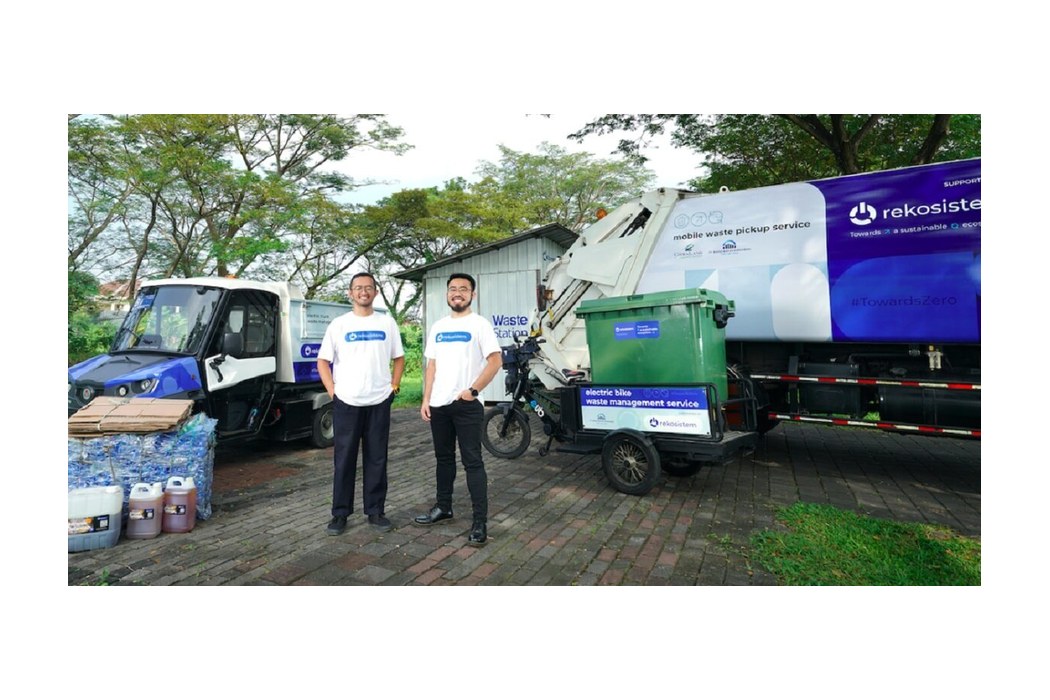
Rekosistem
Rekosistem is a Jakarta-based clean- and climate-tech company that manages Indonesia's fragmented waste supply chain end to end. Through a network of Reko Waste Stations, app-based pickup services, and material recovery hubs, it collects, sorts, and channels waste from households and businesses back into the circular economy. Founded in 2021 by Ernest Layman and Joshua Valentino, the company serves 90,000+ households and 200+ enterprise clients, processes roughly 4,500 tonnes of waste per month, and raised a US$7M Series A in 2025 led by Saratoga Investama Sedaya and K3 Ventures.

Flash Forest
Flash Forest is a Toronto-based reforestation company that uses drones, proprietary biological seed pods, aerial mapping, and machine learning to replant forests faster and cheaper than traditional hand-planting. Founded in 2019, it deploys aerial and ground-based systems to restore land degraded by wildfire and logging, and pairs planting with a forestry intelligence service that surveys and monitors forests. The company has planted more than 3 million trees and aims to reach one billion by 2028.

SeekOps Inc.
SeekOps is an Austin-based climate-technology company that mounts a NASA-derived laser methane sensor, the SeekIR, onto enterprise-grade drones to detect, locate, quantify, and report methane emissions for energy, renewable natural gas, and waste operators. Spun out of NASA's Jet Propulsion Laboratory in 2017, its drone-agnostic Leak Detection and Quantification (LDAQ) systems help operators meet regulatory frameworks such as OGMP 2.0, EPA rules, and the EU Methane Regulation, and have been deployed onshore and offshore for majors including bp, Shell, TotalEnergies, and Equinor.
E2 Consulting Engineers, Inc.
E2 Consulting Engineers is a multidisciplinary engineering and technical consulting firm founded in 1988 and headquartered in Emeryville, California. It delivers project management, engineering and design, construction management and inspection, environmental permitting and remediation, and federal support services to investor-owned utilities, government agencies, and infrastructure operators across North America. With more than 800 professionals in 11 U.S. offices, E2 supports grid modernization, wildfire mitigation, pipeline safety, and water infrastructure programs. In June 2026 it was acquired by EIP-backed Guardian Infrastructure Services.
Carba
Carba is a Minneapolis-area climate-tech company that turns low-value waste biomass - dead trees, yard waste, and other biogenic scraps - into a stable, charcoal-like material called biocarbon (biochar). Using a patent-pending autothermal pyrolysis reactor and an anoxic (oxygen-starved) burial method, Carba locks carbon away for a certified 1,000+ years, most notably inside existing landfills where the material can also filter pollutants. The company sells the resulting permanent carbon-removal credits - including a five-year, 44,000-tonne deal with Microsoft - and aims to remove a billion tons of CO2 by 2035.
Earth Force Technologies
Earth Force Technologies is a San Francisco climate-tech company modernizing wildfire prevention. It builds precision-forestry sensors, in-cabin tablets, and a web portal that give crews real-time, tree-level guidance during fuel-treatment work and let administrators oversee far more acres from a desk. By combining teleoperated machinery, jobsite connectivity, and automated reporting, the company aims to make landscape-scale forest treatments faster, safer, and cheaper - so states, federal agencies, and conservation districts can reduce catastrophic fire risk at the pace the crisis demands.
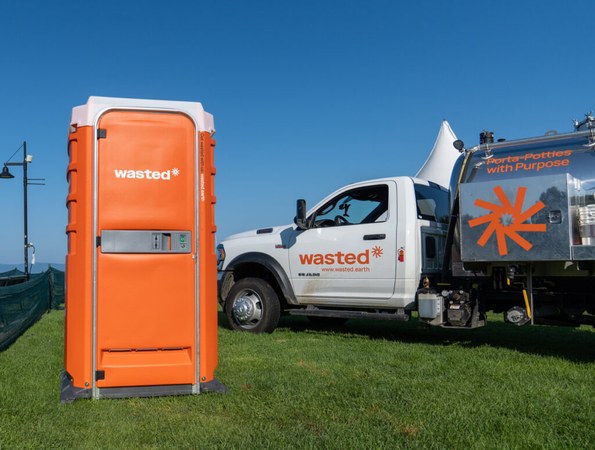
Wasted* PBC
Wasted* PBC is a Vermont public benefit corporation reinventing the humble porta-potty. Its waterless, chemical-free, solar-ventilated toilets separate and collect human waste on-site, then a Vermont R&D team recovers the nutrients and turns them into WeeBloom, a commercially registered struvite fertilizer sold to farms and gardeners. Grown out of the nonprofit Do Good Sh*t, Wasted* is building a circular economy for something everyone would rather not think about - closing the loop from toilet to topsoil.
Capture6
Capture6 is a climate-tech company that turns the salty waste brine left over from desalination and water treatment into two things the world needs: fresh water and permanently removed atmospheric CO2. Its integrated platform converts brine into a CO2-absorbing solvent in a single step, eliminating costly brine disposal while producing freshwater, green chemicals, and durable carbon removal. Founded in 2021 and based in the San Francisco Bay Area with operations in New Zealand, the public benefit corporation works with water utilities, industry, and governments across California, Western Australia, New Zealand, and South Korea.

Compost Crew
Compost Crew is a Rockville, Maryland-based organics recycling company that collects food scraps from homes, businesses, schools and local governments across the Greater Washington (DMV) area and turns them into nutrient-rich compost. Founded in 2011 and acquired by CEO Ben Parry in 2018, the company has grown from three trucks into a regional operation that has diverted tens of thousands of tons of food waste from landfills. Operating a network of distributed 'Compost Outposts' in partnership with local farms, Compost Crew aims to make food waste recycling a mainstream, everyday habit while rebuilding regional soil health.

Renewance, Inc.
Renewance, Inc. is an Elmhurst, Illinois company that manages the full life cycle of industrial batteries - from installation and remote monitoring to decommissioning, repurposing, and recycling. Founded in 2015 by three former GE Energy Storage leaders, it pairs hands-on field services with the RenewanceConnect software platform so energy-storage and EV operators can track assets, stay compliant, and retire batteries safely instead of letting them become environmental liabilities.
SOLARCYCLE
SOLARCYCLE is an advanced solar panel recycler turning America's mounting pile of retired solar panels into raw materials and new solar glass. Using patented technology, the company recovers more than 95% of the value in a panel - silver, silicon, copper, aluminum and glass - and feeds it back into a domestic clean-energy supply chain. Founded in 2022 and headquartered in Mesa, Arizona, it runs facilities in Texas and Georgia and has signed long-term recycling deals with more than 40 of the largest solar companies in the U.S.
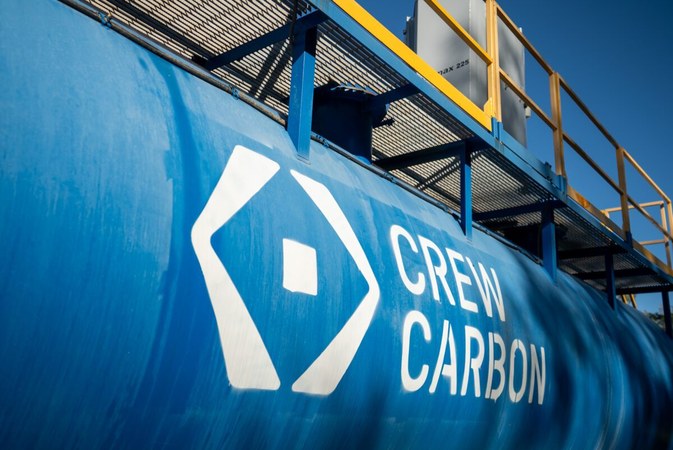
CREW Carbon
CREW Carbon is a Yale-spinout water and climate technology company based in Hamden, Connecticut. It retrofits municipal and industrial wastewater treatment plants with a closed-system enhanced-weathering process: dosing alkaline minerals into wastewater to convert dissolved CO2 into stable bicarbonate. The approach lowers operating costs and improves treatment performance for utilities while permanently and measurably removing atmospheric carbon, which it sells to corporate buyers as durable carbon removal credits.

Heirloom Carbon
Heirloom Carbon Technologies is a San Francisco-based direct air capture company that uses limestone's natural CO2-absorbing properties to pull carbon dioxide permanently out of the atmosphere. Their process accelerates a geological phenomenon that normally takes thousands of years into a 3-day cycle: calcium oxide powder absorbs CO2 from ambient air, becomes limestone, gets heated in a renewable-energy-powered electric kiln to release the captured CO2, and repeats. The captured CO2 is then stored permanently underground or embedded in concrete. Founded in 2020, Heirloom opened America's first commercial DAC facility in Tracy, California in November 2023 and has raised over $354 million to expand capacity toward their goal of removing 1 billion tons of CO2 by 2035.
Woodard & Curran
Woodard & Curran is a 100% employee-owned environmental engineering and consulting firm founded in 1979 and headquartered in Portland, Maine. With roughly 1,300 employees across 30+ offices in 14 states, the firm integrates engineering, science, design-build, and operations to solve complex water and environmental challenges for municipal, industrial, and government clients. From treating 11.7 billion gallons of drinking water annually to cleaning up Superfund contamination sites, Woodard & Curran positions itself as the firm that takes on the hard problems in water infrastructure and environmental health — not as a contractor but as a long-term partner.